
Japan is deepening its defence relationship with India while simultaneously expanding its economic, infrastructure and security engagement with countries around India -- particularly Bangladesh. The result is an emerging Japanese conception of South Asia in which India remains the strategic anchor, but the geography surrounding India is becoming increasingly important, points out Varun Arya.

Drogo Aerospace's JK 250e fixed-wing VTOL UAV has received type certification from the DGCA on Thursday. This UAV, designed for the Indian armed forces' ISR needs, combines fixed-wing efficiency with VTOL capability and has an endurance of two to three hours. The certification is crucial for indigenous UAV technology development and operator training.
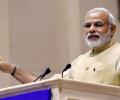
Prime Minister Narendra Modi, in his Independence Day address, highlighted technology and innovation as central to India's goal of becoming a developed nation by 2047. He called for India to lead in emerging technologies like AI, quantum computing, and space, announcing a massive AI skilling initiative for one crore youth. Modi stressed the importance of becoming a global innovation hub, bolstering energy security with nuclear power, and strengthening cybersecurity.

The CBI has arrested Anil Kumar, a senior executive at Munitions India Limited (MIL), for allegedly taking bribes and disclosing sensitive defence information related to a Rs 500 crore supply contract. The FIR also names SMPP CEO Ashish Kansal. Kumar is accused of routing illicit proceeds through family members, compromising national security.

'India is trying to project that it can engage with the world in a different way too.'

Built as an expendable, short-duration turbojet engine for single-mission applications, it can power tactical cruise missiles, anti-ship missiles, and long-range loitering munitions.
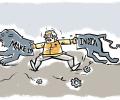
RRP Electronics and Orvis Semi Pvt Ltd have formed a strategic partnership to develop and manufacture low-light imaging sensors for defence, surveillance, and security in India. This collaboration aims to reduce reliance on imports and bolster India's semiconductor and defence electronics ecosystem under government initiatives like Make in India.

A dozen companies, including major players like Jio Platforms and Zetwerk Manufacturing Business, are poised to launch Initial Public Offerings (IPOs) in October, continuing India's strong fundraising momentum in the primary market. These offerings span diverse sectors, reflecting sustained investor interest in businesses with robust growth prospects.

Air Chief Marshal A P Singh, the IAF chief, has strongly advocated for India to achieve greater self-reliance in unmanned aerial systems and other critical defence technologies, stating, "Technology delayed is technology denied." He stressed the importance of indigenous development to avoid dependency on other countries for components.

US Secretary of State Marco Rubio is on a three-day visit to India to discuss bilateral ties in energy, trade, investment, defence, and critical technologies, as well as the West Asia crisis. His visit aims to strengthen the India-US Comprehensive Global Strategic Partnership amidst existing friction, with a focus on finalising a proposed bilateral trade deal.
Hical Technologies and Safran Aerosystems have signed a Memorandum of Understanding to explore a joint venture for manufacturing complex systems, including fluid and fuel systems, for the Dassault Rafale program in India. This partnership aims to bolster the Make in India initiative, leveraging Hical's expanding manufacturing capabilities and Safran's technology leadership to produce critical aerospace components domestically and for global markets.

The move is meant to enhance the operational capability of the armed forces, reduce import dependence and increase domestic value addition.

The reforms, undertaken by the Department of Defence Production, remove stakeholder consultation for exports of non-lethal defence items to most destinations, while retaining safeguards for sensitive countries.

External Affairs Minister S Jaishankar will host US Secretary of State Marco Rubio in Mumbai on October 20 for talks aimed at strengthening the Comprehensive Global Strategic Partnership. Discussions will cover energy, trade, defence, and critical technologies. The visit also includes celebrations for the 250th anniversary of US Independence. This meeting follows earlier confusion regarding Rubio's visit and will also touch upon the India-US bilateral trade agreement, which both sides are close to concluding. The MEA clarified that hosting foreign dignitaries outside Delhi is a common practice.
GE Aerospace is set to significantly increase its supply chain spending in India, targeting USD 400 million by 2030, up from USD 200 million in 2025. This expansion reflects the company's commitment to India's burgeoning aviation market, driven by substantial aircraft orders and the strategic importance of its manufacturing and technology centres in Pune and Bengaluru.
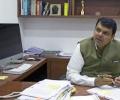
Maharashtra Chief Minister Devendra Fadnavis announced the state's ambition to become India's leader in quantum technology. The state plans to build a robust ecosystem, align with the National Quantum Mission, and train over 5,000 professionals, recognising AI, semiconductors, and quantum tech as key pillars for future growth and global competitiveness.

Former Chief Economic Adviser Krishnamurthy V Subramanian outlines India's strategy to become a USD 55 trillion economy by 2047. The plan hinges on leveraging its young demographic in AI, dominating sunrise sectors like space and defence tech, attracting FDI, and achieving sustained 8% GDP growth.
Keralam-based Genrobotics Innovations, known for its Bandicoot robots used in hazardous underground environments, has secured a project from ISRO's U R Rao Satellite Centre. The company will develop a high-precision articulated boom arm system for satellite missions, marking its entry into advanced aerospace engineering and contributing to India's commercial space programme.

Drone technology company ideaForge Technology has successfully raised Rs 500 crore through a Qualified Institutional Placement (QIP). The funding, which saw strong interest from domestic and international institutional investors, will be used to accelerate innovation, expand its product portfolio into combat drones and autonomous systems, and strengthen its working capital to meet growing demand in defence, homeland security, and civil sectors.
Drone technology company ideaForge Technology has successfully raised Rs 500 crore through a Qualified Institutional Placement (QIP). The funding, which saw strong interest from domestic and international institutional investors, will be used to accelerate innovation, expand its product portfolio into combat drones and autonomous systems, and strengthen its working capital to meet growing demand in defence, homeland security, and civil sectors.

Prime Minister Narendra Modi and Russian President Vladimir Putin held extensive discussions to strengthen bilateral trade, defence, and energy cooperation, while also addressing the ongoing Ukraine conflict and exploring avenues for peace and resolution, with Modi reiterating India's call for dialogue and diplomacy.

India's government is set to release its draft National Steel Policy for public consultation, aiming for over 600 million tonnes of steelmaking capacity and 500 million tonnes of consumption by 2047. The policy will also introduce a ~5,000-crore scheme to incentivise small steel producers for carbon emission reduction and address challenges like raw material availability and technological dependence.

Apple has removed the offline messaging app Bitchat from its India App Store following a demand from the Ministry of Electronics and Information Technology (MeitY). Developed by Jack Dorsey, Bitchat faced scrutiny under Section 69(A) of the IT Act, 2000, due to concerns about its potential misuse by anti-national elements and for evading lawful surveillance, especially during public disorder. This marks the second time the app has faced government action in India.

An Indian firm, Bharat Forge, and US defence major Pratt & Whitney Canada have announced a collaboration to develop India's high-altitude, long-endurance (HALE) unmanned aerial vehicle (UAV). This partnership will focus on integrating advanced turboprop engines into the DRDO-designed HALE UAV, bolstering India's indigenous defence capabilities under the Aatmanirbhar Bharat initiative. The collaboration aims to enhance India's strategic self-reliance in surveillance and reconnaissance technology.
Tata Projects has forged a strategic partnership with Canada-based MDS Aero Support Corporation to develop advanced aero-engine testing infrastructure in India. This collaboration combines Tata Projects' infrastructure capabilities with MDS Aero Support's global expertise in gas turbine engine testing, aiming to support India's rapidly growing aerospace and propulsion ecosystem.

The political confidence required to place high-end Japanese aircraft and personnel on Indian soil is itself a data point.
It indicates a level of trust that would have been difficult to imagine when India-Japan defence ties were largely symbolic, explains Varun Arya.
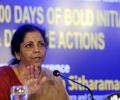
Union Finance Minister Nirmala Sitharaman has urged significant investment in AI infrastructure, semiconductors, and quantum technology, identifying them as India's next major growth frontiers. Speaking at an IIT Madras Alumni Association event, she emphasized the need to build hardware, skills, and institutional ecosystems to harness these technologies, countering perceptions that India is lagging in AI. Sitharaman also highlighted the potential for increased investment in defence production, particularly in unmanned systems and drones, stressing collaboration between academia and industry.

Prime Minister Narendra Modi has introduced a 'Sapta Dhara' (seven-stream) reform framework, aiming to propel India into a developed nation by 2047. This comprehensive plan focuses on key sectors including manufacturing, agro-food processing, technology, logistics, defence, green and blue economy, and soft power, leveraging the nation's youth potential.

The Indian Navy is enhancing its operational capabilities across all domains, including air, underwater, AI, and quantum technology, to become a multi-domain network force. Vice Chief of Naval Staff, Vice Admiral Ajay Kochhar, highlighted lessons from recent conflicts, the exploration of directed-energy weapon systems, and significant procurement plans, including 42 new platforms on order and RFPs issued for LPDs and next-generation frigates. The Navy's focus on indigenous innovation and technology absorption, guided by "scale, sophistication, speed, and spiral development," aims to meet evolving operational requirements and protect maritime interests, especially amidst ongoing global crises.
Britain's AI Minister, Kanishka Narayan, issued a strong warning on Monday about the growing risks posed by artificial intelligence to cyber defences. He highlighted the potential for serious consequences from autonomous AI systems and announced new government measures, including a 'National Cyber Action Plan', to bolster the UK's resilience against cyber-attacks.
Cisco Chairman and CEO Chuck Robbins stated that attempts to slow down AI development are futile. He emphasised that the primary focus should be on enhancing security and defensive measures to match AI's rapid advancement. Robbins also discussed the need for guardrails in AI model releases, the importance of cyber hygiene, and the balancing act between innovation and regulation, particularly for countries like India. He believes AI will not be a net job disruptor but will move people up the value chain.
The Indian Air Force (IAF) demonstrated 'Vayu UTtaM', an indigenously developed multi-mode Unmanned Traffic Management (UTM) system, at 'Dronathon 2026' in Pokhran. This ground-based system is designed to manage drone operations in congested airspace and identify rogue drones, with applications extending to critical infrastructure, civil aviation, and public safety. The event also saw the release of the 'IAF UAS Roadmap' to guide indigenous innovation in unmanned systems.
Indian firm Bharat Forge and US defence major Pratt & Whitney Canada have announced a collaboration to support the development of India's high-altitude, long-endurance (HALE) unmanned aerial vehicle. This partnership involves integrating advanced turboprop engines into a DRDO-designed UAV, bolstering India's indigenous defence capabilities under the Aatmanirbhar Bharat initiative.

State-run Hindustan Aeronautics Limited (HAL) has delivered LCA Tejas FOC twin-seater trainers and HTT-40 basic trainer aircraft to the Indian Air Force, and Dhruv Next Generation helicopters to Pawan Hans. This significant handover, attended by Defence Minister Rajnath Singh and Civil Aviation Minister K Rammohan Naidu, underscores India's progress towards self-reliance in aerospace, strengthening both military and civil aviation capabilities with indigenous platforms.

Specialised range taking shape in Andhra Pradesh, while West Bengal clears way for DRDO's new testing facility.

Industry experts advocate for India to develop its own artificial intelligence (AI) safety framework, distinct from US or EU models, to address unique challenges like deepfakes and cyberattacks. They call for a comprehensive commitment involving all stakeholders and a hybrid regulatory approach combining voluntary and binding measures, as the Indian government also considers new AI regulations.

Elon Musk, CEO of SpaceX, stated that Starlink's services in India must be affordable for widespread adoption and that competition would benefit consumers, despite potentially reducing Reliance Jio's profits. He criticised Reliance Jio as a 'de facto monopoly' in India, alleging that certain business conglomerates were blocking Starlink's entry.

The Chintan Shivir is expected to discuss the progress of government schemes, policy implementation, time management, inter-ministerial coordination, and public service delivery, among others.
The Indian Army has launched 'Bharat Rice', a superior-quality rice for defence forces, aimed at improving ration quality and logistics. This initiative, spearheaded by the Directorate General of Supplies and Transport, involves direct supply to Army Supply Depots, including remote areas, and an MoU with FCI for infrastructure utilisation during contingencies. Defence Minister Rajnath Singh highlighted its significance for soldier welfare, operational readiness, and national security, emphasising logistics as combat power.
The Automotive Research Association of India (ARAI) has launched comprehensive conformity assessment and certification services for drone manufacturers, aiming to streamline the type approval process for Unmanned Aerial Systems (UAS) in India. This initiative supports the rapidly expanding drone sector by ensuring design, quality, and performance meet evolving safety and airworthiness standards.
