
Mumbai terror attack accused Tahawwur Rana has moved an 'emergency application' with the United States Supreme Court against his extradition to India, claiming that he will be tortured there since he is a Muslim of Pakistani origin.
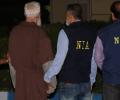
The National Investigation Agency (NIA) has begun questioning Tahawwur Hussain Rana, the mastermind behind the 2008 Mumbai terror attacks, to uncover the larger conspiracy behind the deadly strikes. Rana, who was extradited from the US, is being held at the NIA headquarters in New Delhi. The interrogation is focused on his possible connection with the Lashkar-e-Taiba (LeT) and his suspected links with the Pakistani spy agency Inter-Services Intelligence (ISI).
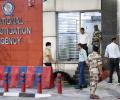
Tahawwur Hussain Rana, the mastermind behind the 2008 Mumbai terror attacks, has been taken into 18-day custody by the National Investigation Agency (NIA) in India. Rana was extradited from the United States after years of legal battles and will be questioned to unravel the complete conspiracy behind the attacks.
Tahawwur Hussain Rana, a Canadian national accused of involvement in the 2008 Mumbai terror attacks, has been extradited to India from the United States. Rana's interrogation is expected to shed light on the role of Pakistani state actors in the attacks, which claimed 166 lives. Indian authorities are particularly interested in his travels across India in the days leading up to the attacks, including visits to Hapur, Agra, Delhi, Kochi, Ahmedabad, and Mumbai. Rana's extradition follows a lengthy legal battle, with the US Supreme Court ultimately denying his application to challenge it. Rana is known to be associated with Pakistani-American terrorist David Coleman Headley, one of the main conspirators of the 26/11 attacks. The investigation into the Mumbai attacks has implicated senior members of terror outfits Lashkar-e-Taiba (LeT) and Harkat-ul Jihadi Islami (HuJI), as well as officials from Pakistan's Inter-Services Intelligence (ISI).

Tahawwur Rana, accused of involvement in the 2008 Mumbai terror attacks, is expected to be extradited to India from the United States soon. The US Supreme Court denied his last-ditch effort to stop his extradition, moving him closer to being handed over to Indian authorities. Rana's extradition is expected to help probe agencies expose the role of Pakistani state actors behind the attacks and shed new light on the investigation. He is associated with Pakistani-American terrorist David Coleman Headley, one of the main conspirators of the 26/11 attacks.

Pakistani-origin Canadian businessman Tahawwur Rana, a key accused in the 26/11 terror attacks case, stayed at a hotel in Mumbai's Powai area for two days in November 2008 ahead of the attacks, where he discussed about the crowded places in south Mumbai with a witness in the case, the police said on Tuesday.
Tahawwur Rana, accused in the 2008 Mumbai terror attacks, has been extradited to India after the US Supreme Court denied his last-ditch effort to avoid being sent back. Rana, a close associate of David Coleman Headley, another key conspirator in the attacks, was expected to be extradited "shortly" after his legal appeals failed. This decision comes after a multi-agency team from India traveled to the US to complete all necessary paperwork and legalities with the US authorities. Rana's extradition marks a significant development in the pursuit of justice for the victims of the Mumbai attacks.
Tahawwur Rana, accused in the 2008 Mumbai terror attacks, has renewed his application to the US Supreme Court seeking a stay of his extradition to India. The Supreme Court will hear the application next month. Rana, currently detained in Los Angeles, claims his extradition would violate US law and expose him to torture in India due to his health and Muslim background. The US government has denied these claims and authorized his surrender to India, citing the Extradition Treaty between the two countries. The Supreme Court's decision will determine if Rana will face justice in India or remain in the United States.
Tahawwur Hussain Rana, a Canadian national convicted in the United States for his role in the 2008 Mumbai terror attacks, has been extradited to India. Rana, a close associate of Pakistani-American terrorist David Coleman Headley, was involved in the conspiracy from 2005 onwards and assisted Headley in obtaining a visa for India. He is the third person to be sent on trial in India for the 26/11 attacks after Ajmal Kasab and Zabiuddin Ansari alias Abu Jundal. Rana's extradition comes after US President Donald Trump approved the request.
'The government has to explain (to the army, air force and navy chiefs) whether they want a punitive strike, a deep punitive strike, or whether they want limited war or an all-out war, will it be a circumscribed war or will it be a shallow attack along the border.'
Tahawwur Hussain Rana, a key accused in the 26/11 Mumbai terror attacks, was brought to India on Thursday after being "successfully extradited " from the US, the National Investigation Agency (NIA) said. The 64-year-old Canadian citizen of Pakistani origin landed in Delhi in a special plane on Thursday evening, ending days of speculation of when and how he will be extradited, officials said. The NIA said in a statement that it had secured the successful extradition after years of sustained and concerted efforts to bring to justice the key conspirator behind the 2008 mayhem that claimed 166 lives. Rana is accused of conspiring with David Coleman Headley alias Daood Gilani, and operatives of designated terrorist organisations Lashkar-e-Taiba (LeT) and Harkat-ul-Jihadi Islami (HUJI) along with other Pakistan-based co-conspirators, to carry out the the three-day terror siege of India's financial capital.

Tahawwur Hussain Rana, a Pakistan-born Canadian national and close associate of David Coleman Headley, is set to be extradited to India from the US. Rana was involved in the planning and execution of the 2008 Mumbai terror attacks, which killed 166 people, including six Americans. He assisted Headley in obtaining a visa for India, established a front company in Mumbai, and helped in reconnaissance of targets in Mumbai and New Delhi. Rana was convicted in the US for providing material support to Lashkar-e-Taiba (LeT) and sentenced to 14 years in prison. His extradition to India will allow authorities to question him about his involvement in the Mumbai attacks and potentially uncover new information about the role of Pakistani state actors.

The United States has approved the extradition of Tahawwur Rana, accused of involvement in the 2008 Mumbai terror attacks, to India. The decision was announced by President Donald Trump during a joint press conference with Prime Minister Narendra Modi in the White House. India is currently working on the logistics of Rana's surrender and extradition, with several final steps to be completed before he is sent back to India. The joint statement issued by India and the US during Prime Minister Modi's visit reaffirmed their commitment to fighting terrorism and eliminating terrorist safe havens. The leaders also called on Pakistan to bring to justice the perpetrators of the 26/11 Mumbai and Pathankot attacks. Rana, a Canadian national of Pakistani origin, is currently lodged at a metropolitan detention center in Los Angeles. He is associated with Pakistani-American terrorist David Coleman Headley, one of the main conspirators of the 26/11 attacks.

The Mumbai police on Monday submitted a chargesheet before a special court in Mumbai against Pakistani-origin Canadian businessman Tahawwur Rana for his involvement in the November 2008 terror attacks in the metropolis.

'As Rana is not an Indian citizen, our leverage on the US system -- whether it's their judiciary or the executive -- is very limited in that sense.'

Backed by a court order, India is expected seek extradition of Lashkar-e-Tayyiba operative David Coleman Headley and his accomplice Tawwahur Rana. But this is going to be an uphill task for investigators, reports Vicky Nanjappa.
In the fourth and concluding part of the series ProPublica's Sebastian Rotella talks about how Laskar-e-Tayiba operative David Coleman Headley was finally nabbed by United States law enforcement agencies, but only after he hoodwinked them for seven years. But the epilogue in the story is rather like the prologue: full of impunity and mystery
The United States Department of Justice on Thursday announced that a team of Indian investigators was afforded complete and unhindered access to Lashkar-e-Tayiba operative David Coleman Headley over a period of seven days.The department, in a statement, said, "As part of the cooperation and partnership between the United States and India in the fight against international terrorism, Indian law enforcement officials were provided direct access to interview David Headley.
The United States has put the case of David Coleman Headley, Mumbai terror attack suspect now languishing in a Chicago jail, as one of the key counter-terrorism cases on information sharing with its partners.
The arraignment for Pakistan-origin US national David Coleman Headley charged with criminal conspiracy in the 26/11 Mumbai attacks has been scheduled for December 9.

Pakistani-American David Coleman Headley, a Lashkar-e-Tayiba operative charged with conspiring in the 26/11 Mumbai terror strike, will plead guilty before a United States court on Thursday, five months after he was arrested by the Federal Bureau of Investigation.

In a huge setback to Tahawwur Hussain Rana, a United States court has ruled that the Pakistani-origin Canadian businessman could be extradited to India where is wanted for his involvement in the 2008 Mumbai terror attack carried out by Pakistan-based Lashkar-e-Taiba terrorists.
The Indian Consulate in Chicago said the papers related to issuance of visas to terror suspects David Coleman Headley and Tahawwur Rana had not gone missing and the 'relevant information' in this regard is available with the Indian government.
The detention hearing of terror suspect David Coleman Headley, arrested by the Federal Bureau of Ivestigation for plotting attacks in India at the behest of the Lashkar-e-Tayiba, scheduled for December 4 at a court in Chicago has been indefinitely deferred.
The key to the conspiracy hatched by David Headley and Tahawwur Rana may lie in Bangladesh and Pakistan.
'India has established probable cause to prosecute him for his role in terrorist attacks that resulted in 166 deaths and 239 injuries'
A federal United States court has allowed Pakistani-origin Canadian businessman Tahawwur Rana time till November 9 to file a motion against his extradition to India to face a trial in the 2008 Mumbai terror attack.
Intelligence sources tell Vicky Nanjappa/Rediff.com how investigators overlooked an important aspect of the 26/11 case. A key suspect, who helped Pakistani-American terrorist David Headley gather information for the 2008 Mumbai attacks, has never been captured.

Filing the Writ of habeas corpus through his attorney, Rana, 62, challenged his extradition by the Government of India. Rana's extradition would violate the United States-India extradition treaty in two respects, his attorney argued.
India on Wednesday requested the United States to provide it access to the 2008 Mumbai terror attacks accused David Coleman Headley and Tahawwur Hussain Rana, visiting External Affairs Minister S M Krishna said.
India has asked Morocco to extradite the estranged wife of David Coleman Headley, the alleged mastermind of November 2008 Mumbai terror attack, as she is believed to have information and answers to key questions related to the incident.
Even after Lashkar-e-Tayiba's David Coleman Headley identified his Inter-Services Intelligence handler Major Iqbal as Chaudhery Khan, mystery continues to shroud his presence. Hoping to get another access to Headley, the National Investigation Agency on the 26/11 money trail, is positive of hunting down the major. Vicky Nanjappa reports.
Was 26/11 conspirator David Headley working for CIA, ISI or LeT? Did he know more about the Ishrat Jahan module? Five years since the terror attacks and we are yet to find clear answers on the many mysteries regarding this man. Vicky Nanjappa reports
'We will continue to probe the Fahim Ansari angle since there is one stark similarity between him and Headley. Both men were in touch with the man called Sajid Mir.'
Sebastian Rotella, the award-winning reporter relentlessly exposing the David Headley case, in an exclusive interview with Rediff.com's Vicky Nanjappa.
David Headley dominated the discussions between the CIA and their Indian counterparts on Monday.
On the fourth anniversary of 26/11 Mumbai terror strike, US Under Secretary for Political Affairs Wendy Sherman says Lashkar-e-Tayiba operative David Coleman Headley's extradition to India is under consideration in an exclusive interview with CNN-IBN
When Tahawwur Rana's defence attorneys cross-examine David Headley this week, it's possible that they will severely damage him, or that he will self-destruct on the stand. Investigative journalist Steven Rotella reports for ProPublica.org on the Lashkar operative's credibility problems
Speaking at a hearing of the Foreign Relations Committee, Maryland Democrat Ben Cardin, a member of the Senate Foreign Relations Committee, said: "There are mixed signals here that are very, very troubling and that the United States needs to be able to have alternatives for carrying out its foreign policy in that region."
While the Lashkar-e-Tayiba leadership made plans for fool-proof attacks in Mumbai, the ten men involved in the carnage made a number of mistakes thus leaving crucial clues behind for Indian intelligence agencies, according to court documents.
