
The pre-owned vehicles arm of the Mahindra Group plans to add 30 outlets in a few days taking the total number to 1,000.

Indian economy is likely to rebound with an 8.9 per cent growth in the fiscal year beginning April 2021 after economic activity showed significant improvement in the last quarter, IHS Markit said on Friday. The National Statistical Organisation (NSO) on Thursday predicted that the economy will contract 7.7 per cent in the current financial year ending in March, the worst performance in four decades.

The five southern states source 10-15 per cent of their revenue from excise duty on liquor but account for nearly half of the total consumption, says a report. The financial position of these states is precarious as the coronavirus lockdown completely dried up this crucial liquidity tap for them in April.

The duo bought additional shares in pharmaceutical companies Lupin and Jubilant Life Sciences, along with Agro Tech Foods and NCC during Q2FY21

Brent crude oil price surged 4 per cent on Friday, following tension between Iran and the US. Airlines, however, have been unable to pass on the price increase to customers due to the soft demand.

The Rs 2 a litre cut in petrol and Re 1 per litre reduction in diesel prices, announced last week, will increase the loss on auto fuel sales by Rs 300 crore (Rs 3 billion), Crisil Research has said.

Reliance Retail would be exposed to implementation and execution risks in its expansion plans.

With RIL supplying about 47 per cent of the domestic petcoke production, current dynamics are bound to change.

Here's how to get high returns from equities...
Arghya Banerjee, founder of The Levelfield School in Suri, West Bengal, on why he quit a high-flying job to teach India's young.

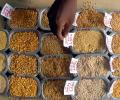
This is not the 1st time dal prices have gone over the roof
Core inflation, a measure of demand-side pressure on prices also rose sharply in March.

Overall, the credit profiles of players will be supported by healthy balance sheets and liquidity. Prudence in capital and development expenditure, efficient working-capital management, and recent equity raising will help sustain credit metrics in FY22.
The specific characteristics of the Indian growth slowdown are poised, according to some observers, to stall a major structural change to the Indian economy.
As domestic opportunities diminish, investors look abroad for these projects.

The biggest challenge is crude oil's sustained rally - it is nearing $80 a barrel - stoking inflationary pressures and consequent price hikes in the sector.
To translate into more spending on education, health, and nutritious food.
CRISIL predicts no more than 6.5 per cent yearly from now till FY19, and only with a stable and decisive government; predicts problems in job generation, poverty and demand.

Compared to equity funds, debt funds are lower risk profile and are usually suitable for investors for very short term.

The first to see price hikes will be soaps. In the past six months, domestic palm oil prices have increased by 46 per cent. Palm oil is a key input going into soaps.

Lenders can now initiate recovery proceedings since the SC has lifted the standstill on asset classification, which protected stressed accounts from slipping into NPAs.

The capital markets watchdog had set up an expert panel in March to suggest new measures to regulate insider trading.

Currently, the investor and his family's net worth in listed firms stands at Rs 8,517 crore, compared to Rs 8,388 crore as of March 31, 2020.

Most analysts expect growth in the sales of Nifty-50 companies to decelerate, albeit marginally, in the quarter ended December compared to the corresponding period of 2013-14, with metals and real estate companies pulling down earnings.

The earnings are, however, expected to be down around 2 per cent on a sequential basis due to pent-up demand getting exhausted and the adverse impact of rising metals and energy prices on consumer goods and manufacturing companies.
Of the total 381 summer placement offers at the Indian Institute of Management Ahmedabad, 24.4 per cent roles were offered by financial and banking services.
Following the footsteps of ICRA and CRISIL on rating corporate governance, credit rating agency Fitch will also take up such an exercise soon.

On the flipside, since 60-70 per cent of the costs pertain to raw material, which are mostly imported, currency fluctuation is a key risk for the segment.
Backed by upsurge in stock prices, diversified open-ended equity schemes of mutual funds posted an average 19 per cent return for the one year ended June 2003, according to Crisil's mutual fund ranking.\n\n\n\n

Balanced funds are generally equity-oriented with at least 65 per cent exposure to equities and the rest of the corpus invested in fixed income securities
Residential property prices in Mumbai are likely to fall by 10 per cent this year.

Long-term funding was a requirement for infrastructure projects, and asset-liability mismatch in the banking system, impacts the access to finance for infrastructure projects. One of the key challenges would, however, be to get private sector back into investing.

Lenders have reported a surge in their bad loans in the six months to March after an asset quality review ordered by the central bank.
Charity donations have suffered as the uber-rich are preferring to maintain their opulent lifestyles over philanthropy in the gloomy economic environment, a specially commissioned report to "decode" the high networth families said.

By 2013, the Chinese economy had become 2.7 times India's.
Clearly, the domestic market has taken sharp knocks in April, which is likely to be visible in May as well, said analysts tracking the market, as FMCG companies are grappling with improving capacity utilisation and dealing with labour shortage.
