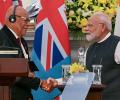
Fijian Prime Minister Sitiveni Rabuka discussed US tariffs on Indian goods with Prime Minister Narendra Modi, noting that "somebody is not very happy with you." The discussion occurred during Rabuka's visit to India to strengthen ties.
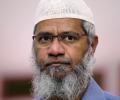
At an interactive session at the Indian Council of World Affairs in New Delhi, Ibrahim also said that the issue shouldn't deter the two countries from enhancing bilateral relations.

Being with Russia means being on the wrong side of history and Kyiv wants closer and deeper relations with New Delhi, Ukraine's First Deputy Foreign Minister Emine Dzhaparova said on Tuesday while suggesting that the Russian invasion has lessons for countries with 'difficult neighbours'.

The India-Japan global partnership is based on shared democratic values and respect for the rule of law and promotes peace and stability in the Indo-Pacific, Prime Minister Narendra Modi said on Monday after holding wide-ranging talks with his Japanese counterpart Fumio Kishida.

On Monday, Korosi met Prime Minister Narendra Modi, External Affairs Minister S Jaishankar and Petroleum and Natural Gas Minister Hardeep Singh Puri with an overall focus on pressing global issues including those related to the UN.

We present the translation of the full speech given by Chiese Prime Minister Li Keqiang at the Indian Council of World Affairs in New Delhi on Tuesday.
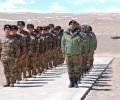
Chinese Foreign Ministry spokesman Wang Wenbin said this at his media briefing as he parried questions on India's assertion that consensus reached by the leaders on maintaining peace along the border cannot be swept under the carpet.

In an address at the Indian Council of World Affairs, he said Nepal wants to take the relations with India to the next level, but at the same time added: "We should be mindful equally that healthy relations require continuous nurturing, creative thinking, promptness and readiness to understand each other in changing dynamics."

Nepal attaches 'great importance' to its relations with India which are based on mutual respect, goodwill, understanding and cooperation, Prime Minister Madhav Kumar Nepal has said.
Tharoor talked to Dr Singh over phone on Sunday morning and explained that the media had misinterpreted his comments, which he had made as chairman of a seminar at the Indian Council of World Affairs on Friday.
'Nobody ever said that moving from US-India estrangement to partnership would be easy. Constant engagement at all levels on disparate issues is necessary to build a strong friendship that is in the interests of both nations.'
The Union Cabinet today approved the release of an additional instalment of Dearness Allowance at 6 per cent to central government employees and dearness relief to pensioners. The allowance will be released with effect from January 1, 2008. The DA rate now stands at 47 per cent.
Lauding India for successfully avoiding a "clash of civilisations", Fontelles said the teachings of Mahatma Gandhi could play an important role in this regard.
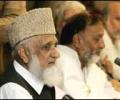

It is the first highest level face-to-face meeting between the two sides after the border row escalated in eastern Ladakh in early May.

He also said it was important that even during the difficult moments of this "crisis" India has been communicating and engaging with China.
'Terrorism continues to be the overwhelming threat to security and stability in the SCO region and therefore Dr Jaishankar strongly pitched for 'collective action',' observes Dr Rajaram Panda.
Afghan President Dr Mohammad Ashraf Ghani will be paying a three-day state visit to India beginning on Monday, during which he would meet Prime Minister Narendra Modi and attend delegation-level talks.
Iran's decision to keep India out and welcome China to the scene is a huge strategic setback for India, observes Dr Rajaram Panda.
'What if Kim is alive as the latest reappearance suggests, but unable to rule?' 'Will his sister be installed as the leader to continue with the Kims's hereditary dynasty that began with the present ruler's grandfather?' asks Dr Rajaram Panda.
United Nations Secretary General Ban Ki-moon will meet India's top leadership and Nobel Peace Laureate Kailash Satyarthi when he visits the country later this week, his spokesperson said on Wednesday.

'India-China economic ties are likely to take a hit in the wake of the new situation, but that also provides India with a new opportunity to strengthen its manufacturing base,' points out Dr Rajaram Panda.

The India-Japan joint naval exercises are a strategic signal for China, observes Dr Rajaram Panda.
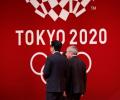
'The Olympics postponement may not be a political body blow to Abe Shinzo, but it is no denying that the economic cost of the postponement of the Games will be heavy for Japan,' observes Dr Rajaram Panda.

'Both India and Japan can find themselves in a win-win situation if they draw some lessons from each other's strengths,' says Dr Rajaram Panda.
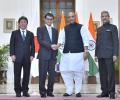
The India-Japan 2+2 dialogue added strategic heft to the special relationship in the wake of growing Chinese assertiveness on regional affairs, points out Dr Rajaram Panda.

It is often said that the India-Indonesia relationship is overshadowed by mutual neglect.

'Antonio Guterres takes over as the UN secretary-general with tremendous goodwill as the process of his election was without the usual horse trading and compromises.' 'We have every reason to believe that he will be sensitive to Indian positions,' says Ambassador T P Sreenivasan.
Modi's Vietnam visit is timely and crucial for several reasons. First, Vietnam lies at the heart of India's vision for Southeast Asia as also its 'Act East' policy. India also wants to boost its defence exports to friendly countries. And it is looking to increase trade between the two countries will now is only $7.83 billion, says Dr Rahul Mishra.

President Pranab Mukherjee's recent visit to the Pacific Island nation is path-breaking, but much more needs to be done, says Dr Rahul Mishra.

India is no longer shying away from playing a role on the regional and international stages and is willing to don a bigger role in regional politics. It is showing traits of a responsible stakeholder in the regional security dynamics, says Dr Rahul Mishra.

As India strives to make its Act East Policy a comprehensive politico-diplomatic and economic success, Brunei gains more salience, says Dr Rahul Mishra.

The two governments have already set a target of increasing bilateral trade in goods and services to $500 billion.
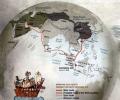
China's desire to have India as part of its ambitious Maritime Silk Route makes strategic sense for both nations. However, it would involve substantive assurances from Beijing, says Dr Rahul Mishra
Has the Modi government ensured that the MEA keeps abreast of the times, asks Ambassador Vivek Katju.

His sartorial taste is not something he acquired suddenly as the chief minister of the prime minister. His "god-given" dress sense is like his politics: inventive, imaginative if slightly unconventional, often loud. It goes well with his oratory, robust persona and penchant for coining terms, says Mahendra Ved.

Prime Minister Narendra Modi's visit to South Korea is considered essential in strengthening defence ties, enhancing economic cooperation and forging cultural ties between the two countries, says Dr Rahul Mishra
 © 2026 Rediff.com - Advertise with us - Disclaimer - Privacy Policy - Sitemap - Feedback - About us - Terms of use - Grievances