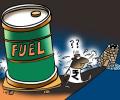
The windfall tax on oil produced within India and fuel exported overseas will make up for more than three-fourths of the revenue that the government lost when it cut excise duty on petrol and diesel to cool soaring inflation, industry sources said. India on July 1 joined a select league of nations globally that have taxed windfall gains accruing to oil companies from soaring energy prices. The government slapped a Rs 6 per litre tax on the export of petrol and jet fuel (ATF) and Rs 13 a litre on the export of diesel effective July 1. Additionally, a Rs 23,250 per tonne tax was levied on crude oil produced domestically.

Maruti Ciaz and Ertiga are exempt from the infrastructure cess and so, there is no change in the prices of these models.

The Finance Minister proposed a cess of 1 per cent on small petrol, LPG and CNG cars, 2.5 per cent on diesel cars of certain capacity.

The Supreme Court Wednesday asked the Centre and the NCR states to continue implementing for few days the measures to ensure improvement in air quality, saying that preventive actions are needed in anticipation to curb pollution even as it wondered what signals are being sent to the world.

Dissenting states including Chhattisgarh and Kerala, have made it clear they are in no mood to relent. They want the Centre to borrow the entire Rs 2.35 trillion this fiscal citing bleak fiscal position.
In a statement, the CBDT, which is the apex policy making body for direct tax policies, said it has never asked IRS Association or these officers to prepare such a report and no permission was sought by them before making the report public. 'It is unequivocally stated that CBDT never asked IRS Association or these officers to prepare such a report.

Most say they will review their Make in India plans as prices may top pre-GST level

Inputs by the Petroleum Ministry were found among stolen documents.

Currently, domestic supplies and commercial imports of vaccines attract a 5 per cent Goods and Services Tax, while COVID drugs and oxygen concentrators attract a 12 per cent levy.

'I have been advising investors since the last couple of months to at least take their capital out.' 'Most of the people have made 50-60 per cent in the market, if not more, they must at least take their capital out.'

Petrol attracts a total excise duty of Rs 17.46 per litre.

Facing a deepening slowdown, the auto sector is pinning hopes on the GST Council meeting on September 20 for a rate cut from 28 per cent to 18 per cent. However, states including Bihar, West Bengal, Kerala, and Punjab are of the view that the slowdown in the auto sector is not because of the GST rate but structural issues in the economy.

If the protected growth in GST revenue is reduced to 10 per cent, the Centre would save more than Rs 25,000 crore in 2020-21 if none of the states show any revenue growth. This would nearly amount to 0.1 per cent of the gross fiscal deficit and help the government in avoiding fiscal slippage to some extent in subsequent years.

Those travelling in AC coaches of trains will now have to shell out more from Wednesday , with the government deciding to impose 'Krishi Kalyan' cess of 0.5 per cent on service tax.

Highlights of the announcements made by Finance Minister Nirmala Sitharaman on the reduction in corporate tax and other fiscal relief measures for the economy to promote growth and investment.
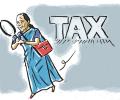
'When you need to revive the economy, when you need to revive aggregate demand, you cut taxes.' 'But what's this government doing?' 'It's increasing taxes for the middle class and the vast majority of the poor on fuel, which has a ratchet effect on most other products.'

During the month, the GST revenue from domestic transactions witnessed a growth of 16 per cent as compared to the year-ago period.

The Budget, to be presented on February 1, is likely to be less worried about fiscal deficit and will be focused more on nursing the fragile growth, according to a Wall Street brokerage report. Bank of America Securities India expects the budget to peg "fiscal deficit at a high 5 per cent of GDP for FY22 and 7.2 per cent for FY21, as it is likely to step up capex, recap public sector banks, push asset sales to break government monopolies, offer sops for real estate, tax cuts for lower income groups and creation of a bad bank". Its house economists expect these spends to be funded by debt and partly by imposing a cess on high income groups and also by some non-fiscal measures like tapping the central bank's revaluation reserves and bank recapitalisation and infra bonds.

Adhiraj Parthasarathy, a professional from Telangana, tells Rediff.com's A Ganesh Nadar what he would like to see in Finance Minister Nirmala Sitharaman's Budget.

GST collections in March slipped below the psychological Rs 1 lakh crore-mark for the first time in four months to Rs 97,597 crore as the Covid-19 lockdown that shut most businesses compounded tax collection woes in an already sluggish economy. Goods and Services Tax (GST) mop-up in March recorded a 8.4 per cent decline over March 2019 collection of Rs 1.06 lakh crore. The collections were lower on account of dip in revenues from domestic transactions as well as imports.
With a view to keeping inflation under check, essential items including food, which presently constitute roughly half of the consumer inflation basket, will be taxed at zero rate.

'The CEA suggested that could be as high as 19 per cent.'

India's appetite for imported crude oil may wane in fiscal year (FY) 2023 from record levels in pre-pandemic 2019-20 fiscal as higher oil prices, a spillover from the conflict in Ukraine, and increasing use of biofuels affect domestic demand for petroleum products. Brent crude surged to a nine-year high, shy of a July 2008 record $147.50 a barrel, before declining to around $100 a barrel - but the volatility in commodity rates will slow global economic growth and use of fuels. Demand for all oil products may grow at only 2-3 per cent in FY23, slower than the current fiscal and nearly half the 5.5 per cent growth estimated by the petroleum ministry, according to industry officials.
India's Goods and Services Tax (GST) collection surged to Rs 1.30 lakh crore in October, the second highest since its implementation in July 2017, indicating economic recovery from the COVID-19 pandemic and impact of festive demand, a finance ministry statement said on Monday. The highest GST collection of Rs 1.41 lakh crore was recorded in April 2021. This is the fourth time in a row when the GST collection was upwards of Rs 1 lakh crore. The collection from GST was Rs 1.17 lakh crore in September, 2021.

GST collections touched a record high of over Rs 1.15 lakh crore in December, reflecting festive demand and reflating economy. The gross GST revenue collected in the month of December 2020 is Rs 115,174 crore and is the highest since the introduction of Goods and Services Tax from July 1, 2017, the finance ministry said in a statement.

In order to check the abnormal surge in edible oil prices during Diwali festivities, as many as 18 states are in the process of imposing stock holding limits on oilseeds and edible oils after being empowered by the Centre for doing so. Of the 18 states that are in the process of imposing stock limit on my edible oils apart from UP, include Rajasthan, Gujarat, Maharashtra, Odisha, Kerala, Jharkhand, Chhattisgarh, Andhra Pradesh, Tamil Nadu, Tripura and the Union Territory of Chandigarh. Of the 18, Uttar Pradesh, has already imposed stock limits on edible oils, the Centre was informed with as many as 23 states to discuss ways and means to ensure further easing of edible oil prices.

The stock was the worst hit among Sensex and Nifty components.

Assocham president Niranjan Hiranandani said his talks with government officials showed dues to industry and states were pending in the form of refunds of income tax, value-added tax, and GST, and compensation, payments to discoms in the power sector, fertiliser subsidies, etc.

States should have enough time. We still do not know the rules. There are a lot of operational difficulties, says Jammu and Kashmir Finance Minister Haseeb Drabu.
Mop up grows 10% y-o-y at Rs 1.05 trillion, almost equal to levels in February before a nationwide lockdown to contain the coronavirus pandemic

Kerala has seen one of the worst floods in its history during this monsoon. From August 8 to 20, nearly 223 people have lost their lives, 33 are missing and around 1.2 million individuals from 3,02,441 families are in 3,941 relief camps. Initial losses are estimated to be around Rs 200 billion (Rs 20,000 crore). With the rescue measures in its last leg, the Kerala government is looking at raising funds to rebuild the state. In an interaction with Gireesh Babu and T E Narasimhan, Kerala Finance Minister T M Thomas Isaac says he has a three-pronged strategy to raise funds. Edited Excerpts.

Aerated drinks, mineral water, travel packages, coaching classes and beauty parlour services might also cost more

We have not suffered such huge price shocks across so many basic commodities, at the same time, in decades. Has the inflationary impact of all this been factored into stock prices as yet, asks Debashis Basu.
Revenue from Goods and Services Tax (GST) stood at over Rs 1.04 lakh crore in November as against Rs 1.05 lakh crore collected in the previous month, the Finance Ministry said in a statement. This is the second straight month in the current fiscal when GST revenue has topped Rs 1 lakh crore. The collection in November 2020 is 1.4 per cent higher than in November 2019 when the GST mop-up was Rs 103,491 crore.

Cars and two-wheelers attract 28% GST and a cess in the range of 3-22%, taking the effective tax rate to up to 50%.

Experts say, these leave many matters to the discretionary powers of bureaucrats, rather than providing them explicitly in the rules.

The lion's share of the amount -- Rs 1,003 crore (till November 10) -- comes from an Environment Compensation Charge (ECC) imposed by the Supreme Court in 2015 on trucks entering Delhi while the rest is made up of cess on every litre of diesel sold, in effect since 2008.

Mercedes-Benz India, BMW India and Audi India have lined up over 50 new model launches as they seek to recoup previous year's loss in volumes, reports Shally Seth Mohile.

This is a moment when the leaders at the Centre and states must show true leadership for the sake of the country. And it is the top political leaders, not attorney generals or bureaucrats, who should be sitting together and settling this thorny issue of compensation, says Arvind Subramanian, former Chief Economic Adviser to the Government of India.

From real estate to metals, what Sitharaman's Budget has in store.
 © 2026 Rediff.com - Investor Information - Advertise with us - Disclaimer - Privacy Policy - Sitemap - Feedback - About us - Terms of use - Grievances