
Eminent virologist Shahid Jameel COVID-19 cases in the second wave also won't come down in as steady a fashion as they did after the first wave.

Unless public health is prioritised over swift re-opening, the chances are that a third wave will hit India sooner than we would like.
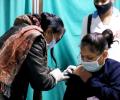
'Ideally, the efficacy data of all the trials should be there in the public domain, and as soon as possible.' 'It is difficult to understand the reason behind the authorisation.'
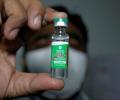
Those who have recovered from COVID-19 respond faster to the Covishield vaccine and reach high antibody levels, says a study, leading to hopes that they may not need a second dose and therefore help widen India's corona immunisation cover.

Based on this price, state governments, private hospitals, industrial establishments, etc would be able to procure vaccine doses from the manufacturers.
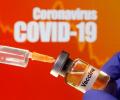
While there has been no commitment from the government on the procurement of vaccines, initial volumes, or distribution plans, there is a likelihood that the low interest loans may be made available to these players only when the time to scale up manufacturing arises.

Bill Gates specifically complimented India's Aadhaar identity system and the country's performance in the financial services and pharma sectors.
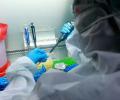
ICMR says it is following all globally accepted norms to fast-track vaccine and wants to 'cut red tape'.

The NTAGI has also stated that those having laboratory test proven SARS-CoV-2 illness should defer COVID-19 vaccination for six months after recovery, the sources said.

The government is considering setting up air freight stations to enable direct movement of vaccines from pharmaceutical factories to the aircraft.
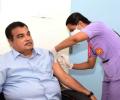
The Union government's role and the prices announced by the vaccine makers raises far too many disquieting questions, observes Prosenjit Datta.

A total of 3,006 session sites across all states and union territories will be virtually connected during the launch at 10.30 am by Prime Minister Narendra Modi and around 100 beneficiaries will be vaccinated at each session site.

Prime Minister Narendra Modi will flag off the first phase of the pan India roll-out of COVID-19 vaccination drive at 10.30 am via video conferencing.

The pandemic has brutally highlighted the inadequacy of India's administrative systems. And, the government has demonstrated its culpable inability to speed up vaccination in a timely manner, says Jaimini Bhagwati.

Experts said attempts from China have increased in the last year, which further amplified after the Indian government banned Chinese applications post the Galwan clash.
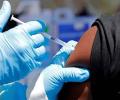
Addressing a press briefing, Union Health Secretary Rajesh Bhushan said healthcare workers and frontline workers need not register themselves as their database has been populated on to the Co-WIN vaccine delivery management system in a bulk manner.

The Oxford vaccine, which also has a tie-up with the Serum Institute of India, was first administered to Brian Pinker, an 82-year-old Oxford-born dialysis patient. Pinker is among the first to be vaccinated by the Oxford University Hospital's (OUH) chief nurse, hailed as a major milestone in the phased vaccination programme being undertaken by the National Health Service (NHS).

The health ID will contain information about medical data, prescriptions and diagnostic reports and summaries of previous discharge from hospitals for ailments. The mission is expected to bring efficiency and transparency in healthcare services in the country.

For vaccination, online registration is mandatory. Thereafter, eligible beneficiaries will be informed on their registered mobile number about the nearest vaccination facility, and the date and time of vaccination.
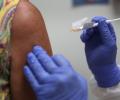
The ministry further stated that it was advisable to receive a complete schedule of the anti-coronavirus vaccine irrespective of past history of infection with COVID-19 as this will help in developing a strong immune response against the disease.
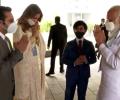
The PM's visit would signal a strong intent towards making sure India becomes a beneficiary as vaccines become a massively traded commodity in the coming years.

You need, first of all, to figure out how we messed it all up so badly. You need to fix accountability. None of that is happening, says Vir Sanghvi.
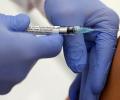
With final preparations underway and the vaccine set to arrive in the national capital in the next couple of days, Rohit Datta, who was the first person to be diagnosed with coronavirus infection on March 1, said "it feels surreal".
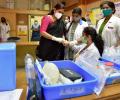
The first nationwide mock drill was held on January 2 which, the health ministry said, helped to iron out any glitches in the final execution and further refinement of the operational procedures.

The average rate of COVID-19 vaccination in the country has been 10.8 million per week. At that rate, it will take India till December 2024 to complete two billion doses.
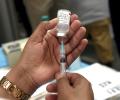
The second phase of Covid-19 vaccination in India will begin from March ,1 in which people above 60 years of age and those above 45 years of age with comorbidities will be vaccinated, Union Minister Prakash Javadekar said on Wednesday.

'Whenever you roll out: effectiveness is important, operational logistics are important, side effects are important and vaccine hesitancy is important.'

If the government had paid enough to begin with, or if it had made serious advance purchase commitments that allowed the vaccine producers to mobilise necessary investment, then it is possible to imagine more free or subsidised vaccines such as are available in developed economies, asserts Mihir S Sharma.

'The future looks quite bleak unless we ramp up testing and start vaccinating on a war footing.'
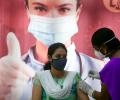
'I'll give it to the vaccine manufacturers without guarantees, take the payment in advance and give me the supplies.' 'The moment you give me one lot of supply, I'll give you more.'

'The prioritisation of groups for COVID-19 vaccine shall be based on two key considerations -- occupational hazard and risk of exposure to infection, and the risk of developing severe disease and increased mortality'

The Johnson and Johnson and Sputnik vaccines should be approved now, as should the Pfizer and Moderna ones, suggests Naushad Forbes. Leave it to the companies to figure out how to put in place the right chilling infrastructure. Don't let a lack of approvals deprive the country of availability, suggests Naushad Forbes.

After healthcare and frontline workers, priority will be given to those above 50 years of age and the under-50 population groups with co-morbidities numbering around 27 crore, it added.

Maharashtra and Punjab, which are recording a surge in new COVID-19 cases, tightened curbs on Friday and the chief minister of the western state said lockdown is an option, as India added close to 40,000 cases in the biggest daily increase in nearly four months.

Students who have received admission to foreign universities are struggling with unexpected delays, additional living costs and scarcity of vaccine supplies.
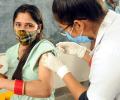
'The vaccine policy should be such that all people should get the vaccine free.'

India's willingness to play a big role in the manufacturing and to allow some of those vaccines to go to other developing countries will be an absolutely critical part of containing the pandemic, said Gates.

'It is absolutely important for us to continue to message to people that they must wear masks, keep physical distancing, as much as is practically possible, at work or at home.'

More than 2 million people have been diagnosed with coronavirus across the world, and the pharmaceutical industry is pulling out all stops to find potential treatments and vaccines for the global pandemic. According to the World Health Organization, there are now more than 70 potential vaccines under evelopment, with some already in clinical trials.

To build one's political and ideological arguments on the dead bodies piling up outside our crematoriums is despicable and breaches the basic tenet of human civility, argues Vivek Gumaste.
 © 2026 Rediff.com - Advertise with us - Disclaimer - Privacy Policy - Sitemap - Feedback - About us - Terms of use - Grievances