
'There were assurances that Jaish-e-Mohammad was being reined in as was the Lashkar-e-Tayiba, but Pakistan's security forces could not risk opening too many dangerous new fronts,' notes former foreign secretary Ambassador Shyam Saran, who has just returned from a visit to Lahore.

Pakistan, which has propped up the new Taliban leadership, would be keen to use its influence over the group to neutralise India's presence in the region.

'The two NSAs, who have been mandated to address mutual concerns on terrorism, will need to devise credible and irreversible measures to see that the likes of Hafiz Saeed and Masood Azhar do not ever get a free hand to run riot again,' says Ambassador G Parthasarathy, India's former high commissioner in Pakistan.
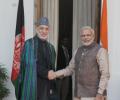
Security will be a consideration, as would protocol, but given Modi's penchant for the unconventional, it should not come as a surprise if he indeed decides to attend the ceremony in Kabul, says Ramesh Ramachandran.

'The danger today is that out of sheer fatigue and exasperation, the US might cut loose and exit from Afghanistan leaving it to the region to cope with the debris, which it is ill-equipped to handle,' says Ambassador M K Bhadrakumar.
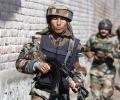
'After General Raheel Sharif took on the Tehrik-e-Taliban Pakistan, some sections of the military establishment may have felt unease as to whether the crackdown could be extended against friendlier 'non-State' actors like the Lashkar-e-Tayiba.'

'The public has unfair expectations from Mrs Swaraj who is in Islamabad primarily for the Heart of Asia Conference. To restore India's position among stakeholders on Afghanistan is a fair one but to expect her to do more on the Indo-Pak front without requisite preparatory work is unrealistic.'
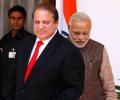
The government has returned to talks with Pakistan, but can it withstand pressure from a jingoistic press and a rabidly nationalistic social media.

A grieving Pakistan's policy shift towards the Taliban has comes at a great cost, says Shahzad Raza.
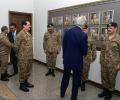
'Both India and Pakistan are now, for the first time in history, very closely allied and connected with the US -- economically and politically.'

Images of the events that shaped the world in March.
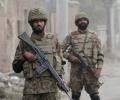
India must watch for signs after Peshawar that Pakistan is waking up to the dangers of Islamism, muses Ajai Shukla

A list of all the foreign visits taken up by PM Narendra Modi this year and their outcomes.

'What should worry India and which needs to be expressed is Russia's simultaneous proximity to both China and Pakistan from a strategic angle. That hasn't happened ever before,' says Lieutenant General Syed Ata Hasnain (retd).

'Despite almost $30 billion of funding since 2001, all the US reaps today is unmitigated hostility of a Pakistan emboldened to flaunt its China card.' 'How can the US give credence to any offers from Pakistan, which has trotted out the standard alibi of non-State actors time and again, including dreaded terror outfits being out of State control, Pakistan itself being a victim and so forth?'

We take a look at Time magazines top world leaders.

'If the US-Pakistan relationship continues to suffer, Pakistan may feel it has less to lose and decide that it need not keep a leash on LeT in order to appease America.' 'A tougher US policy toward Pakistan could lead to an emboldened and strengthened LeT and JeM, resulting in more terrorist attacks in India.'
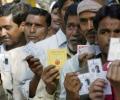
Indonesia, Turkey and Afghanistan also see important polls in the seven short weeks between end-March and mid-May, says Shankar Acharya
New Delhi and Beijing are the only two regional capitals that have commented on US President Donald Trump's speech on August 21 outlining the way forward in Afghanistan. The Indian foreign ministry statement was effusive in praise, while the Chinese statement has been one of cautious and guarded hope. Delhi has identified itself with Trump's Afghan strategy, whereas the Chinese stance is calibrated -- observant and objective, keeping a distance, says Ambassador M K Bhadrakumar.

'The ISI has given a stunning display of its capacity to do with impunity what it likes within Kabul. Incensed over the triumphalism of the hardliners in Kabul, the ISI has hit out; it is a typical ISI reflex action that Indians are familiar with,' says Ambassador M K Bhadrakumar.

'India has to judge what Pakistan says to us, not what they say to a domestic audience,' a source tells Sheela Bhatt/Rediff.com, explaining why India-Pakistan talks remain on track despite discordant noises from across the border.

The developments in Af-Pak region, particularly the fall out of Pak political paralysis, would make President Xi Jinping's task a little more complicated, says Colonel R Hariharan.

'It was a mission undertaken in darkness in every sense -- literally, because Afghanistan had no electricity at that time; and, metaphorically because Delhi historically dealt only with the Pashtuns of Afghanistan and the foreign ministry's vast archives had nothing to offer on the culture and politics of the northern tribes in the Hindu Kush.'

'Whether it's investments in Kashmir, building naval facilities, or selling top-of-the-range military equipment, Pakistan could well benefit more under Xi's watch.' 'Do Chinese concerns about the 'Islamisation' of Pakistan give it pause about how quickly to move forward with security and economic projects? At the moment the indication is quite the opposite: China is doubling down on its support to Pakistan, partly because of its fears about where the country is headed.'
 © 2026 Rediff.com - Investor Information - Advertise with us - Disclaimer - Privacy Policy - Sitemap - Feedback - About us - Terms of use - Grievances