
Aditya-L1, the first space-based Indian observatory to study the Sun, is getting ready for its launch soon, ISRO said on Monday.
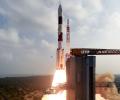
The Indian Space Research Organisation (ISRO) is all set to make its maiden commercial launch of 36 broadband communication satellites on board the space agency's heaviest rocket LVM3-M2, the countdown for which began early on Saturday at Sriharikota spaceport in Andhra Pradesh.

Here is a glimpse of the journey of India's third lunar exploration venture has taken so far.

The Lagrange point 1 (L1) of the Sun-Earth system is about 1.5 million km from the Earth. It is about one per cent of the total distance between the Earth and the Sun.

The ISRO on Sunday scripted yet another history after its LVM3 rocket successfully placed 36 satellites of United Kingdom-based OneWeb group company into intended orbits.

Aditya-L1 is the first Indian space-based observatory that will study the Sun from a halo orbit around the first Sun-Earth Lagrangian point (L1), which is located roughly 1.5 million km from the Earth.
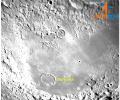
If any factor regarding the lander module appears unfavourable, then the landing will be shifted to August 27, said the Space Applications Centre-ISRO about Chandrayaan-3 on Monday.

The polar satellite launch vehicle's 52nd mission is scheduled for lift-off at 15.41 hours on Thursday from the second launch pad at the spaceport of Sriharikota 'subject to weather conditions'.

Aditya L1, the first space based Indian mission to study the Sun underwent the second earth-bound manoeuvre successfully, during the early hours on Tuesday, Indian Space Research Organisation (ISRO) said.

The new year will witness two unmanned missions under the "Gaganyaan" project, deep ocean exploration project, "Samudrayaan" and many more.

Former National Aeronautics and Space Administration (NASA) Official Mike Gold has said Chandrayaan-3's success is a triumph of Indian innovation, human capital and the capabilities that will take India even further.
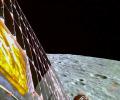
Chandrayaan-1, India's first mission to the Moon, was launched on October 22, 2008 from Sriharikota spaceport in Andhra Pradesh.

NavIC consists of a constellation of seven satellites and a network of ground stations and is touted to be more accurate than GPS.
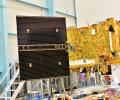
Aditya-L1 spacecraft is designed for providing remote observations of the solar corona and in situ observations of the solar wind at L1 (Sun-Earth Lagrangian point), which is about 1.5 million kilometres from the earth.
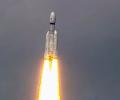
The Chandrayaan-3 mission that aims for a soft landing on the moon's surface, paving the way for future interplanetary missions, carries six payloads that would help ISRO understand the lunar soil and also get the blue planet's photographs from the lunar orbit.

Chandrayaan 3 follows the Chandrayaan 2 mission which did not achieve the desired soft landing on the surface of the moon in 2019, disappointing the scientists.

'One thing about ISRO is that all the people who work there are passionate about their work.' 'They did not mind spending day and night over there.' 'Even today it is like that.'

The Trans-Lagrangian Point 1 Insertion manoeuvre marks the beginning of the spacecraft's about 110-day trajectory to the destination around the L1 Lagrange point, a balanced gravitational location between the Earth and the Sun.

As more than 400 candidates from a single state -- Haryana -- had taken the test, there are suspicions over whether coaching centres may be involved.

Scientists expect to get new information about the past, present and future of the Sun after analysing the data that will be collected by India's first solar mission Aditya-L1, scheduled to be launched by Indian Space Research Organisation (ISRO) on September 2.
As scientists at the Indian Space Research Organisation (ISRO) gear up for the much-awaited soft landing of the Chandrayaan-3 spacecraft on the Moon's surface, the space agency may postpone the touchdown to August 27 in the event that health parameters of the lander module are found to be "abnormal", a senior official has said.

While the mission is a follow-up to the PSLV-C55 TeLEOS-2 mission launched in April this year, scientists in Sunday's mission will place the fourth stage of the PSLV rocket in a lower orbit.

Aditya-L1 will be launched by PSLV-C57 rocket on September 2 at 11:50 am. It carries seven payloads to study the Sun, four of which will observe the light from the Sun and the remaining three will measure insitu parameters of the plasma and magnetic fields.

Indian Space Research Organisation's (ISRO's) heaviest rocket LVM3 will launch British start-up OneWeb's 36 broadband satellites from the spaceport in Andhra Pradesh's Sriharikota on October 23, marking the launcher's entry into the global commercial launch service market.

ISRO chairman S Somanath on Monday said instead of a success-based design in Chandrayaan-2, the space agency opted for a failure-based design in Chandrayaan-3, focused on what all can fail and how to protect it and ensure a successful landing.

The launch of Polar Satellite Launch Vehicle (PSLV-C52) is scheduled at 05:59 hours on Monday from the First Launch Pad of Satish Dhawan Space Centre, Sriharikota, the Bengaluru-headquartered space agency said.
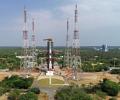
Days after landing on the Moon, India will aim for the Sun on Saturday with its maiden solar expedition, as ISRO's trusted PSLV will carry the Aditya L1 mission on a 125-day voyage to the Sun.

'When a Project Director is appointed, the whole organization -- including the Chairman ISRO -- works for his success. It is a lesson that has been of abiding value all through the other projects I have worked on,' recalls the late President, one of the earliest pioneers at ISRO.

The 6-metre tall launch vehicle Vikram-S is named after Vikram Sarabhai, the father of the country's space programme and lifted off at 11.30 am.

On Thursday, the four-stage, 44.4 metre tall PSLV-C53 that blasted off from the second launch pad of Satish Dhawan Space Centre and placed the three Singapore satellites--DS-EO, NeuSAR and SCOOB-1 in intended orbit.

The earth observation satellite would provide real-time images of the country and also be able to quickly monitor natural disasters.

He unveiled the country's ambitious space project's timeline during a media interaction.
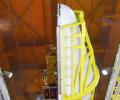
PSLV-C51/Amazonia-1 is the first dedicated commercial mission of NewSpace India Limited, Indian Space Research Organisation's commercial arm.

The maiden mission of Skyroot Aerospace, named 'Prarambh' (the beginning), will carry payloads of two Indian and one foreign customers and is set for launch from the Indian Space Research Organisation's launchpad at Sriharikota.
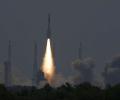
The Indian Space Research Organisation (ISRO) on Monday successfully launched a second generation navigation satellite, using a GSLV rocket with a cryogenic upper stage to do the job.

Friday's mission is the fourth operational flight of LVM3 which aims to launch the Chandrayaan-3 spacecraft into a Geo Transfer Orbit.

The heaviest rocket of the Indian Space Research Organisation -- LVM3-M2/OneWeb India-1 -- blasted off from the Sriharikota spaceport on Sunday to place 36 broadband communication satellites into the Low Earth Orbit (LEO) for a UK-based customer.

The FAC found that the failure happened when the Geosynchronous Satellite Launch Vehicle rocket's cryogenic engine was to kick in to take the rocket forward.

In the first dedicated mission of its commercial arm New Space India Limited (NSIL), the Indian Space Research Organisation on Sunday successfully launched Brazil's earth observation satellite Amazonia-1 and 18 other co-passengers, including five built by students, onboard a Polar rocket from the spaceport in Sriharikota.
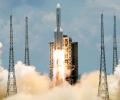
India's first privately developed rocket -- Vikram-S -- is set for launch in a sub-orbital mission with three payloads between November 12 and 16, Hyderabad-based space startup Skyroot Aerospace announced on Tuesday.
