
'The Indian private space sector is no longer a high-risk bet; it is a highly bankable, globally competitive asset class capable of easing the global small satellite launch bottleneck.'

Skyroot Aerospace is set to launch the maiden test flight of its orbital-class rocket, Vikram-1, from SDSC-SHAR on July 18, marking a significant milestone for India's private sector in the global launch business.

Skyroot Aerospace successfully launched India's first privately developed orbital rocket, Vikram-1, placing multiple technology demonstration payloads and commemorative items, including a postcard from Prime Minister Narendra Modi, into low Earth orbit, marking a significant entry into the global orbital launch market.

'With Vikram-1, we take our biggest step yet towards a reliable, high-cadence launch programme built in India, for India and the world.'

Prime Minister Narendra Modi lauded young Indian innovators for the country's first privately developed orbital rocket, Skyroot Aerospace's Vikram-1, which made India the third nation with private orbital launch capabilities. While praising the 28-year-old average age of the Skyroot team, Modi made a veiled remark about a "56-year-old young man," widely understood to be a dig at Congress leader Rahul Gandhi, who recently turned 56.

Mission Embrace aims to perform the world's first in-orbit demonstration of soft robotic capture for future active debris removal missions

'PowerBank-50 is now space proven, made in India, and ready for every satellite builder in the world.'
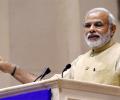
Prime Minister Narendra Modi, in his Independence Day address, highlighted technology and innovation as central to India's goal of becoming a developed nation by 2047. He called for India to lead in emerging technologies like AI, quantum computing, and space, announcing a massive AI skilling initiative for one crore youth. Modi stressed the importance of becoming a global innovation hub, bolstering energy security with nuclear power, and strengthening cybersecurity.

The technology startup ecosystem in India attracted $7.2 billion in funding during the first half of calendar year 2026, marking a 12 per cent year-on-year (Y-o-Y) increase. However, even as funding increased, deal count fell sharply, according to a report by market intelligence platform Tracxn.

Prime Minister Narendra Modi inaugurated Skyroot's Infinity Campus, highlighting government reforms and the rise of private space companies in India. He also unveiled the company's first orbital rocket, Vikram-I.

India is set to take its first steps towards its own human space flight when the uncrewed Gaganyaan mission soars to the skies later this year. Private players in the space sector are also gearing up for launching satellites on home-built rockets.
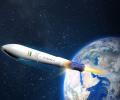
The Vikram-I rocket will fly with its maximum carrying capacity and put the satellites in a Low Earth Orbit.

The spacetech startup is expected to launch the first rocket which can hurl satellites of 250-700 kg into a lower Earth orbit by end-2021.

India took another leap in space infrastructure with the foundation stone laid for a new launch pad at the country's second rocket port in Kulasekarapattinam.
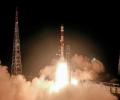
State-run Hindustan Aeronautics Limited has won a bid under which it will receive technology from the Indian Space Research Organisation for the end-to-end commercial production of the Small Satellite Launch Vehicle (SSLV), a first for the industry as India seeks to become a global hub for small satellite manufacturing and launches.

If Rakesh Sharma represented the dreams of a nascent India looking outward, Shubhanshu Shukla embodies a confident India reaching for the controls.

'The launch of Nila, our very first satellite was very emotional as well as nerve wracking. We tried to calm ourselves by cracking some poor jokes!'

The maiden mission of Skyroot Aerospace, named 'Prarambh' (the beginning), will carry payloads of two Indian and one foreign customers and is set for launch from the Indian Space Research Organisation's launchpad at Sriharikota.
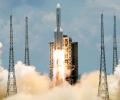
India's first privately developed rocket -- Vikram-S -- is set for launch in a sub-orbital mission with three payloads between November 12 and 16, Hyderabad-based space startup Skyroot Aerospace announced on Tuesday.

Preparations are in the final stages by the Chennai-headquartered space-tech startup Agnikul Cosmos for the maiden launch of India's first-ever private launchpad and the second rocket launch by a private sector player.

The 6-metre tall launch vehicle Vikram-S is named after Vikram Sarabhai, the father of the country's space programme and lifted off at 11.30 am.

Skyroot Aerospace has become the first private company in India to give wings to the Indian space programme, after the sector was opened to private players by the Centre in 2020.

'With India's growing capabilities in the space sector, this creates promising opportunities for enhanced collaboration and market access.'

Nibe Space (NSPL), a subsidiary of Nibe, announced its vision to establish India's first multi-sensor, all-weather, high-revisit Earth observation satellite constellation. Aiming to strengthen India's self-reliance in the strategically crucial defence-space sector, NSPL signed memoranda of agreement with Indian and global partners, including Larsen & Toubro, Centum, AgniKul, Skyroot Aerospace, SpaceFields, SISIR Radar, CYRAN AI Solutions, and Thales Alenia Space as a technology partner.

'The current launch is a sounding rocket, this cannot be called a milestone. The importance is this is for the first time a private player is doing it.'

The race for space has got real, and it is attracting funding like never before. In 2022 so far, funding to private players in the space sector has jumped a whopping 61.5 per cent - soaring to $108.52 million compared to $67.2 million in 2021. Propelling it is the government's decision to open up the space sector to private players and the work done by companies like Skyroot Aerospace, the Hyderabad-based start-up behind the launch of India's first privately developed rocket on November 18.
Lauding India's ambitious space programme, The New York Times has said the country, currently witnessing an 'explosive' growth in space-tech start-ups, is set to 'transform the planet's connection to the final frontier' and can emerge as a 'counterweight' to China.

The new year will witness two unmanned missions under the "Gaganyaan" project, deep ocean exploration project, "Samudrayaan" and many more.

'We started AgniKul to show that space transportation should be as simple as road transportation.'

'What we have done is a symbol of new India; that is what a small start-up can do, a few hundreds of people coming together, developing a rocket and launching to space and succeeding at the very first attempt.'

The Department of Space (DoS) plans to realise entirely-built rockets -- GSLV-Mk III and SSLV -- from Indian industry partners, in addition to PSLV, according to a top official of its commercial arm NSIL.
Lack of access to the cosmonaut training programmes would also be a hindrance for ISRO's planned manned missions, explains Devangshu Datta.

Chandrayaan-3's success is a must for India's space ambitions; we can't afford to lose out. And for realising our space dreams, the Indian private sector must be encouraged because if we lose this race, the moon, Mars, and mineral-rich asteroids will already be crowded before we reach there.
