
India's leading FMCG companies, including Hindustan Unilever and Dabur, reduced their permanent workforce in FY26, even as most firms in the sector, such as Tata Consumer Products and Marico, increased median employee remuneration, reflecting a mixed trend in staffing and compensation strategies.

Leading Fast-Moving Consumer Goods (FMCG) companies in India are expressing strong optimism for the current fiscal year, anticipating robust consumption trends, significant growth, and improved profit margins. This positive outlook is largely driven by resilient demand and the expected easing of elevated input costs, despite ongoing inflationary pressures and potential weather volatility.

Fast-moving consumer goods (FMCG) companies like Dabur India and Marico anticipate high single-digit growth in Q4FY26, driven by strong domestic demand in India, which is helping to offset the negative impact of geopolitical conflicts in West Asia on their international businesses.
Driven by GST reforms, robust festive demand, and softening raw material prices, the FMCG industry expects volume-based growth, supported by a mid-single digit revenue rise and improved operating margins in the December quarter.

The consolidated net profit of Marico, the maker of Parachute coconut oil, declined 0.7 per cent in the second quarter (July-September) of 2025-26 (Q2FY26).
Marico is expected to post high single-digit volume growth in the India business in the July-September quarter. However, it is expected to moderate sequentially, the company said in its quarterly update on exchanges.
Marico reported consolidated revenue growth of 20 per cent year-on-year (Y-o-Y) during the January-March quarter (Q4) of FY25. Domestic revenue surged 23 per cent Y-o-Y, while volume growth was 7 per cent. International growth stood at 11 per cent (16 per cent in constant currency growth).

Marico may buck the industry trend with the fast-moving consumer goods (FMCG) major reporting strong growth and favourable commentary in a weak quarter for the industry. The company reported consolidated revenue growth of 8 per cent year-on-year (Y-o-Y) in Q2FY25. Domestic revenue growth was 8 per cent Y-o-Y with 5 per cent volume growth (4 per cent in Q1FY25).

Homegrown fast-moving consumer goods (FMCG) major Dabur India is set to record low single-digit growth in consolidated revenue in the December quarter, it said in an update on Friday. The maker of Hajmola candy and Real fruit juice said rural consumption continued to be resilient and grow faster than urban in the third quarter.

From its recent lows, the stock of consumer major Marico is up 7 per cent on the back of a better-than-expected June quarter performance and robust outlook. In a pre-quarter update, the management indicated that domestic volume growth should witness an improvement in FY25, while other segments (growth portfolio, international business) too would see traction going ahead. The near-term trigger is strong sales and operating performance for Q1FY25.
Concerns have been raised over Marico's exposure to Bangladesh in the wake of turmoil in that country. However, the management reiterated expectations of growing domestic business at double digits and maintaining international growth. Marico scaled up its food business by 4 times between FY20-24 and aims to double it again in the next three financial years.
Hit by inflation, higher input costs and pricing measures, fast-moving consumer goods companies are expected to see a contraction in their gross margin and a modest-to-flat operating profit in the October-December quarter. Several FMCG makers are likely to log a low single-digit rise in their revenue, returning to the cycle of value-driven growth.

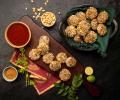
Delicious snacks, parathas made from sabudana.

Leading FMCG companies reported a decline in margins in the September quarter on account of higher input costs and food inflation, which ultimately slowed down the pace of urban consumption. Rising prices of commodity inputs such as palm oil, coffee and cocoa were also accentuated and some FMCG firms have hinted at a price hike. HUL, Godrej Consumer Products Ltd (GCPL), Marico, ITC, and Tata Consumer Products Ltd (TCPL) have expressed concerns over squeezing urban consumption, which according to industry experts forms 65-68 per cent of FMCG total sales.

Mango shrikhand with garam puri is a classic combo.

Complan and Horlicks, which claim to make kids taller in India, do not make any such claims in the UK

The stock of Godrej Consumer Products Limited (GCPL) fell about 3.7 per cent in trade after its Q3FY24 earnings disappointed brokerages and led to downgrades. Further, the stock, after a 15 per cent run-up over the past month prior to Monday's correction, had already factored in the upside from the business front. Its peer in the consumer space, Marico, too, saw a 4 per cent drop in its stock price.

Celebrate Mother's Day with a scrumptious mango dessert. Or a cocktail.

The move is significant since it signals the growing importance of foods in Marico's overall strategy. It also comes six months after Marico stepped into honey, a Rs 1,500-crore category dominated by players such as Dabur.
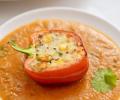
Make use of Shimla mirchis in the tastiest of ways.
Marico's January-March quarter (Q4) results were slightly better than consensus. Revenue was up by 1.7 per cent year-on-year (Y-o-Y) to Rs 2,280 crore. Ebitda grew by 12.5 per cent Y-o-Y to Rs 440 crore. Adjusted PAT was up 10.3 per cent Y-o-Y to Rs 320 crore.

A muted revenue performance in the September quarter and weak management commentary weighed on the stock of consumer major Marico which shed 8.5 per cent to Rs 542 from its intraday highs on Tuesday. The company indicated that demand trends were similar to that of the June quarter with instances of increasing food prices and below-normal rainfall distribution in some regions impeding the anticipated recovery in rural demand.

Lack of sleep, unhealthy eating habits, physical inactivity and a stressful daily schedule stemming from demanding career paths to juggling multiple hats on the personal front are some factors that increase health challenges, especially in young Indians, notes dietician Sheryl Salis.
As far as Saffola is concerned, oil and oats have been successful segments.

India indulges in the most sophisticated marketing campaigns but has poorest branding, says Shombit Sengupta, Founder, Shining Consulting.

'To get success in business one should know how to create and attract talent and how to retain it.'
Consumer goods companies are realising that men also participate in decisions about groceries
Moving ahead from the conventional advertising focus on brands, FMCG companies are now trying to establish a connection among the company and its various brands.
FMCG firms such as ITC, Parle Products, Marico, Emami, PepsiCo India and CG Corp Global on Wednesday assured uninterrupted supply of their products based on the learnings from the last year's lockdown, even as surge in COVID-19 cases in India forced Maharashtra to declare a 15-day curfew while other states also imposing various restrictions.

Sebamed's campaign for its cleansing bar of the same name, released across print, television, digital and outdoor, has also named Santoor, a popular soap brand from Wipro Consumer Care.

Over the past week, several unusual partnerships among start-ups, traditional businesses and hospitals have been announced, and several more are likely to materialise soon. The trend could see increased importance of gig workers, who are taking considerable risk to deliver goods to people in the time of a pandemic.

Zohnerism drives our daily consumption of news and shaping our understanding of most issues, warns Sandeep Goyal.

Companies from Nestle and ITC to Hindustan Unilever and Patanjali have pledged to reduce use of unhealthy ingredients by five to 50 per cent

These consistent performers are expected to maintain momentum.

Many consumer good companies say they will pass on the benefits to consumers, which will bring down prices.

Excise duty on most products has been capped at 12.5 per cent
'Hardly any aqua centres exist in India though they are popular abroad.' 'Water is known for its buoyancy which reduces pressure on joints. So, you can exercise effectively underwater, provided you have the right experts guiding you,' Harsh Mariwala tells Viveat Susan Pinto.

MTR re-positions its brand to cater early morning to the hungry urban young. It has launched a range of breakfast foods to pave the way for future product and brand transformation.
