
According to crime branch officials, Nagori is an expert trainer who can influence young people with his inflammatory speeches. He may be a crucial link to other blasts in the country as well.

The Gujarat High Court has upheld the death sentences for 38 Indian Mujahideen operatives and life imprisonment for 11 others involved in the 2008 Ahmedabad serial blasts, which killed 56 people. The court also directed the state government to pay significant compensation to victims' families and those grievously injured.
A division bench of justices AY Kogje and Samir Dave, in its July 7 judgment cited the "humongous" conspiracy, the intention to spread widespread terror and the large number of casualties as key reasons for affirming the punishment.

The Gujarat high court has characterised the 2008 Ahmedabad serial bomb blasts as a direct assault on India's sovereignty and democratic governance.
Students Islamic Movement of India chief Safdar Nagori and four others, brought from Madhya Pradesh for questioning in connection with the Ahmedabad serial blasts, were sent to judicial custody on Monday by a metropolitan court in Ahmedabad.Nagori, along with his four accomplices Abdul Sibley, Hafeez Hussain, Kamruddin Nagori and Amil Pervez, all accused in the serial bomb blast case, were brought before Metropolitan Magistrate G M Patel after their remand period ended today.
After SIMI was banned by the Union government in 2001, it was Nagori who revamped the outfit and urged his cadres to take up arms in order to wage a war against the country, which he felt would become anti-Islamic in the days to come.
Nagori, Abdul Sibley, Hafeez Hussain, Kamruddin Nagori and Amil Pervez were produced before Metropolitan Magistrate G M Patel who sent them to police custody till September 23.
A special tribunal has issued notices to the Students Islamic Movement of India, its chief Safdar Nagori and two other functionaries of the banned outfit, asking them to explain why the organisation and its activities should not be declared 'unlawful'. A single-member tribunal headed by Justice Sanjiv Khanna of the Delhi high court has asked SIMI, its president Safdar Nagori, finance secretary Imran Ansari and president of the outfit's Madhya Pradesh zone.
Safdar Nagori, one of the 38 convicts sentenced to death in the 2008 Ahmedabad serial bomb blasts case by a Gujarat court on Friday, appeared remorseless after the sentencing for a terror act that killed 56 people, and was heard saying the Constitution does not mean anything to him.
Khamruddin Nagori was arrested in Indore along with his brother Safdar Nagori and 8 others earlier this year. Nagori's brother, during his interrogation, revealed details on how arms, ammunition and funds are transported into India from Pakistan.
Kamruddin Nagori, brother of Students Islamic Movement of India chief Safdar Nagori, has revealed that some leaders of the Vishwa Hindu Parishad were on the hit-list of the banned outfit.
Their role was to hack into systems and send out mails prior and after terror attacks. This according to Nagori acted as a distraction to investigating agencies. Further they were also assigned the role of providing information relating to bomb making and the use of chemicals.
The police team, accompanied by the banned outfit's leaders Qamaruddin Nagori, Safdar Nagori and Aamil Pervez, visited the jungle and recovered 122 guilletines and explosives, 100 detonators, wire bundles, starters and VCD from the area where the training camp was organised in 2007, highly placed sources told PTI in Indore. According to sources, they also tested explosives at a farmhouse, owned by one Shahjad Hussain in the Gawalu village of Balwada police station.
Nagori and Mohammad Saleem were shifted to Rewa Jail, while Abdul Razzaq and Akbar Baig were transferred to Shahdol jail, under tight security, official sources said on Monday. Another SIMI activist Sheikh Mumtaz was shifted to Satna jail.

Safdar Nagori, SIMI's notorious face, told investigators how he trained his terrorists on the lines of the Taliban.
An exclusive account of SIMI chief Safdar Nagori's confession of terror plots across India.
Safdar Nagori, the general secretary of the proscribed outfit Student's Islamic Movement of India, was in Mumbai on July 11, 2006, when a series of explosions in suburban trains claimed 187 lives and injured thousands. Nagori is said to be acquainted with serial train blasts case accused and SIMI's Maharashtra unit general secretary Ehtesham Siddiqui. However, investigators have not been able to establish any link between Nagori and the serial blasts.

The Gujarat Police have said that the names of the accused in terror cases of Castle Rock, Vagamon and the Sabarmati Jail are the same.
The roots of the Indian Mujahideen (IM) which has claimed responsibility for every terror strike since the Uttar Pradesh serial blasts is becoming a serious threat to the security of the country. The Intelligence Bureau says this outfit of the outlawed Students Islamic Movement of India is aggressive by nature.
Intelligence Bureau officials said that several important SIMI activists are still on the run. On top of the list of wanted men is Mohammad Altaf Subhan. Subhan specialises in designing bombs for the outfit. IB officials say that Subhan, a resident of Thane near Mumbai, had started imparting bomb-making training to several SIMI activists across the country.
Shaheen Force, the women's wing of the banned Student's Islamic Movement of India, is spreading its tentacles all over India. SIMI general secretary Safdar Nagori and his brother Qamruddin, who were recently arrested in Indore, revealed this chilling fact during their interrogation. The main task of the Shaheen Force -- which is most active in Hyderabad is to brainwash children into taking up the jihadi path. These women had allegedly roughed up cops in Hyderabad.
Intelligence Bureau sources say a massive manhunt has been launched to track down these missing men. The agency is gathering telephone intercepts and other information, which includes statements made by those arrested in Madhya Pradesh.
Moshin Chaudhary has been out of news for quite some time. The Pune blasts have now brought this name back in the limelight and the Mumbai ATS has launched a massive manhunt. Moshin Chaudhary, according to several Indian Mujahideen operatives, had taken over the India operations of the IM following the arrest of Safdar Nagori and the fleeing of Abdul Subhan. Chaudhary was closely associated with Riyaz Bhatkal, the founder of the IM.
Thirteen top leaders of the banned Student's Islamic Movement of India, who were arrested in Indore, had come to the city to finalise the training programme of its cadres, the police said on Friday. The leaders had been residing in Indore for over a month, a police official said, adding that the police have recovered news clippings from them relating to the Mumbai train blasts. The police was now trying to expose their local network.
The 29 accused produced before court included blast mastermind Mufti Abu Basher, SIMI leader Safdar Nagori and two others accused of planting bombs at various places in Surat after the terror attacks in Ahmedabad.
According to the confessions made by Jaber, son of Moulana Nasirrudin, an accused in the Haren Pandya murder case, Safdar Nagori, the chief of the banned outfit had visited Hyderabad to zero down on a location to set up a terror training camp.
Riazuddin Nasir, the man arrested in Karnataka earlier this year is back in the limelight once again with the Gujarat police obtaining a body warrant against him in order to interrogate him. They hope to find the answers from Nasir, who is the only person so far in the SIMI network to have told the police about the entire operation.

Intelligence agencies welcomed the Delhi high court's decision to extend the ban on the Students Islamic Movement of India.

Serious lack of funds to carry out its operation has forced the Students Islamic Movement of India and the Indian Mujahideen to adopt a method that was earlier forbidden. Vicky Nanjappa/Rediff.com reports
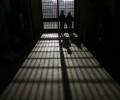
Seven members of the banned Students Islamic Movement of India have escaped from a prison in Madhya Pradesh's Khandwa district. While jail authorities managed to nab one SIMI member, the rest are still on the run.
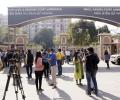
A special court in Ahmedabad on Friday awarded death sentence to 38 convicts in the 2008 Ahmedabad serial blasts case, which had claimed 56 lives and left over 200 injured.

The Anti Terrorist Squad of Madhya Pradesh has arrested four members of the Students Islamic Movement of India and recovered several pipe bombs and detonators from them.

The Centre on Monday extended the ban on terrorist group Students Islamic Movement of India (SIMI) for five years for its involvement in fomenting terrorism and disturbing peace and communal harmony in the country.
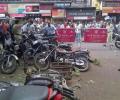
With the five escapees from Khandwa jail set on a terror mission, a state of alert has been sounded in Gujarat.

The embarrassing incident in which alleged activists of the Students Islamic Movement of India got away from a MP jail is being probed by the government.

The Gujarat Anti-Terrorist Squad has arrested an alleged Students Islamic Movement of India operative, who was wanted in the 2008 serial bomb blasts in the city, from Belgam in Karnataka.
A special court in Indore on Monday awarded life imprisonment to Students Islamic Movement of India chief Safdar Hussain Nagori and 10 other activists of the banned group
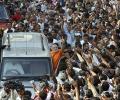
SIMI slogans in Bhopal against the next prime minister alert security agencies about a likely threat.
NIA sleuths suspect this SIMI module also carried out the October 2013 jail break in Khandwa, Madhya Pradesh, in which 10 SIMI members escaped.
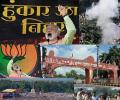
Flawed execution by SIMI operatives resulted in many bombs, including the one under Narendra Modi's stage during his Hunkar rally in Patna in October 2013, not going off
