
The Supreme Court is scheduled to hear a plea challenging the detention of climate activist Sonam Wangchuk under the National Security Act (NSA). The plea, filed by Wangchuk's wife, argues the detention is illegal and violates his fundamental rights.
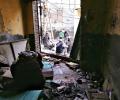
Delhi Police strongly opposes bail pleas of activists Umar Khalid, Sharjeel Imam, and others in the February 2020 riots case, claiming it was a pre-planned attack on the nation's sovereignty and an attempt to divide society on communal lines.
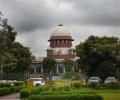
The Supreme Court criticized the Haryana government for uprooting 40 trees to build a road to a BJP office in Karnal, demanding a remedial plan and warning of consequences.
The Supreme Court has ruled that non-disclosure of a conviction in a nomination form will lead to the disqualification of an elected candidate. The ruling came on an appeal filed by a former councillor who was unseated for failing to disclose her conviction in a case.
The Supreme Court has agreed to examine whether a law banning married couples facing secondary infertility from using surrogacy to have a second child amounts to a restriction by the State on the reproductive choices of citizens.
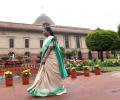
The Supreme Court of India has ruled that a governor has discretion under Article 200 to refer a state bill to the President or return it to the legislature, and is not bound by the advice of the council of ministers. The court clarified that a governor cannot simply withhold a bill.

The Supreme Court on Friday sought response from the Centre and others on a plea alleging that female sanitation workers at the Maharashi Dayanand University in Haryana were asked to prove through pictures of their private parts that they were menstruating.

AIFF adopts SC-approved constitution, leaves out two clauses pending Apex court direction
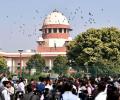
The Supreme Court of India has ruled that no timelines can be imposed on governors and the president to grant assent to bills passed by state assemblies, clarifying the extent of their powers under Article 200 of the Constitution.

Concerned about Indian football's "decline for many years", East Bengal, one of the country's oldest clubs, on Thursday sought Prime Minister Narendra Modi's urgent intervention to address the "unprecedented crisis"

Supreme Court Justice B V Nagarathna dissented against the collegium's recommendation to elevate Patna High Court Chief Justice Vipul Manubhai Pancholi to the Supreme Court, citing concerns about seniority, regional representation, and the circumstances of his earlier transfer.

The Supreme Court of India has appealed to women, particularly Hindu women without sons, daughters, or husbands, to make wills to avoid potential property disputes, highlighting the increasing number of women with self-acquired property.

In a significant development, the Supreme Court on Tuesday sought responses from the Centre, CBI, ED, Anil Ambani and the Anil Dhirubhai Ambani Group (ADAG) on a PIL seeking a court-monitored probe into alleged massive banking and corporate fraud involving the ADAG and its group companies.

The Congress party has released its initial list of 48 candidates for the upcoming Bihar Assembly elections, including key state leaders. The announcement precedes the finalization of seat-sharing arrangements with Mahagathbandhan allies.
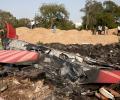
The Centre informed the Supreme Court that the Air India pilot has not been blamed in the AAIB's preliminary report into the June 12 plane crash that claimed 260 lives. The court is hearing a plea for a parallel inquiry into the accident.

The Supreme Court has directed the removal of all cattle and other stray animals from highways and expressways, citing safety concerns and frequent accidents.
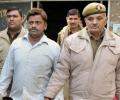
The Supreme Court of India has acquitted Surendra Koli in one of the Nithari murder cases, paving the way for his release. Koli was earlier acquitted in other Nithari killing cases.

IFA Shield Final: Mohun Bagan set up third Kolkata derby in three months after win over United SC

The Supreme Court questioned petitioners who challenged the accuracy of India's COVID-19 vaccine adverse effect data, suggesting they unduly trusted UK figures. The court heard arguments about alleged deaths due to the Covishield vaccine and reserved its order.

The Supreme Court dismissed a plea by Jamiat Ulama-i-Hind seeking compensation from the Uttar Pradesh government for victims of mob lynching, deferring to the Allahabad High Court's order to approach the state government directly.
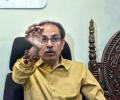
The Supreme Court has scheduled a hearing for January 21 on pleas challenging the Election Commission's decision to allot the 'bow and arrow' symbol to the Eknath Shinde faction of the Shiv Sena. The court will also hear arguments on a similar dispute concerning the Nationalist Congress Party (NCP) on January 22.

The petition points out that Shami's annual income, as disclosed in his Income Tax Return for 2021-22, stood at nearly Rs 48 crore, while she has been forced to live in "downtrodden conditions", struggling to meet even basic expenses.
The Supreme Court expressed deep regret that the actual perpetrator of the Nithari killings was not established despite a prolonged investigation, while acquitting Surendra Koli in the last Nithari murder case.

The Supreme Court on Friday said a 'blanket direction' to pick up stray dogs in Delhi-NCR and place them in shelters without evaluating the existing infrastructure might lead to a 'catch-22 situation' as the directive might be impossible to comply with.
The Supreme Court of India has issued a series of directives aimed at safeguarding lawyer-client privilege, restricting the ability of investigative agencies to arbitrarily summon lawyers for providing advice. The court's decision came in response to concerns about the Enforcement Directorate summoning lawyers in money laundering probes.
The Supreme Court has restrained lower courts from releasing the accused in a digital arrest fraud case where a 72-year-old lawyer was duped of Rs 3.29 crore. The court expressed concern over the growing cybercrime and the targeting of elderly citizens.

The wife of a senior Haryana police officer who allegedly committed suicide has questioned the FIR filed in the case, citing incomplete information and seeking amendments to include all accused and reflect appropriate sections of the SC/ST Act.

The Supreme Court delivered a split verdict on a plea by the Maharashtra government seeking a review of the court's earlier direction to form a special investigation team (SIT) with Hindu and Muslim officers to investigate the 2023 Akola communal riots. Justice Sanjay Kumar refused to review the direction, while Justice Satish Chandra Sharma agreed to hear the review plea in open court.
A woman in Maharashtra 'married' her deceased boyfriend's body and demanded justice after he was allegedly murdered by her father and brothers.

The Supreme Court has directed authorities to relocate stray dogs from institutional areas like schools and hospitals to designated shelters due to a rise in dog bite cases. The court also addressed the issue of stray animals on highways.

Mohammedan Sporting thump BSF to end Durand Cup campaign on a high
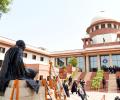
Calling itself the "custodian of the Constitution", the Supreme Court on Thursday asked if it could "sit idle" if a constitutional functionary like governor failed to discharge duties, as it reserved its verdict on the presidential reference on grant of assent to bills.
The Supreme Court has declined to urgently hear pleas seeking a stay on anti-conversion laws enacted by several states, including Uttar Pradesh, Gujarat, and Madhya Pradesh. The matter is now scheduled for hearing in December.

Liston Colaco struck a brace as 10-man Mohun Bagan Super Giant beat Mohammedan Sporting 3-1 to begin their Durand Cup campaign at the Salt Lake Stadium in Kolkata on Thursday.

The Supreme Court expressed concern over an incident in Delhi where students from Kerala were allegedly assaulted and ridiculed for their cultural attire and language.
The Supreme Court has directed all states and Union Territories to report on the implementation of guidelines for addressing mental health issues and suicide among students in educational institutions. The Centre has also been asked to file a compliance affidavit.
The Supreme Court has sought the Centre's response on a plea seeking the implementation of the 2023 Nari Shakti Vandan Act, which reserves one-third of seats for women in the Lok Sabha and state assemblies.

As outrage mounted over the death of a 19-year-old Dalit student, the Himachal Pradesh government on Saturday suspended an assistant professor booked on charges of sexually harassing her and announced an inquiry into allegations, including those of ragging and cast related abuse of the victim, while the University Grants Commission also set up a fact-finding committee.

It also aims to reduce the powers of the Supreme Court, with some authorities shifted to the proposed Constitutional Court, and immunity to the president from criminal proceedings for life.
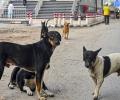
Many also displayed a picture of Lord Shiva with a dog seated next to him, symbolising the cultural and spiritual connection between humans and animals.
