
India and the US on Wednesday marked their maiden space collaboration with the successful flight of a GSLV rocket that placed an earth observation satellite, jointly developed by the two space agencies, in a precise orbit.
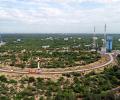
The Polar Satellite Launch Vehicle (PSLV) in its 63rd mission, would carry the earth observation satellite (EOS-09) which would be capable of capturing high-resolution images of the Earth's surface under all weather conditions.

ISRO has projected wheat production of 122.24 million tonnes.
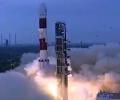
RESOURCESAT-2A, intended for resource monitoring, is a follow-on mission to RESOURCESAT-1 and RESOURCESAT-2, launched in 2003 and 2011 respectively. It is intended to continue the remote sensing data services to global users provided by RESOURCESAT-1 and 2.

India's Polar Satellite Launch vehicle-C16 rocket on Wednesday successfully launched into orbit the latest remote sensing satellite Resourcesat-2 that would study and help manage natural resources along with two nano satellites.

Data provided by the satellites helps experts predict the level of rains till then, what to expect in the next few hours and even about the situation in the forests and the water reservoirs.
The Polar Satellite Launch Vehicle is carrying 1360-kg satellite 'Resourcesat -I'.
The Indian Space Research Organisation, which had a recent setback with the failure of its latest communication satellite GSAT-5P, is planning three major satellite launches in the first quarter of this year.

Military use apart, the new satellite would be useful for urban and rural applications, coastal land use and regulation, utility management and various related applications.

Out of its 47 operational satellites, India currently has six to eight satellites which are used entirely for military purposes.
Antrix Corporation, the commercial arm of Indian Space Research Organisation, has signed an agreement with US-based Space Imaging to market and sell data worldwide.
"The Resourcesat-1 launched today was equal to half a dozen people in space for a period\n\nof five to six years," ISRO chief Dr Madhavan Nair said.

The Indian space agency has already begun work on the third generation of the earth observation satellite -- the first of which will be ready by 2018 and boost the capability to generate digital maps.

'By pushing PSLV production to industry, the extra ISRO personnel available will be utilised to do projects like the human space mission.'

ISRO launched 12 Indian, 22 foreign satellites and successfully flight-tested India's first winged-body aerospace vehicle.

This is ISRO's new record of launching 20 satellites, including those from the US, Germany, Canada and Indonesia.

When the universe is your workspace, the sky is the limit, and there's no such thing as a glass ceiling. Divia Thani Daswani meets the women behind Mangalyaan
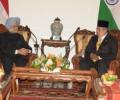
The two countries have decided to expedite trade related issues and signed six pacts to take forward their strategic partnership. Rediff.com's Sheela Bhatt, who is travelling with the prime minister on his visit to Indonesia, reports from Jakarta.

In the years to come, India's space assets will play a much bigger role if and when hostilities break out on our borders, says Pallava Bagla.
