
Listed companies have seen equity deals worth Rs 23,500 crore in March.

Year 2021 was another great year for fund-raising through equities. A total of Rs 1.8 trillion was raised through initial public offerings (IPOs), qualified institutional placements (QIPs), and rights issues, against the Rs 1.7 trillion raised in the previous year. Funds raised through IPOs quadrupled, while those from rights issues and QIPs reduced.

Industry players estimate the average payouts to be in the range of 50-75 per cent of the bankers' annual salaries. For the top performers, the bonuses could be 100-125 per cent.
In a first, the government has made it mandatory for interested buyers of IDBI Bank to provide details for security clearance from the Ministry of Home Affairs (MHA) in the first stage of the bidding process. So far, in all instances of CPSE privatisation, the government would seek details regarding security clearance of the bidders at the second stage of the bidding process. This meant that bidders who qualified in the first or the Expression of Interest (EoI) round, were required to seek security clearance from the government while placing their financial bids.
India's biggest non-bank finance company, Bajaj Finance (BAF), is set to raise capital after a gap of four years. On October 5, the board of directors will meet to approve the fund raise by way of preferential issue and/or qualified institutional placement (QIP) subject to regulatory and shareholder approvals. The move, analysts said, comes ahead of expectations, and could be in the wake of simmering competition in the consumer lending space, especially with the launch of Jio Financial Services (Jio Fin). "While we still do not have finer details on the game-plan of Jio Financial, it has plans to initially foray into consumer and merchant lending.

Billionaire Gautam Adani-led group's renewable energy firm on Thursday announced plans to raise Rs 12,300 crore through a share sale to investors as the group continues to build on a comeback strategy to emerge out of allegations of fraud levelled by a US short-seller. Adani Green Energy Ltd in a stock exchange filing said its board has approved raising up to Rs 12,300 crore through an issue of equity shares by way of qualified institutional placement (QIP). The funds are intended to be used for meeting capital needs of the company's expansion plans.

The Adani group has exited the financial services business by selling its entire 90 per cent stake in Adani Capital and Adani Housing to private equity (PE) firm Bain Capital for Rs 1,440 crore. The total valuation of the Adani financial services business stands at Rs 1,600 crore. Gaurav Gupta, managing director (MD) and chief executive officer (CEO) of the Adani firms will hold the rest of the stake.
MMFS is looking at a compounded annual growth rate (CAGR) of 18 per cent in assets under management (AUM) during FY23 to FY26 on the back of the strong recovery. The company has initiated risk-mitigating initiatives, including diversification into non-vehicle loans, building digital capacity and re-classification of customer profiles into affluent and mass-affluent in semi-urban segments to better target marketing.

Sebi's move to reduce time period required between subsequent QIPs to two weeks would help companies raise capital at regular intervals and time their share sale better.

Fund mobilisation by companies through equity and debt routes has dropped 20 per cent in 2022 to nearly Rs 11 lakh crore, as exuberance dwindled this year due to expensive credit avenues and volatile markets. The first half of 2023 could continue to remain challenging. The year 2021 was extraordinary for fundraising from the equity and debt routes, while 2022 has seen a slowdown in capital raising owing to elevated volatility provoked by unprecedented inflation globally and the Russia-Ukraine war.

'Start-ups that generate a majority of their income in India are likely to opt for an Indian listing.'

The primary market has seen hectic fundraising activity in April-November 2021, with 75 companies garnering Rs 89,066 crore through their IPOs, much higher than in any year in the last decade, Economic Survey showed on Monday. Moreover, a flurry of technology startups made their public debuts during the period. In comparison, 29 companies raised Rs 14,733 crore through initial public offerings (IPOs) during April-November 2020.
So far, nine companies have raised Rs 17,860 crore - nearly three times of last year's tally - by way of rights issues.
'Everyone says never waste a crisis.' 'When we went into Covid and we were in total lockdown, we were at work.' 'The planes were not flying and we wondered what to do.' 'We looked at each of our performance metrics -- what are customers complaining about, how do employees feel, how do investors feel?'

Bonuses are typically commensurate with deal activity in any given year. Investment banks, on average, pocket 2-3 per cent as fees for managing an IPO and 1.5-2 per cent for handling QIPs.

Adani Enterprises' proposed Rs 20,000 crore (Rs 200 billion) fundraising via fresh issue of equity shares through a public offer would be the fourth biggest by Indian companies, excluding banks and non-banking financial companies.

This will help the company reduce its debt that has doubled to Rs 40,177.6 crore in four years.

Sebi officials say the regulator has turned down the proposal on ground that the Indian market is still not prepared for such flexibility in pricing.
In the President's address to Parliament last week, the United Progressive Alliance government announced its intention to resume disinvestment as a way to bring the fiscal situation back under control. Of course, it would not consider surrendering its majority stake in the enterprises in which it decides to dilute its holding.

Loans for Indian airlines have dried up as banks have become cautious to lend to the sector.
Firms in rush to raise capital but those putting in money at new valuations might be left holding the can.
PSBs were required to bring down government shareholding to at least 75 per cent, to comply with the amended Securities Contract (Regulations) Rules by August 2017.

Over 10 Indian start-ups with total valuations of $84 billion (some are planning fresh fund-raising) are bracing to launch initial public offerings (IPOs) in the next 36 months. While the size of their IPOs is under discussion, estimates are that they would together raise a minimum of over $8-10 billion during the initial listing.

India's real estate industry staged a rebound from 2020's downturn, with housing sales seen rising by over 50 per cent. The performance, though short of pre-COVID levels, has property developers hoping for stronger gains in the New Year and the beginning of a long upcycle. A strong foundation has been laid this year for revival in the Indian real estate sector, which is projected to reach $1 trillion mark by 2030 from $200 billion in the pre-pandemic year.

SpiceJet on Tuesday said shareholders have approved the transfer of its cargo and logistics services business to a subsidiary, on a slump sale basis, through an all-share deal worth over Rs 2,555 crore, a move that will help the airline to significantly reduce its negative networth. Besides, the shareholders have cleared the proposal to raise up to Rs 2,500 crore through the Qualified institutional placement (QIP) route. These developments also come at a time when the airline industry is slowly recovering after being battered by the coronavirus pandemic.

The QIP route was a big hit.

Stocks such as NIIT, Punj Lloyd, Gati, Welspun India and BEML are favourites of the trading community.

'Bottomline, hairline and waistline -- you have to watch them always.'

RCom shares fell 0.34 per cent to Rs 145.50 at the close on the BSE.
SpiceJet, India's second-largest private airline, kicked off the process of hiving off its logistics business to its subsidiary SpiceXpress as it looks to raise much-needed capital. On Tuesday, the company sought its shareholders' approval to complete the process and to raise up to Rs 2,500 crore via a qualified institutions placement (QIP). It is in talks with multiple private equity investors as it tries to sell shares in the logistics arm to raise money.

Chairman A M Naik said H2 of 2020-21 will herald better economic and business activity in terms of tendering, good liquidity, as well as revival of labour and supply chains.

Since Modi sarkar came to power in May 2014, markets have been trading volatile.
IndiGo, India's largest airline, is in talks to raise fresh funds as a second wave of pandemic has led to collapse in travel demand. The airline may look to raise Rs 3,500-4,000 crore. On Monday, only 97,761 passengers flew. With flyers cancelling bookings, airlines had to put aside flights and operated only 1,306 of them.
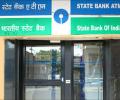
The government's holding in the bank will not decline below 58 per cent pursuant to the QIP.

'This is not like a one quarter hit; it will take time.'
Growth-oriented technology companies have raised Rs 15,000 crore through initial share sales in the last 18 months and IPOs worth around Rs 30,000 crore by such firms are in the pipeline, Sebi chairman Ajay Tyagi said on Thursday. "Growing number of unicorns in the startup ecosystem is a testimony of the new age tech companies coming of age in our economy. These companies often follow a unique business model focusing more on rapid growth than immediate profitability," Tyagi said at an event organised by industry body CII. During the last 18 months, growth-oriented technology companies have raised a sum of around Rs 15,000 crore through IPOs (Initial Public Offerings).
Given the sharp rally in stock prices since September, coupled with robust foreign inflows, share-sale activity by companies is likely to gather pace in the next few weeks.

Fund-raising by Indian companies through issue of shares to institutional investors is gathering pace, rising to Rs 2,211 crore in August highest in a month during the current fiscal.

'The cost of funds has come down, which will lower lending rates'.
