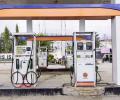
The Indian government has imposed a new windfall gains tax of Rs 3 per litre on petrol exports, while simultaneously reducing the levy on diesel to Rs 16.5 per litre and aviation turbine fuel (ATF) to Rs 16 per litre, effective May 16.

State-owned refiners Bharat Petroleum Corporation Ltd (BPCL) and Hindustan Petroleum Corporation Ltd (HPCL) have reported substantial losses for the first quarter of financial year 2026-27 (Q1FY27), primarily driven by a sharp increase in crude oil prices exacerbated by the ongoing West Asia crisis and suppressed marketing margins on petroleum products.

Despite decades of efforts towards energy transition, oil will remain the critical energy source for all nations for some decades. We can hope for peace opening the Strait of Hormuz, but must prepare for war closing it, points out former foreign secretary Ranjan Mathai.

Nissan Motor India aims to achieve a fourfold increase in domestic sales, targeting 100,000 units annually, and export another 100,000 vehicles from its Chennai plant by financial year 2027-28 (FY28), marking a significant revival of its presence in the Indian passenger vehicle market.

The government has sharply reduced excise duty on petrol to 3 and diesel to zero, offering major relief to consumers. Here's how the price cut will impact fuel rates and inflation.
State-owned Indian Oil Corporation (IOC), Bharat Petroleum Corporation Ltd (BPCL), and Hindustan Petroleum Corporation Ltd (HPCL) are reportedly incurring losses of Rs 18 per litre on petrol and Rs 35 per litre on diesel, as they continue to absorb rising crude oil costs without increasing retail prices. This situation is leading to expectations of a fuel price hike after upcoming state elections.

Union Finance Minister Nirmala Sitharaman has warned that the ongoing West Asia crisis is not merely a geopolitical issue but will directly lead to higher fuel costs for common people and businesses, impacting shipping, input availability, and export orders.

The reopening of the Strait of Hormuz, following a ceasefire agreement between the US and Iran, is expected to significantly ease India's crude oil supply risks, lower freight costs, and reduce inflationary pressures, as global oil prices have already dropped.

Not a single retail outlet ran dry. Every household that wanted a cylinder got one. India faced neither a 1991 moment nor a 2013 one. Macroeconomic stability held. This was not an accident, and it was not luck alone. It was the work of a government that chose to act as it had during the pandemic -- deliberately and gradually, building one measure upon another rather than reaching for a single dramatic lever, explains V Anantha Nageswaran, chief economic advisor to the Government of India.

Flex fuel motorcycles can deliver "3 per cent higher torque and 7 per cent higher peak power".

Global oil prices fell on Thursday to their lowest levels since before the outbreak of the Iran conflict, offering a significant economic tailwind for India, the world's third-largest crude importer, by easing inflation risks, reducing the import bill and improving the government's fiscal position.

Insights from behavioural economics suggest that an ambitious nudge can be effective if three conditions are met, points out Ram Singh Insights from behavioural economics suggest that an ambitious nudge can be effective if three conditions are met, points out Ram Singh, director, Delhi School of Economics.

The Indian government has increased the export duty, or windfall tax, on diesel to Rs 55.5 per litre and on aviation fuel (ATF) to Rs 42 a litre, effective immediately, to boost domestic availability and prevent exporters from exploiting global price differences.

'Unfortunately, today most ministers are busy with either election duty or praising duty. They are not interested in serving duty.' 'Ministers have become relaxed like retired people still holding onto jobs.' 'Look at how the NEET paper leaked. But there is no accountability.' 'After 12 years, they have become saturated. They are short of ideas.'

JSW Motors, part of the JSW group, is set to enter India's passenger vehicle market with plans to launch 15 new-energy vehicles (NEVs) over the next four years, with deliveries commencing from December 2026.

Bank of Baroda economists project India's GDP to grow 6.5-6.8 per cent in FY27 but warn that the fiscal deficit could overshoot the budgeted 4.3 per cent target, potentially reaching 4.7-4.8 per cent of GDP due to subsidy overruns, excise duty cuts, and oil marketing company losses.

Indian benchmark equity indices, Sensex and Nifty, closed lower due to investor caution over rising bond yields, a weaker rupee, and fresh fuel price hikes, which have revived inflation concerns.

India possesses two months of fuel stockpiles and faces no supply concerns despite global energy disruptions, according to Oil Minister Hardeep Singh Puri. However, state-run fuel retailers are incurring losses of up to Rs 1 lakh crore in a single quarter due to elevated crude prices and unchanged retail fuel prices, raising questions about the sustainability of these losses.

India has no plans to ration fuel supplies despite ongoing disruptions in global energy markets, according to a top oil ministry official. The country has maintained adequate inventories of crude products and LPG while diversifying imports to manage supply risks.

The Strait of Hormuz crisis is impacting lifestyles worldwide, from reduced gold purchases in India to energy conservation in Europe and Japan, as governments urge citizens to adapt to the global energy shock.

The Indian government is considering additional relief packages for vulnerable sectors like MSMEs to mitigate the impact of the ongoing West Asia crisis on the economy and inflation.

India emerged reasonably well from 2025. But now, the oil shock and war-related supply disruptions have again driven funds out of India and significantly weakened the rupee, points out Ajay Chhibber.

The Indian government has increased measures to secure fuel and gas supplies following the Strait of Hormuz closure, urging citizens to avoid panic buying. Refineries are operating at high capacity, and sufficient stocks of petrol and diesel are available nationwide.

Congress leader Rahul Gandhi criticised Prime Minister Narendra Modi for gifting 'Melody' toffees to Italian Premier Giorgia Meloni, calling it a 'gimmick' while India faces an 'economic storm'. He accused Modi of prioritising public relations over addressing the struggles of farmers, labourers, and youth, a sentiment echoed by other Congress leaders.
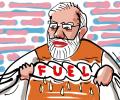
Following through announcements with enforcement of measures is key, as a run through recent Indian economic history shows, points out A K Bhattacharya.

The Confederation of Indian Industry (CII) has proposed a 20-point policy agenda to the finance ministry, including a conflict-linked emergency credit line guarantee scheme and tax rationalisation on energy inputs, to support MSMEs, exporters, and energy-intensive industries affected by the ongoing West Asia war.

'OMCs are incurring losses of Rs 1,000 crore per day due to the West Asia crisis.'
'At the first sign of real trouble, that money will move. There will be a run.'

India's fertiliser subsidy bill for the current financial year (FY27) is projected to increase by approximately 20% due to surging global prices, primarily driven by the West Asia crisis, a senior official confirmed. Despite this, retail prices for urea and di-ammonium phosphate (DAP) will remain unchanged, ensuring adequate supply for the kharif season.

India's sugar consumption is projected to fall by nearly 400,000 tonnes in the 2025-26 season, primarily due to the ongoing liquefied petroleum gas (LPG) shortage exacerbated by the West Asia conflict and unseasonably cool weather.

'In all these years of rupee depreciation, of rising oil prices, of inflation caused by import dependence, not one leader had the courage to look the people in the eye and say: Please do this for your country.'

The Andhra Pradesh cabinet has recommended a series of measures, including 'No Vehicle Day,' online classes, and reduced foreign tours, to mitigate the economic impact of the Gulf war.

Jewellers in Lucknow protest Prime Minister Modi's appeal to defer gold purchases for a year amid the West Asia crisis, fearing significant business losses and economic hardship for those involved in the trade.
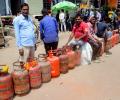
The Indian government has implemented several measures to mitigate external risks, support the balance of payments, and maintain macroeconomic stability amidst the ongoing West Asia crisis, according to Minister of State for Finance Pankaj Chaudhary.
The Indian government has refuted claims of fuel shortages, asserting that the country possesses approximately 60 days of fuel stock cover and that all petrol pumps are adequately stocked and operating normally.
Around one full month of supply is firmly arranged with additional procurement being continuously finalised, and oil companies are successfully delivering over 5 million cylinders every day.

The Indian government has doubled the daily quota of market-priced 5-kg LPG cylinders for migrant workers to ensure stable fuel supplies amidst global disruptions. This move prioritises household cooking gas and addresses the needs of migrant workers who often lack regular connections.

The Indian government has waived customs duty on critical petrochemical products until June 30 to ensure supply stability and provide relief to consumers amid disruptions caused by the crisis in West Asia.

Calling such reports baseless, Finance Minister Nirmala Sitharaman said there was no such move under consideration.

Reliance Industries Ltd on Thursday said it has halted the use of Russian crude at its export-only refinery in Jamnagar, Gujarat, as the company moves to comply with European Union sanctions. Reliance is India's largest buyer of Russian oil, which it processes and turns into fuel, such as petrol and diesel, at its giant oil refining complex at Jamnagar.
