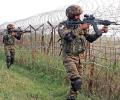
This marked the sixth consecutive night of ceasefire violations by Pakistan along the LoC, amidst heightened tensions between New Delhi and Islamabad following a recent terror attack in Pahalgam on April 22.

Over 5,000 people have been evacuated from flooded areas in the Jammu region following heavy rains and flash floods. Rescue and relief operations are underway to restore essential services and provide assistance to those affected.

People along the Line of Control and International Border in the Jammu region continue to live under the shadow of death, with unexploded mortar shells fired by Pakistani troops still embedded in farmlands and residential areas even though hostilities have stopped for nearly a week. IMAGE: Kindly note that this image has been posted for representational purposes only. Photograph: / Rediff.com Despite the May 10 understanding between India and Pakistan, locals describe the border areas as a 'death trap'. Sixty-two-year-old Balvinder Singh, who returned to his home in Pargwal sector on May 14, recounted a narrow escape. "Two shells exploded in our compound, damaging our house. Three more landed on our farmland. We were terrified and told our family to stay away from the fields until the Army could help," Singh told PTI. Army engineers later came to the village and safely defused the unexploded shells, bringing a temporary sense of relief. "Fear is writ large on the faces of people to these death traps in border hamlets", he said. Scenes of destruction are evident rooftops torn apart, broken houses, windows punctured by shrapnel, and carcasses of cattle lying in pools of blood. The acrid smell of gunpowder still lingers in the air. Sardar Gurmeet Singh faced a similar ordeal. His family could not re-enter their home as a live mortar shell had sunk into the compound in a village close to the International Border. "The army's bomb disposal squad removed it after four days, allowing us to finally enter, back home," he said. Indian Army engineers have launched a sweeping clearance operation across border districts, defusing over 80 unexploded shells in the past five days -- including 6 in Pargwal, 19 in Rajouri, 42 in Poonch, and 12 along the IB. "These shells, mostly 120 mm calibre, have a range of 15 to 30 km and pose a serious threat to both civilian and military targets," an Army officer said. "Many of them were fired by Pakistan during recent hostilities." On May 7, the Indian Army launched Operation Sindoor, conducting precision strikes on nine terror hubs in Pakistan and Pakistan-occupied Jammu and Kashmir (PoJK) in response to the April 22 terror attack in Pahalgam that killed 26 people, most of them tourists. The subsequent retaliation by Pakistan pushed the region to the brink of war. From 7 to 10 of May, 27 civilians were killed and over 70 injured in Pakistani shelling in the Jammu region. Farid Din Gujjar, a resident near the border, expressed fear about returning to his fields. "Several shells created deep craters in our paddy land. We cannot resume work until all unexploded ordnance is cleared. It's a death trap," he said. Army units, in coordination with Jammu and Kashmir Police, have evacuated high-risk zones and issued stern warnings to residents not to touch any suspicious objects or unexploded shells. In one major operation, 42 live shells were safely destroyed in the Poonch villages of Jhullas, Salotri, Dharati and Salani. "All safety protocols were followed. The shells posed a serious danger to local lives," an Army spokesperson said, calling the effort a 'continued commitment to protect civilians and restore normalcy'. Poonch saw the vast majority of deaths due to shelling. Security officials said that Pakistan used a mix of mortar shells, armed drones, and missiles during the shelling spree, specifically targeting civilian habitations and border towns in Jammu, Samba, Kathua, Rajouri, and Poonch. As clearance operations continue, the border residents are slowly returning to their homes, but with caution, fear, and lingering uncertainty about shelling that may yet happen in the future.

Giving details of how she silenced three hostile posts resorting to unprovoked firing on her position during Operation Sindoor, she said, "I had three posts falling in my area. I pinned down the people at all three hostile locations. We hit them with every weapon we had. They were forced to flee their posts."
The firing exchanges are taking places in five districts out of seven border districts of Jammu and Kashmir. So far, there has been no firing reports along International Border in Samba and Kathua districts.
Pakistani troops continued unprovoked small arms firing in different sectors along the Line of Control (LoC) in Jammu and Kashmir for the 10th consecutive night, prompting effective retaliation by the Indian army. The ceasefire violations, which started after the April 22 terror attack in Pahalgam, were reported from eight places across five districts in the Union Territory during the intervening night of Saturday and Sunday. Indian Army responded promptly and proportionately to the unprovoked firing, a defence spokesperson said.
The exchange of fire occurred even though the directors general of military operations of India and Pakistan spoke over the hotline on Tuesday amid rising tensions between the two countries over the Pahalgam terror attack on April 22.
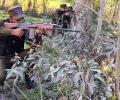
India has warned Pakistan against its unprovoked firings along the Line of Control (LoC) in Jammu and Kashmir as the directors general of military operations of the two armies spoke on the hotline amid the escalating tensions over the Pahalgam terror attack.
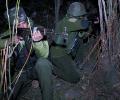
For the ninth consecutive night, Indian and Pakistani troops engaged in small arms fire along the Line of Control (LoC) in Jammu and Kashmir, continuing a pattern of heightened border tensions. The skirmishes, initiated by Pakistani troops in violation of the ceasefire agreement, have led to a tense situation along the LoC and International Border (IB). The incidents come in the wake of the April 22 terror attack in Pahalgam, which claimed the lives of 26 people, mostly tourists. Civilians residing near the border have begun preparing their bunkers, anticipating potential escalation. Despite a recent hotline conversation between the Directors General of Military Operations (DGMOs) of India and Pakistan, where India cautioned Pakistan, the ceasefire violations persist.

In a post on X, the additional directorate general of public information posted: "Pakistan again violates the Ceasefire Agreement by firing artillery in Bhimber Gali in the Poonch-Rajouri area. Indian Army is responding appropriately in a calibrated manner."
Pakistan troops have violated the ceasefire agreement for the 11th consecutive night, firing on Indian posts along the Line of Control (LoC) in Jammu and Kashmir. The firing began in Kupwara and Baramulla districts and spread to other sectors, including Poonch, Rajouri, Mendhar, Naushera, Sunderbani, and Akhnoor. The Indian Army responded promptly and proportionately. The ceasefire violation comes despite a recent phone call between the Directors General of Military Operations (DGMOs) of India and Pakistan on April 29. This marks the latest escalation of tensions between the two countries, following a terror attack in Pahalgam in April.
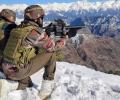
Pakistan's troops have engaged in unprovoked firing along the Line of Control (LoC) and International Border (IB) in five districts of Jammu and Kashmir, prompting retaliation from the Indian Army. This marks the eighth consecutive night of such incidents, following heightened tensions stemming from a recent terror attack in Pahalgam. Civilians residing along the LoC and IB are preparing their bunkers in anticipation of potential escalation.
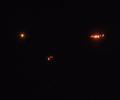
Suspected drones were observed along the International Border in Samba district of Jammu region on Monday, while armed forces downed a 'surveillance drone' in Punjab's Jalandhar district.
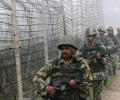
A senior Border Security Force official said that Pakistan Rangers had resorted to heavy firing using small arms and few mortar shells in the in the Kanachak and Pargwal sectors.

Hours after India and Pakistan held a flag meeting in an attempt to diffuse the tensions along the International Border along Jammu, Pakistan once again violated the ceasefire in the Pargwal sector of the international border near Jammu, the same area where the flag meeting was held.

Indian and Pakistan authorities are scheduled to hold a flag meeting on Wednesday afternoon in the wake of repeated ceasefire violations by Pakistan on the international border.

Here are a few glimpses of people doing their Diwali shopping across the nation.

Pakistani troops shelled mortars and opened heavy fire on 10 Border Out Posts along the International Border in Jammu and Kashmir, leaving two security personnel injured.

In yet another ceasefire violation, Pakistani Rangers on Sunday resorted to small arms firing on forward Border Outposts along the international border in Jammu district.

The Border Security Force troops opened fire on observing movement of intruders near forward post along the International Border of Akhnoor tehsil in Jammu district on Wednesday.
Two Border Security Force jawans were on Friday injured when Pakistani troops opened fire at seven border out posts and civilian areas along the International Border in Jammu and Samba districts.
A BSF patrolling party observed some movement in forward area of Garkhal, 30 km from Jammu, in Pargwal belt around 0400 hours and challenged the infiltrating terrorists, police said. The terrorists opened fire and the BSF troops fired back. The exchange of gunfire continued for half an hour following which the terrorists fled back, they said.
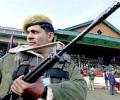
All entry and exit points have been sealed, vehicles are being checked and people frisked. Security in the city and adjoining routes have been intensified to check for any suspected person, police said.
Havaldar Jaspal Singh of 14 Sikh Light Infantry shot himself with his service rifle at an army camp in Pargwal area on Saturday night, Defence Spokesman Col S D Goswami said. The jawan died on the spot, he said, adding the body has been sent to his native Patiala city for last rites.

Five other civilians injured as Pak troops shelled border out posts along the IB.

On Sunday, a civilian was killed and two persons were injured in the Pakistani shelling along the IB in Kanachak belt of Jammu district, raising the death toll in the ceasefire violations since Thursday last to 12 and injuries to over 60.
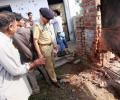
Border dwellers in Bobiya and adjoining hamlets in Hiranagar sector in Kathua district have been experiencing sleepless nights due to the intensified shelling and firing by Pakistan.
.jpg)
After overnight intermittent firing, Pakistani troops targeted Indian forward posts and hamlets along the LoC in Jammu and Kashmir's Poonch district with rocket propelled grenades, mortar bombs and medium machine guns on Friday morning.

Breaching ceasefire, Pakistani troops targeted forward posts and civilian areas in Poonch district along the Line of Control for the second day on Thursday.
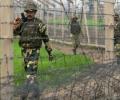
Pak troops resorted to heavy firing and mortar shelling on forward posts and hamlets along the Line of Control in Poonch.

After a brief lull of three days, Pakistan on Wednesday again resorted to firing from across the International Border in Samba district of Jammu and Kashmir in yet another act of ceasefire violation.
The Hamirpur and Sabzian sectors in Poonch have been targeted by Pakistan troops for the past 3 days, possibly to facilitate infiltration from across the border.

In the backdrop of the night-long firing by Pakistan Rangers targeting civilians areas and BoPs, BSF troops and the Rangers on Friday held a commandant-level flag-meeting along International Border in Samba sector of Jammu and Kashmir, during which they impressed upon each other to respect the ceasefire.

In escalating ceasefire violations that continued on the night of October 7, Pakistani troops targeted over 40 Border Out Posts and 25 border hamlets with heavy mortar shells in Jammu sector and LoC areas in Poonch district, leaving 12 people including a JCO injured. Military officials of India and Pakistan discussed on the hotline the cross-border firing in Jammu and Kashmir but there was no signs of a solution.
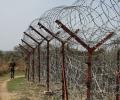
With no let up in the ceasefire violations by Pakistan on the International Border in the Jammu region, the state government is formulating a contingency plan to deal with the situation.
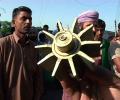
Violating the ceasefire again, Pakistani troops pounded Indian posts and civilian areas along the LoC with 82 mm mortar shells and fired from automatic weapons in Poonch district.
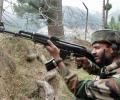
These fresh violations came after a gap of one month and four days along Indo-Pak border in Jammu and Kashmir.

Nine persons have been killed so far in ceasefire violations over three days, police officials said.

In yet another ceasefire violation, Pakistan on Thursday again resorted to firing on Border Out Posts along the International Border in the Samba and Jammu districts of Jammu and Kashmir.
Over two dozen "unprovoked" ceasefire violations by Pakistan have been reported after the army announced that it carried out surgical strikes on terrorist launch pads across the Line of Control.
