.jpg)
The HSBC Emerging Markets Index, a monthly indicator derived from the PMI surveys, continued its upward trajectory in November on the back of faster manufacturing growth.
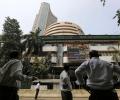
On the macroeconomic data front, PMI data on manufacturing and services sector will also influence trading

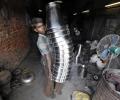
Factory growth picked up in May.

The S&P BSE Sensex shed 112 points to close at 27,167 and the Nifty50 dropped 35 points to finish at 8,336.

Sluggish rise in new business inflows and a cautious approach to costs reportedly led Indian manufacturers to shed jobs in September.

The breadth, indicating strength of the market was strong

Chinese shares opened lower, with the Shanghai Composite Index down 1.8% and the CSI300 index down 2.2%.

The Nikkei India Manufacturing PMI dipped from 50.3 in November to 49.1 in December.

The HSBC Emerging Markets Index, a monthly indicator derived from the PMI surveys, remained only just above the neutral threshold of 50.0 in September, signalling muted output growth in emerging markets.
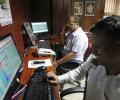
In the broader market, the S&P BSE Midcap and the S&P BSE Smallcap indices added 0.6% and 1.3%, respectively to touch their fresh lifetime highs.
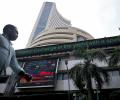
RBI policy, macro data, company earnings to decide market course this week: Experts
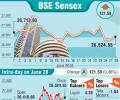
The S&P BSE Sensex gained 122 points to end at 26,525.

India's services sector activity expanded at a slower pace in December as rates of growth in sales eased to a three-month low and staff hiring came to a halt amid weak business optimism, a monthly survey said on Wednesday. The seasonally adjusted India Services Business Activity Index fell from 53.7 in November to 52.3 in December. The index was above the critical 50 mark that separates growth from contraction for the third month in a row during December, but pointed to the slowest pace of expansion in the three-month sequence.

The recovery in manufacturing is still likely to prove "protracted" given the lingering structural constraints.

"Any lingering concern that India's manufacturing recovery was tailing off should be put off. A second consecutive rise in PMI has taken the series to a new cycle high consistent on double digit rise in industrial production," said Robert Prior Wandesforde, senior asian economist, HSBC.

The Nikkei Markit India Manufacturing Purchasing Managers' Index (PMI) -- an indicator of manufacturing activity -- declined from 52.5 in April to a three-month low of 51.6 in May.

BSE Bankex and Telecom indices led the fall.

Experts said the slowdown could be attributed to adjustments leading to destocking and the offering of discounts by companies as the government ushered in the new indirect taxation system on July 1.

The new orders sub-index, which includes domestic demand as well as orders from abroad, rose to 53.2 in May


India's services sector activity surged to a seven-year high in January driven by sharp increase in new business orders, leading to job creation and business optimism amid favourable market conditions, a monthly survey said on Wednesday. The IHS Markit India Services Business Activity Index rose from 53.3 in December to 55.5 in January, signalling the strongest upturn in output in seven years.

NSE Nifty finished higher by 46.05 points, or 0.39 per cent, at 11,707.90. Asian Paints was the top gainer in the Sensex pack, rallying 6.32 per cent, followed by Nestle India, HUL, Bajaj Auto, IndusInd Bank, Tata Steel, Maruti and PowerGrid.

The recovery in the Indian services sector was sustained in November as new work orders supported business activity growth and the first rise in employment in nine months, a monthly survey said on Thursday.

The Nikkei Markit India Manufacturing Purchasing Managers' Index (PMI) -- a gauge of manufacturing performance -- fell to 52.3, down from October's 22-month high of 54.4.

The services sector had slipped into contraction in July as confusion caused by the GST rollout triggered a dip in new business orders.

During March, the rate of inflation slowed to the weakest in four months and was below the long-run survey average

Investment trend by foreign investors will also be closely watched for stock movement

Finance Minister Nirmala Sitharaman had in May announced that there will be a maximum of four public sector companies in strategic sectors, and state-owned firms in other segments will eventually be privatised.
A reading above 50 indicates expansion while a one below this level means contraction.
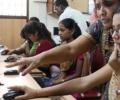
Marking its quickest rise in over seven years, India's services sector activity expanded for the fifth successive month in February, tracking spike in business orders, renewed export demand and strengthening business confidence, a monthly survey showed on Wednesday. The IHS Markit India Services Business Activity Index rose from 55.5 in January to 57.5 in February. This is the fastest expansion in services output since January 2013.

Economic recovery in US, euro zone help; new orders sub-index at 52.4

'Dr Khobragade is now a Counsellor without any specific work responsibility at the PMI. There is not going to be any work for her at the mission at least for now. This is an interim measure to help her so she can get diplomatic immunity and get over this situation.'

Dietician Komal Jethmalani provides expert help.
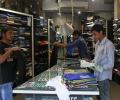
The improvement in business conditions promoted job creation, while confidence towards the year-ahead outlook for activity was at a four-month high during March.

Dietician Komal Jethmalani provides expert help.
The 30-share Sensex was up 137 points at 19,517 and the 50-share Nifty was up 45 points at 5,780.
The department for promotion of industry and internal trade has asked the telecom department and State-owned BSNL to put on hold the tender for setting up 4G network, valued at Rs 9,000 crore, after allegations emerged that the tender favoured foreign companies. The tender was floated by BSNL in March under the new management for setting up the 4G network.
The 30-share Sensex ended up 106 points at 20,898 and the 50-share Nifty ended up 42 points at 6,217.

Service providers' confidence with regard to the 12-month outlook for business activity remained positive.
