
Opposing the fresh bail pleas of former Karnataka minister Gali Janardhan Reddy and his brother-in-law B V Srinivas Reddy, the Central Bureau of Investigation on Friday alleged that the two were main culprits in the Obulapuram Mining Company mining scam.
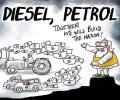
Petrol and diesel prices are unlikely to be increased despite firming raw material costs because of upcoming general elections next year, Moody's Investors Service said. Three state-owned fuel retailers -- Indian Oil Corporation (IOC), Bharat Petroleum Corporation Ltd (BPCL) and Hindustan Petroleum Corporation Ltd (HPCL) -- which control roughly 90 per cent of the market, have kept petrol and diesel prices on freeze for a record 18 months in a row. This is despite the raw material (crude oil) cost surging last year, leading to heavy losses in first half of 2022-23 fiscal year before easing oil prices propelled them to profitability.
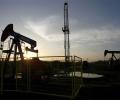
There are about 23 oil refineries in India with a combined capacity of 230 million tonnes per annum.

India may have to lean more on West Asian nations for supplies of liquefied petroleum gas (LPG), a cooking fuel, in the coming years after Indian state-run refiners drew up big plans to diversify into producing more profitable petrochemicals. This shift leads to reduced LPG output, Indian refining executives said. The mantra for state-run oil companies, from Indian Oil Corporation (IndianOil) to liquefied natural gas (LNG) importer Petronet LNG, which are looking to diversify their businesses from lower-margin fuels, has been value-added petrochemicals.

Investors are showing some interest in the downstream energy cycle. Refiners and marketers, especially the public sector (PSU) oil marketing companies (OMCs) could see a revival of marketing margins. Lower crude oil and gas prices may also improve margins in industries like paints, logistics, synthetic fabrics, plastics, and fertilisers. In the medium-term, however, there could be a supply overhang affecting OMCs as new refining capacities are scheduled to be commissioned, especially in China, and this may lead to a drop in the refining margins as capacity would be surplus to demand until and unless there's a pick-up in global growth.

International oil prices continue to be extremely volatile, falling on one day and rising thereafter, a top oil ministry official said explaining the reason behind no reduction in petrol and diesel prices despite softening in input cost, but could not say if the rates will be cut before Maharashtra elections. Global oil benchmark Brent crude futures fell below $70 per barrel last week -- the first time since December 2021 -- but gained thereafter. Brent was trading at $74.58 per barrel on Thursday while West Texas Intermediate advanced to trade at $71.71.

India's trade account could come under pressure and there could be an inflation push if crude oil prices remain above the $90 per barrel (Brent) for a prolonged period since India imports over 85 per cent of its oil and roughly 50 per cent of its gas. A rebound in economic activity is bound to lead to higher fuel demand. While India is the third-largest importer of crude, it is a net exporter of refined products, which helps to compensate to some degree.
Lower crude oil costs and higher marketing margins are expected to raise the fortunes of oil marketing companies (OMCs) in the first quarter (Q1) of 2023-24 (FY24), while city gas distribution (CGD) companies could also benefit from lower spot prices of liquefied natural gas (LNG). However, in a break from the past, growth trends are expected to diverge for various segments within the broad energy sector. Analysts expect the earnings from gas production to go down for upstream national oil and gas companies such as Oil and Natural Gas Corporation (ONGC) and Oil India (OIL) due to the introduction of the new domestic gas pricing regime on April 1. After showing steep losses over the first half of 2022-23 (FY23), the marketing margins of OMCs have steadily recovered in four months.
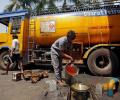
The medium-term scenario for oil marketing companies (OMCs) is high risk due to the surging crude and gas prices. Apart from OPEC-plus cutting production, the Hamas-Israel conflict has caused fears of supply disruption. The July-September quarter of 2023-24 (Q2FY24) saw positive surprises for OMCs. Strong gross refining margins (GRMs) more than offset weak marketing margins.

There has been a sharp recovery in the headline corporate earnings in the April-June 2023 quarter (Q1FY24), after a dismal showing by early bird companies. The combined net profit of the 983 listed companies that have declared their quarterly results, so far, was up 64.7 per cent year-on-year to record a high of Rs 2.68 trillion in the first quarter, but growth in earnings remained lopsided because most of the incremental gains came from a handful of companies. Moreover, the quarterly numbers showed a continued slowdown in revenue growth.

The limited availability of flexible (flex)-fuel vehicles in the Indian market and the slow rollout of ethanol-blended petrol by oil-marketing companies (OMCs) remain major obstacles to achieving widespread use of biofuels in the transportation sector in India. Recently, two Union ministers have emphasised India's biofuel potential, arguing that it has the capacity and potential to lead a transition towards widespread biofuel adoption. Road Transport Minister Nitin Gadkari signalled that this transition is well underway and urged car manufacturers to quickly adapt and introduce new biofuel-run vehicles, lest the government resort to taxing diesel vehicles.
Households may be feeling the pinch of higher inflation but corporate India is enjoying record high margins and profits. The combined quarterly net profit of listed companies scaled a new high in the April-June 2023 quarter owing to a sharp rise in operating and net profit. The expansion in margins more than compensated for the slowdown in revenue growth, which slipped into single digits in Q1FY24 after a gap of nine quarters.

The market responded positively to the Q1 results of oil marketing companies (OMCs), Bharat Petroleum Corporation (BPCL) and Hindustan Petroleum Corporation (HPCL) despite numbers being weaker than consensus. BPCL's reported gross refining margin (GRM) was in line at $7.9 per barrel (bbl) in Q1FY25, which implies marketing margin stood at Rs 4.8 per litre. Standalone profit after tax or PAT at Rs 3,000 crore was down versus consensus due to under-recoveries in LPG business.
BPCL is a high revenue-earning public-sector undertaking (PSU) and plans to privatise it are completely off the table, Petroleum and Natural Gas Minister Hardeep Singh Puri said on Tuesday after assuming charge of the ministry for the second time. "Why would we divest ourselves of highly successful Maharatnas like BPCL," Puri said, arguing the Centre was not in favour of divesting its stake in oil PSUs.

As a panel of senior ministers deliberates on the need to review curbs on exports of some rice varieties, data shows that since outbound shipments saw restrictions in July-August last year, the non-basmati segment has suffered more than basmati exports. Sources said the panel is expected to soon deliberate on a few suggestions to ease the export curbs on some rice varieties due to higher-than-required stocks in the central pool. The panel, some observers feel, may also postpone the decision to ease the export curbs till a firm picture emerges on the latest kharif paddy sowing.

Overall market reaction to the Budget was neutral. Investors absorbed the changes to the tax rates (positive for salaried class) and capital gains taxes (CGTs, negative due to the removal of indexation and increases. Other proposals largely pertain to supporting rural development, buybacks taxed as dividends, Custom duty changes that impact multiple sectors, higher outlays for clean energy, etc. There's some moderation in the growth of capex outlay across defence, fer

India's corporate sector is likely to report a slowdown in revenue growth and earnings for the July-September 2023 period (Q2FY24), according to earnings estimates by brokerages, after the country's top listed companies posted higher than expected profits for the first quarter. The combined net profit of Nifty50 companies, based on brokerage estimates, is expected to have grown by 19.6 per cent year-on-year (Y-o-Y) to Rs 1.75 trillion in Q2FY24 - a sharp deceleration from 37.6 per cent Y-o-Y growth in the combined earnings of index companies in the April-June 2023 period. According to estimates, the combined earnings in the second quarter would be down 8.8 per cent on a quarter-on-quarter (Q-o-Q) basis and the lowest in the past three quarters.

While most analysts are expecting poor results from oil marketing companies (OMCs) in the first quarter of 2024-25 (Q1FY25) and even in the first half (H1) of FY25, GAIL (India) could be an outlier. Upstream producers, Oil and Natural Gas Corporation (ONGC) and Oil India (OIL) could do well due to strong crude and gas prices, but refiners are likely to see weak margins and the impact of frozen prices during the election period will also be negative.

The ongoing Hamas-Israel conflict has disrupted India's efforts to gain from a recent fall in crude oil prices. Since Hamas' invasion of southern Israel on October 7, petroleum has become costlier by around $5 per barrel, threatening to stoke prices and impact growth. Brent crude was trading at $89.8 per barrel on October 9 (9.15 pm IST), up over 4 per cent, thwarting India's anticipation of a period of declining oil prices - after the leading global petroleum benchmark declined by around 11 per cent last week.

Rising prices of cereals and concerns over rice production in the 2023-2024 crop year due to insufficient rains followed by floods could be the possible causes.

The next auction for bauxite blocks in Odisha may see heightened interest with Adani Group charting an entry into alumina refining and existing players looking to boost capacity. Hemant Sharma, principal secretary, Odisha industries department, said that three bauxite blocks have been scheduled for auctions this year. Adani Group - which will be setting up a 4-MMTPA alumina refinery and may enter aluminium production - is expected to bid for mines, though raw material linkages shall be available from Odisha Mining Corporation (OMC).
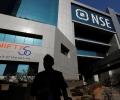
The benchmark Nifty and Sensex could see another 8-10 per cent from the current levels, said HDFC Securities in its outlook for equity markets in 2024. The brokerage said that the market movement in the next year will not be linear, and there will be more volatility. When asked about the market reaction to the General Elections in 2024, Dhiraj Relli, managing director and CEO of HDFC Securities, said more than the outcome of the elections, the market movement in the next three to four months will decide the market trajectory post elections.
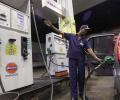
Six non-BJP ruled states -- West Bengal, Tamil Nadu, Andhra Pradesh, Telengana, Kerala and Jharkhand -- have not reduced the VAT on petroleum products, leading to higher prices of petrol and diesel there, Petroleum Minister Hardeep Singh Puri said on Thursday. Puri said in Lok Sabha that the central government has reduced excise duty on petroleum products and some other states, following cues, reduced their Value Added Tax (VAT). Six states -- West Bengal, Tamil Nadu, Andhra Pradesh, Telengana, Kerala and Jharkhand -- have not reduced the VAT, he said amidst vocal protests by the opposition members.

'BJP was always there in my blood, but due to some reasons I had gone out, but today I feel I have come back to my mother's lap. Looking at my brothers here, I don't feel like I'm coming back to the BJP office after 13 years'

Rising crude oil prices and muted passenger traffic in the July-September quarter (second quarter, or Q2) of 2023-24 (FY24) have raised concerns about the profitability of listed aviation players. These two concerns have caused the stock of InterGlobe Aviation (IndiGo), the largest player in the sector, to slip by 11 per cent since its highs at the end of July. Nuvama Research expects yields to cool down in the near term due to seasonality, rising crude oil prices, and higher capacity.

India is back on the diplomatic table pushing oil producing countries to raise production in a bid to cool down runaway oil prices. Brent crude oil prices traded above $90 a barrel, on Thursday, for the first time since 2014. Brent is the most popular marker for crude oil trade. It is used as a benchmark for two-thirds of the world's internationally traded crude oil.
Petrol and diesel prices were cut by Rs 2 per litre each as state-owned oil companies ended a nearly two-year-long hiatus in rate revision, just hours before the general election schedule was announced.

The S&P BSE Sensex and the Nifty50 have hit record highs amid the poll outcome-triggered bull frenzy at the bourses. Most analysts feel that the indices are on course to rise further over the next few months - till the general elections - albeit amid intermittent corrections - largely triggered by global developments. Bharatiya Janata Party's (BJP's) win in the three state elections of Madhya Pradesh (MP), Rajasthan and Chhattisgarh, analysts at Jefferies believe, reinforces the consensus expectations of a Modi win 2024 national elections with a greater likelihood of over 300 seats for the BJP.

They want more cash, forex, higher bond coupons and increase in market prices for petrol, diesel, LPG.

The state government's statement came soon after Dutee tried to douse the controversy that erupted when she put her BMW car on sale.

ONGC's chairman and managing director Sudhir Vasudeva tells Business Standard that any price for natural gas that is more than $4.2 a unit is good for the company.

Despite multiple headwinds at the start of 2023, the Indian markets delivered a strong performance, posting 19-20 per cent growth for the year. Even as new records were set, investor sentiment remains strong going into 2024, given the lower inflation, expectations of steady to lower interest rates, higher economic growth, and strong inflows. However, the overriding concern for most brokerages is valuations.

Oil marketing companies to lose 10 paise on petrol and Rs 6 per litre on diesel from next month.

'SUV is a very intensely fought category, unlike hatchbacks and cars.'

The headline for corporate profit growth has been very encouraging in the July-September quarter (Q2) of 2023-24 (FY24), with the combined net profit of listed companies up by 38 per cent year-on-year. However, the earnings distribution has been very lopsided, with most of the growth coming from public-sector oil-marketing companies (OMCs), banks, non-bank lenders, automobile (auto) companies, and cement producers. By comparison, companies from information technology services, fast-moving consumer goods (FMCG), retail, and consumer durables were disappointed, experiencing a sharp slowdown in net sales growth and a relatively muted increase in reported net profit.

With the price of a cylinder touching Rs 800, it's becoming increasingly unaffordable to an already price-sensitive population, threatening to risk one of the most-celebrated campaigns of the Modi regime, reports Twesh Mishra.

The Centre has indicated that it would consider giving direct cash subsidy to state-owned oil marketing companies this year, instead of bonds, to compensate them for selling cooking fuel at lower than market price.

Government-controlled oil-marketing companies (OMCs) have held back petrol and diesel price revisions for a week and are expected to continue doing so, ostensibly owing to political reasons. It appears that the Centre has informally conveyed to the three major OMCs to not revise fuel prices for the time being, two people in the government said. This informal directive follows the talks between the Centre and states on cutting taxes and bringing the auto fuels under the good service tax regime not fetching the desired results, so far.
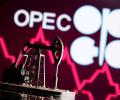
The surprise decision of OPEC and its allies, including Russia, to cut oil output may cause an immediate rise in prices, delaying revision in fuel prices in India, industry sources said. The grouping of Organisation of Petroleum Exporting Countries (OPEC) and its allies, called OPEC+, on Sunday decided to further cut oil output by around 1.16 million barrels. The move led to Brent rising by almost 6 per cent to $84.58 per barrel on Monday.

However, it may still not change its stance on the policy rate as inflationary pressures are coming from high commodity prices.
