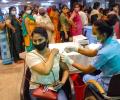
Government institutions and pharma industry are examining if a 'cocktail' approach to making a multi-variant Covid-19 vaccine works against multiple strains of the ever-mutating virus, reports Sohini Das.

The Central Drugs Standard Control Organisation has granted restricted emergency use authorisation to two new vaccines and a drug for COVID-19, taking the number of preventives and treatments available in India to 12.
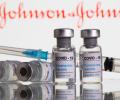
India is not keen to 'bow down' to demands related to indemnity against legal liabilities in case any vaccine recipient develops severe adverse reactions post inoculation.
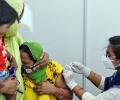
Experts, however, feel that given the intensity of the second wave and the high single dose coverage, India is in a good position to avoid any drastic wave in the near future.

We are entering 2022, facing another infectious variant, with much the same baseless confidence, notes Mihir S Sharma.
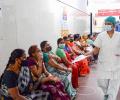
Both manufacturers have sought funds in excess of Rs 150 crore under the department of biotechnology's Mission Covid Suraksha scheme. Announced last November, the scheme has an outlay of Rs 900 crore to help develop Covid vaccines, from the clinical development stage to setting up production sites.

India has purchased 500 million doses of the Oxford University-AstraZeneca vaccine candidate, one billion from the United States company Novavax and 100 million doses of the Sputnik V candidate from Russia's Gamaleya Research Institute, according to the US-based Duke University Global Health Innovation Center.

The protection gained after being fully vaccinated with both doses of the Pfizer/BioNTech and Oxford/AstraZeneca vaccines against Covid-19 wanes over time, a new UK study reported on Wednesday.

India's willingness to play a big role in the manufacturing and to allow some of those vaccines to go to other developing countries will be an absolutely critical part of containing the pandemic, said Gates.

US President Joe Biden on Wednesday announced that the US will allocate 75 per cent - nearly 1.9 crore of the first tranche of 2.5 crore doses - of unused COVID-19 vaccines from its stockpile through the UN-backed COVAX global vaccine sharing programme to countries in South and Southeast Asia as well as Africa.
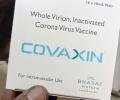
To address the shortage of COVID-19 jabs in the country, the government is exploring the possibility of boosting production of vaccines, including identifying manufacturing sites for indigenously developed Covaxin outside India, sources said.

'Your body will be able to deal with Omicron at any time, but it depends (on when) if you are vaccinated.'
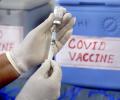
As India prepares to launch its vaccine drive on January 16, here is a look at the options:

The Serum Institute of India, Bharat Biotech and Pfizer have applied to the DCGI seeking emergency use authorisation for their COVID-19 vaccine candidates and are awaiting approval.

By January-February, it's expected to have at least 100 million doses for the Indian government, reports Sohini Das.
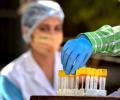
The company has set an affordable ceiling price of USD 3 (around Rs 225) per dose, it added.

The new malaria vaccine (RTS.S/ AS01, tentatively brand-named Mosquirix) is the very first one to offer immunity against a parasite -- specifically the plasmodium falciparum parasite, which is the deadliest of the five parasites that cause malaria.
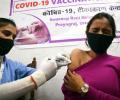
'Scientific data has proven that masks can reduce COVID-91 transmission by 53 per cent...A booster dose of vaccine, even if it works, is just a temporary fix'

'Almost 70 per cent production time of a vaccine is dedicated to quality control, which is done through several hundred tests.'

Apart from the 1.1 crore doses of Covishield being procured from the Serum Institute of India, 55 lakh doses of indigenously developed Covaxin were being obtained from Bharat Biotech, Union Health Secretary Rajesh Bhushan said at a press conference.
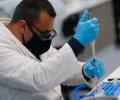
The Centre has also contacted five domestic and three multinational vaccine makers to understand how soon a candidate vaccine against Covid-19 will be ready.
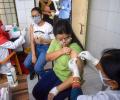
As states grapple with a shortage of coronavirus vaccines, the Centre on Thursday said that over two billion doses will be made available in the country in five months between August and December, enough to vaccinate the entire population.

Behind each Covid vaccine are hundreds of parents, who had the courage and conviction to come forth with their children for the trial of a vaccine which was, until then, untried in that age group, reports Sindhu Bhattacharya.

'Scientifically the effect and change of Delta plus has to be watched through our INSACOG system. This has to be detected and we have to see its presence in the country'

India is struggling with a second wave of the pandemic with more than 3,00,000 daily new coronavirus cases being reported in the past few days, and hospitals are reeling under a shortage of medical oxygen and beds.

The government plans to immunise 30 million people in the first phase, starting February, and by July, the target is to vaccinate 250 million people, reports Sohini Das.

The president said he had discussed with Prime Minister Modi on when the US would be able to send actual vaccines to India.
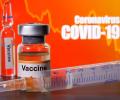
Over the last four days, the Indian arm of US pharmaceutical giant Pfizer, Pune-based Serum Institute of India and Hyderabad-based pharmaceutical firm Bharat Biotech have applied to the Drugs Controller General of India seeking emergency use authorisation for their COVID-19 vaccines.
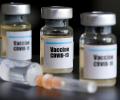
Responding to another question, Choubey said that the phase-I of clinical trials have revealed excellent safety of the two candidate vaccines indigenously developed by Bharat Biotech in collaboration with Indian Council of Medical Research and Cadila Healthcare Ltd, and now their immunogenicity testing is in progress. Their phase II clinical trials are ongoing.
By 2022, there is a plan to make an mRNA-technology vaccine, for which it has tied up with Canadian firm Providence Therapeutics.
Phase-I clinical trials have revealed "excellent safety" of the two candidate vaccines indigenously developed by Bharat Biotech in collaboration with Indian Council of Medical Research and Cadila Healthcare Ltd and their immunogenicity testing is now in progress, minister of state for health Ashwini Choubey informed the Rajya Sabha on Tuesday.

Of the 23.9 million vaccinators who provide vaccination under the universal immunisation programme, 15.4 million will be used for Covid vaccination.

Pune's Serum Institute of India, the world's largest vaccine maker by volume, is placing its bets on the Oxford-AstraZeneca vaccine candidate AZD1222 with CEO Adar Poonawalla stating he would start manufacturing at personal risk.

'Between its natural immunity with Delta, in so many populations, and then getting on top of the vaccination (situation), I do not think India is going to have another bad wave.'
'We are hoping by March, the government allows us to export and give it to the private market.'

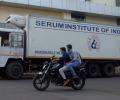
A massive pan-India inoculation drive against COVID-19 was set in process on Tuesday with more than 56 lakh doses of the Covishield vaccine flown to 13 cities across India from Pune and taken to designated national and state-level stores amid tight security.

'All the vaccines that are available in most countries, right now, are all highly effective and safe.'

'Even after vaccines are given, precautions like using a mask and maintaining social distancing have to be taken.'
