
Auto experts from CarJasoos will answer all your questions related to buying, selling or maintenance of new or used cars.

Unveiled in December last year, the Altroz, which is the industry's first BSVI diesel-ready car. is also the first vehicle model based on the brand's Alfa platform and the second vehicle showing the Impact 2.0 design language. Besides Altroz, Tata Motors also launched the BSVI versions of Nexon, Tiago and Tigor.
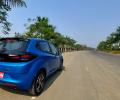
The new 1.2 L turbocharged petrol BS6 engine, which is borrowed from the Tata Nexon, takes the petrol version of the Altroz from a mere 86PS of power to a much needed 110PS of power, finds Rajesh Karkera.

Tata Motors on Tuesday launched its second electric vehicle -- Tigor EV, catering to the personal segment in the domestic market, priced between Rs 11.99 lakh and Rs 13.14 lakh (ex-showroom). The model comes in three variants, priced at Rs 11.99 lakh, Rs 12.49 lakh and Rs 12.99 lakh. A dual tone top-end trim is tagged at Rs 13.14 lakh. The auto major has already achieved success with its first electric model, Nexon EV and now commences deliveries of Tigor EV from around 150 sales outlets in 70 cities across the country.

Dealers across brands are slashing prices by Rs 20,000 to over Rs 1 lakh, depending on the car model.
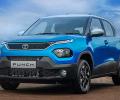
Homegrown auto major Tata Motors on Monday said it will launch its mini SUV Punch in the ongoing festive season. Punch is based on the H2X concept, which Tata Motors had showcased at the Auto Expo 2020. It will be positioned below the company's compact SUV Nexon and is expected to hit the market around Diwali this year.

The electric vehicle evolution in India's passenger vehicle market has remained frozen in time and may see limited adoption over the next decade, experts say.

Buying a car, particularly a diesel-powered one, is set to pinch the customers' pockets even more from the next financial year, as the second phase of Bharat Stage VI (BSVI) emission norms kicks in. The rules require cars to be compliant with real driving emission (RDE) norms, which measure pollutants emitted by cars while they are being driven on the road, unlike in a laboratory test. The norms may increase the cost of producing diesel vehicles by nearly Rs 75,000 to Rs 80,000, and petrol-powered ones by Rs 25,000 to Rs 30,000, analysts said.

With increased consumer awareness and government support in place, it is the opportune time to enter the electric passenger vehicle segment, Mahindra Group Chairman Anand Mahindra said on Monday. With an eye on gaining leadership in the electric four-wheeler segment, the Indian auto major announced that it will launch five new electric Sports Utility Vehicles (SUVs) for both domestic and international markets, with the first four expected to hit the road between 2024 and 2026. The company would introduce the first of the five e-SUVs towards the end of 2024, starting with the Indian market.

At a price starting from Rs 849,000 and going up to Rs 12.14 lakh, the XUV300 competes with the Maruti Brezza, Tata Nexon, Ford EcoSport, and Honda WR-V.

Under the scheme, customers can now make zero down payment, avail a six-month EMI holiday (only interest needs to be serviced monthly) and access up to 100 per cent on-road funding for a loan tenure of five years, Tata Motors said in a statement.

With only a handful of models by a few manufacturers including Tata Nexon, MG ZS, Hyundai Kona, among others, the segment has remained under tapped.

The Tata Nexon and Mahindra Marazzo ace the safety ratings, but what about other Made in India cars? How safe is the car you drive?

These cars can change the fortune of automakers.

Tata Motors is planning to invest Rs 15,000 crore in the EV segment in the next five years, a top company official has said. The company, which is a leader in the newly emerging EV segment with offerings such as Nexon, is also planning to develop around 10 more new offerings in the segment, president for Passenger Vehicles Business of Tata Motors Shailesh Chandra said. "As far as future is concerned, in next five (years) we will invest Rs 15,000 crore in electrification.

The Sway, which is the likely name for the Zica sedan has been codenamed as Kite 5.

Tata Motors is looking to ramp up the production of electric vehicles as demand continues to outpace the manufacturing activity by a huge margin, according to a top company official. The Mumbai-based automaker, which led the passenger electric vehicle space in the domestic market in last fiscal year, has been receiving an average of 5,500-6,000 bookings in the past two months for its EV range. The company sells three electric products -- Nexon EV, Tigor EV and XPRES-T -- in the domestic market.

To make the most of your vehicle, use the age-old 20/4/10 personal finance rule, suggests Bindisha Sarang.

Market leader Maruti Suzuki is putting finishing touches to its plan of finding its feet in what is being hailed as a battle of epic proportions in India's fastest-growing passenger vehicle segment, reports Arindam Majumder.
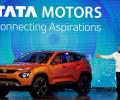
Homegrown auto major Tata Motors on Tuesday said it will raise $1 billion (Rs 7,500 crore) in its passenger electric vehicle business from TPG Rise Climate at a valuation of up to $9.1 billion. Tata Motors Ltd (TML) and TPG Rise Climate, the dedicated climate investing strategy of private investment firm TPG, have entered into a binding agreement in this regard. Under the agreement, TPG Rise Climate along with its co-investor ADQ, will invest in a subsidiary of Tata Motors that will be newly incorporated, the company said in a statement.

This major shift in the consumer choice has forced carmakers to field their version of expedient under 4-metre machines in the market.

This major shift in the consumer choice has forced carmakers to field their version of expedient under 4-metre machines in the market.

Tata Motors, India's third largest passenger vehicle maker, took pole position in the competitive sport utility vehicle (SUV) market in October, reveals the data from industry sources. Riding high on the Punch - the sub-compact SUV offering launched on October 18 - the Tata group flagship sold a record 23,381 units in October, higher than 20,022 units sold by archrival Mahindra & Mahindra, 18,538 units sold by Hyundai Motor India, and 15,931 units sold by Kia Motors India. Utility vehicles - that include SUVs and multipurpose vehicles - accounted for almost one in every two passenger vehicles sold in India in the first seven months of the current financial year, according to the Society of Indian Automobile Manufacturers.

Tata Motors is looking at various measures, including direct buying from stockists and making changes in the product configurations, to offset the impact of semiconductor shortage on its production activities and sales, a top company official has said. The auto major, which sells models including Nexon, Harrier and Safari in the domestic market, is also looking at different kinds of chips which could be used in components where the supply situation is severe. The automaker expects the situation to remain challenging in the ongoing quarter and some improvement in supplies only in the second half of the fiscal.
The business will also see a change of guard. Shailesh Chandra, president of EV and corporate strategy, will replace Mayank Pareek as president of PV business, including EV, with effect from April 1. Pareek will be superannuating from the company after a six-year stint at the end of February 2021. Chandra and Pareek will work on transition over the next few weeks.
Homegrown auto major Tata Motors on Wednesday unveiled a concept compact sports utility vehicle Nexon along with another concept car ConnectNext.

Leading carmakers Maruti Suzuki, Hyundai and Tata Motors reported robust dispatches to dealers in May on the back of strong demand for passenger vehicles across regions, even as the global semiconductor shortage continued to impact production. Mahindra & Mahindra, Kia India, Toyota Kirloskar Motor, Honda Cars and Skoda also witnessed strong demand for their models last month. The month of May also witnessed Tata Motors race ahead of Hyundai in terms of domestic wholesales.
Tata Motors plans to have 10 new battery electric vehicles (BEVs) in its domestic product portfolio by 2025 as it looks to drive its business model towards sustainable mobility going ahead, as per Tata Motors chairman N Chandrasekaran. In his message to the shareholders, he noted that the auto major aims to be amongst the world leaders in sustainable mobility solutions and as part of that it is also exploring tie-ups in cell and battery manufacturing to secure supplies for its portfolio of green vehicles. "In India, EV penetration in our portfolio has now doubled to 2 per cent this year and we expect penetration to increase exponentially in the coming years. "Tata Motors will lead this change in the Indian market. By 2025, Tata Motors will have 10 new BEV vehicles and as a Group, we will invest proactively to set up charging infrastructure across the country," Chandrasekaran informed shareholders in the company's Annual Report for 2020-21.

A digital configurator comprising a three-dimensional graphics-based app will allow customers to choose specifications and align the output generated by the tool to company's back-end manufacturing.

Close to 50 models were launched in India in the past 12 months, but companies have not been able to realise their potential due to the pandemic.

India's electric mobility goal, which has so far been riding on two wheels, is all set to graduate to four wheels. At least, the journey has begun. Hyundai Motor India said it would invest Rs 4,000 crore till 2028 to launch half-a-dozen electric vehicles (EVs) in India. It would eventually straddle premium and mass segments. The first of these - the electrified version of an internal combustion engine (ICE)-powered model - will go on sale as early as next year.

For players like Toyota Kirloskar and Ford, the contribution of UVs to overall sales is now well over 60%.

First off the block will be a new multi-purpose vehicle which is being co-developed with Toyota - Suzuki's alliance partner. The model will also wear a Toyota badge.

DRS to be used in IPL this year: Rajeev Shukla

Higher exports will also drive up volumes, as the company seeks to avail of the benefits under the government's recently announced production linked incentive scheme.

The new year will see a line of hatchbacks (including compact SUVs) hit the Indian roads. Rajesh Karkera/Rediff.com offers a peek.

Tata Motors plans to showcase over 20 passenger and commercial vehicles at the upcoming Delhi Auto Expo.

A record number of 85 products will be launched.

The company, which rents cars by the hour, day, week and month, has Mahindra E2O Plus and Tata E Tigor available on the platform for which it charges a subscription fee of Rs 15,000-20,000 per month.

Dealers of Tata Motors in most parts of the country have stopped placing orders for this small car in the last three-four months and the showrooms are displaying contemporary models such as Tiago, Tigor, Hexa and Nexon.
