
Even three months back, it was trailing Samsung and Nokia in market share in overall handsets.
Micromax was best known so far as the handset vendor which forced Nokia and Samsung to review their strategies for the entry-level market in India.

For the next few years, the company would tap services in the areas of education, health and security, through partnerships.

Ashish Pratap Singh wonders if Samsung will meet the same fate as Nokia?
Made-in-China phone brands are eating away market share of prominent firms like Nokia and Samsung
Though Micromax sold its first mobile phone just two years ago, it appears confident it can pull off a coup - it already has a 5 per cent market share.

With 8.5 per cent market share in the quarter ended September 2017, Nokia makes it to the top four bestselling feature phones in India.

A look at Canvas Nitro A310, and you could get a fair idea as to why Micromax's growth is not surprising.
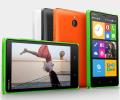
In February this year, Nokia had announced the 'Nokia X' family of affordable smartphones, running Google's Android apps, at the Mobile World Congress in Barcelona.
Nokia's much-awaited Android-based 'Nokia X' will be available in India from March 15, as the Finnish firm takes head-on the likes of Samsung and Micromax to grab a share of the burgeoning affordable smartphone market.

Fair trade watchdog CCI has approved Microsoft's proposed $7.2 billion acquisition of Nokia's mobile devices business, citing that the deal would not have adverse impact on competition in the Indian market.

Eyeing emerging markets for its affordable smartphones, Microsoft launched its first Lumia device without the iconic brand name of Nokia.
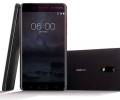
Nokia has managed to enter the top-five list in the feature phone market within six months of its comeback

The Canadian smartphone maker in October last year launched BBM for rival Android- and iOS-based handsets and the app since then has been downloaded on over 40 million such handsets.

The once-popular brand plans to try its luck in the smartphone market with reliability as its key proposition.

Nokia is hiring software experts, testing new products and seeking sales partners.

Samsung may be the leader in the burgeoning Indian mobile market.

Only one in five handsets sold in India this year is likely to be made locally.
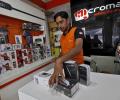
At least two of them - Lava and Micromax - are arming themselves against the Chinese rivals which made them insignificant in the local market over the past few years.

The price range of these mobile phones is between Rs 1,750 and Rs 7,000. After Bharti, others have followed the cue. Tata Indicom recently announced a QWERTY phone, which is a co-branded product with Alcatel.
Competes with Nokia's Asha range and similar offerings from domestic firms like Micromax and Karbonn.
Shruti Puri, who keeps her ears tuned to the Internet chatter and the buzzing grapevine it hosts, offers a sneak peak into what all smartphones and tablets are coming your way in the New Year
Total India smartphone sales touched 2.7 million units during January-March 2012. Samsung emerged as the leader in the smartphone segment with a 40.4 per cent share, followed at number two and number three by Nokia with 25.5 per cent and RIM with 12.3 per cent share.
Karbonn Mobiles, Intex, Lava, Micromax and Maxx Mobile are among the brands that have entered markets in Bangladesh, Nepal, Sri Lanka, West Asia and Africa.
Most India brands have started offering 3G-enabled phones with a starting price of about Rs 4,000.

With the government's crackdown on Chinese handsets, Indian brands like Karbonn, Lava, Micromax and Movil have usurped the vacated space and increased their share of the market to 15 per cent.

Microsoft has launched the Lumia 830, 735 and 730, priced at 330 euros (about Rs 26,190), 219 euros (about Rs 17,370) and 199 euros (about Rs 15,800), respectively, as it tries to build on its acquisition of Nokia's mobile division earlier this year.

India continues to be the fastest growing smartphone market in the Asia Pacific region.

In a first, the India's smartphone market fell by 4%.

It's planning to offer unique apps such as Office 365, One Drive and X-Box Games.

Mozilla showcased a smartphone prototype costing as little as $25 at the Mobile World Congress in Barcelona in February, targeting developing countries including India and China.
Among the top five vendors, Micromax (18 per cent) and Lava (54 per cent) were the only ones to have outstripped the market growth.

However, the firm continued with its operation in the Indian market.

Airtel offers 4G service in 1800 Mhz band frequency while other companies are yet to roll out their services.

'The Chinese outdid them in the price game and turned the competitive dynamics at the lower end of the handset market from price to value.'

Following the footsteps of Motorola, Chinese handset maker Xiaomi is also teaming up with e-Commerce major Flipkart to launch its handsets in India.

Tech giant Apple has launched the 8GB version of its iPhone 5C in India for Rs 37,500, a move aimed at capturing a larger share of the burgeoning smartphone market in India.

Uttar Pradesh has the potential to attract investment of about Rs 72,000 crore (Rs 720 billion) by 2020 in the field of electronics system design and manufacturing.

The revival of feature phones in India is driven by low-cost access to the internet, but the 'dumb phones' are learning to get smart and create a niche, says Veer Arjun Singh.
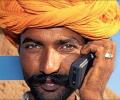
Components manufactured in India are low-value products like casing and box packaging that constitute 5% of the bill for materials required in phone manufacturing.
 © 2026 Rediff.com - Advertise with us - Disclaimer - Privacy Policy - Sitemap - Feedback - About us - Terms of use - Grievances