
Agriculture and allied activity loans are not eligible for the interest on interest waiver announced by the government last week, the finance ministry has clarified.

The Nifty Bank index has come off 15 per cent from its peak in February, underperforming the benchmark Nifty which is down 6%.

'Banks have to be braver, willing to take more risks and give confidence to the customer,' observes Joydeep Ghosh.

Hemant Shivsaran lists the number of projects the Modi government has announced since August to woo Gujarat voters.
Gross bad loans of banks may rise from 6.9 per cent in September 2021 to 8.1-9.5 per cent by September 2022 if the Omicron variant strikes the economy hard, as per the financial stability report of the Reserve Bank released on Wednesday. The report also said that the rising stress level in the retail loan portfolio of banks -- the mainstay of bank credit for many years now -- was led by home loans, which grew in double-digits so far this fiscal. While asset quality improved, with gross non-performing assets (GNPA) and net NPA (NNPA) ratios declining to 6.9 and 2.3 per cent, respectively, in September 2021, the slippage ratio inched up during the same period as private sector banks showed a higher rate of deterioration in asset quality, as per the report.

Reserve Bank Governor Shaktikanta Das on Thursday said the central bank's asset purchases, aimed at mitigating COVID-19-related liquidity stress in the system, did not dilute its balance sheet or compromise on core principles of central banking. In the wake of the pandemic, the RBI undertook several conventional and unconventional measures. "Unlike many central banks, the RBI's asset purchases did not dilute its balance sheet and hence, did not compromise on core principles of central banking," Das said while addressing an event organised by the Bombay Chamber of Commerce. These purchases were confined to risk-free sovereign (government) bonds including state government securities only, he said.

This is part of the first batch of Supplementary Demands for Grants for 2020-21 moved by Finance Minister Nirmala Sitharaman in the Lok Sabha.

Gandhi also called upon the government to immediately put money into the hands of the poor and provide a financial package to the industry to help revive the economy.

So far, 50 people have also been injured in these incidents, the government said in a statement.
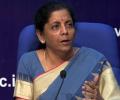
Finance Minister Nirmala Sitharaman on Friday announced a slew of measures to boost economic growth and address distress in various sectors
'As long as Rane is the point-person, the Sena will never revive its partnership with the BJP.'

Economy has become a major cause of concern for the new government with GDP dropping to 5.8 per cent in the last quarter of the 2018-19.

Fitch Ratings on Wednesday cut India's growth forecast to 10 per cent for the current fiscal, from 12.8 per cent estimated earlier, due to slowing recovery post second wave of COVID-19, and said rapid vaccination could support a sustainable revival in business and consumer confidence. In a report, the global rating agency said the challenges for banking sector posed by the coronavirus pandemic have increased due to a virulent second wave in the first quarter of the financial year ending March 2022 (FY22). "Fitch Ratings revised down India's real GDP for FY22 by 280bp to 10 per cent, underlining our belief that renewed restrictions have slowed recovery efforts and left banks with a moderately worse outlook for business and revenue generation in FY22," it said. Fitch believes that rapid vaccination could support a sustainable revival in business and consumer confidence; however, without it, economic recovery would remain vulnerable to further waves and lockdowns.

"The Congress in a way is in the grip of urban Naxals. That is why its thought has become negative," Modi alleged in his 90-minute speech.

Chief Economic Adviser K V Subramanian on Monday said India is likely to post current account surplus in the current financial year as there is moderation in import due to under heating of the economy triggered by the COVID-19 crisis. This crisis is different from what the world witnessed during the taper tantrum, he said while addressing a virtual conference organised by industry body CII. Taper tantrum phenomenon refers to the 2013 collective reactionary response that triggered a spike in US treasury yields, after investors learned that the US Fed was slowly putting brakes on its quantitative easing (QE) program.
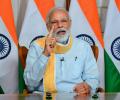
On Tuesday, Modi will share his views with India Inc on 'Getting growth back'.

The NDA government will be following the footsteps of its predecessor, the UPA, which had introduced the concept of "loan mela" to boost credit by directing banks to lend to people through public meetings.

Prime Minister Narendra Modi and his Japanese counterpart Yoshihide Suga met in Washington, DC, on Thursday to discuss ways to further cement the bilateral strategic ties ahead of the first in-person Quad meeting to be hosted by US President Joe Biden.
The bank has decided to embark on a 'Technology Transformation agenda' to provide its customers smoother, faster, and better banking experience.

E-commerce giant Amazon on Thursday announced a $250 million (about Rs 1,873 crore) fund that will focus on digitising small and medium businesses, and driving innovation in the areas of agri-tech and health-tech in India. "Small and medium sized businesses are often the engine and the lifeblood of economies and I think it's true in India as well. "And we are very passionate about trying to enable acceleration of SMBs in fuelling innovation and the economy in India," Amazon Web Services CEO Andrew Jassy said.

Experts attribute the lower target to increased allocation under the credit guarantee scheme for small businesses. Out of the Rs 3.21 trillion worth loans sanctioned under the Pradhan Mantri Mudra Yojana (PMMY) in the last financial year, Rs 3.12 trillion were disbursed to entrepreneurs, according to official data.

Enthused by India's financial inclusion drive, US-based Accion, one of the biggest micro finance organisations in the world, has renewed its focus in India. Michael Schlein, bottom, left, chief executive officer of Accicon, tells Namrata Acharya in an email interview the Wall Street and Silicon Valley are eager to participate in opportunities presented by the issuance of the small finance and payment bank licences, the expanded banking correspondent opportunities, and the Jan-Dhan Yojna.

Former Indian Administrative Service officer A K Sharma was on Friday named a Bharatiya Janata Party candidate for the Uttar Pradesh legislative council polls a day after he joined the party, fuelling speculation that he will get a ministerial post.

Three years and Rs 28,710 crore worth of transactions later, it has more than double the number of sellers than Flipkart.
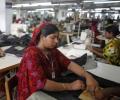
Monetary incentives under Skill India to small entrepreneurs, capital infusion into technology fund to help businesses expand operations
PSBs dominate India's banking system, meaning any failure could jeopardise financial stability, as such, we expect government support will remain forthcoming, said Moody's.

The veteran leader breathed his last at Indira Gandhi Medical College (IGMC) in Shimla at 3.40 am, senior medical superintendent Indira Gandhi Medical College (IGMC) Dr. Janak Raj said.

'Sharma was sent to Lucknow for a purpose, but he has merely been adjusted in the party hierarchy because the chief minister refused to induct him into his government. He was secretary in the Central government and was holding a much higher office than the state ruling party's vice-president' Virendra Singh Rawat reports.

'As valuations of large-caps appeared to be out of whack, investors started lapping up quality mid-caps and small-caps, which were available at relatively comfortable valuations.'

Direct economic stimulus measures such as tax cuts for individuals and industry would have helped to prop up the Indian economy which was hit hard by the lockdowns across several states in India, say economists and corporate leaders. While the measures announced on Monday are focussed more on the supply side, these steps would take a lot of time to move the needle for the economy.

With farmers firm on their demand about repealing of the three agriculture laws passed by the Centre, their protest entered the 20th day on Tuesday with demonstrations continuing on Sant Nirankari Samagam ground in Burari on the outskirts of Delhi and at various border points.

What will be its impact on the banks's balance sheets? Since banks need to provide for 10 per cent of the loans restructured, they would need Rs 50,000 crores to Rs 80,000 crore for this purpose, notes Tamal Bandyopadhyay.

The government on Wednesday approved a production-linked incentive (PLI) scheme for the pharmaceutical sector, entailing an outlay of Rs 15,000 crore. The Union Cabinet, chaired by Prime Minister Narendra Modi, approved the scheme which will benefit domestic manufacturers, help create employment and is expected to contribute to the availability of a wider range of affordable medicines for consumers. The duration of the scheme would be from 2020-21 to 2028-29 and is expected to promote the production of high value products in the country and increase the value addition in exports, an official release said.

The government is set to ask PSBs to expeditiously introduce repo-rate linked products "to step up affordable credit".

In a festival gift to borrowers, the finance ministry on Wednesday approved guidelines for a scheme for grant of ex-gratia payment of the difference between compound interest and simple interest for six months of loans up to Rs 2 crore.

'We completed Rs 17 trillion worth of projects in the first term and currently Rs 9 trillion worth of contracts are under construction.'
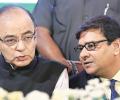
'I suspect the recovery that the banks are going to get out of this IBC is not going to be more than 30 per cent.' 'If you leave the steel industry aside, the recovery rates are not looking very, very healthy,' Jairam Ramesh tells the Rajya Sabha.
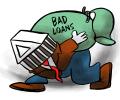
Banks are set to sell dud-loans worth Rs 90,000 crore of 22 firms in the first tranche to the National Asset Reconstruction Company (NARCL). It's reason for cheer given that such sales to asset reconstruction companies (ARCs) have been poor in recent times. In fiscal 2020, their assets under management (AUM) contracted by 4 per cent; and in fiscal 2021, it fell by another 100 basis points to Rs 1.07 trillion. So, why are we where we are?

Seeking to provide a quicker and value-maximising outcome for stressed MSMEs, the government has introduced a pre-packaged resolution process for such enterprises by amending the insolvency law. Now, Micro, Small and Medium Enterprises (MSMEs) can seek resolution for their stress through the pre-packaged process under the Insolvency and Bankruptcy Code (IBC). An ordinance was promulgated to amend the IBC on April 4. Many MSMEs have been impacted by the coronavirus pandemic and experts opined that the latest amendment, which comes less than two weeks after the suspension of certain IBC provisions ended, is a welcome move.
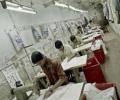
The MSME sector, which is employment-intensive, accounts for 45 per cent of the country's manufacturing, 40 per cent of exports and nearly 8 per cent of gross domestic product.
