
'I will do it again. I am ready to put my life in danger a second time. This is my land, this is my responsibility'

Liston Colaco struck a brace as 10-man Mohun Bagan Super Giant beat Mohammedan Sporting 3-1 to begin their Durand Cup campaign at the Salt Lake Stadium in Kolkata on Thursday.

The Jammu and Kashmir administration has neither accepted nor rejected the demand but the protest had to be suspended as stopping of salaries is 'choking us financially', protesters affiliated to the All Migrant (Displaced) Employees Association Kashmir (AMEAK) said.
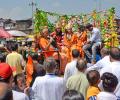
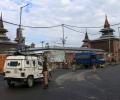
Kashmiri Pandits took part in a Janmashtami procession amid tight security in Srinagar on Friday.
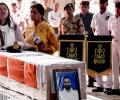
Himanshi Narwal had asked people not to target Muslims and Kashmiris following the April 22 terror attack near south Kashmir's Pahalgam, in which 26 people, mostly tourists, were killed.

Aamina Zehra, a young martial artist from Srinagar, has brought pride to her hometown and country by winning a silver medal at the Pencak Silat World Championship held in Abu Dhabi.
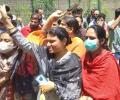
Kashmiri Pandits protest against Tuesday's murder of a lady teacher in Kulgam by terrorists.

Security agencies in Jammu and Kashmir are facing a new threat from 'bedroom jihadis' who use social media to spread misinformation and incite communal discord. These individuals, operating from their homes, are part of a sophisticated cross-border effort to destabilize the region by disseminating inflammatory content and propaganda.

Counter-intelligence wing of Jammu and Kashmir Police detains 10 people for allegedly using encrypted messaging applications to coordinate, finance, and execute terror activities on instructions from Pakistan-based handlers.
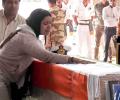
Light a candle to their memory, to show their families and the world that we care. To show that we will not forget, nor will we forgive.

'The relationship between Kashmiri Pandits and Article 370 is vexed.' 'Sentiment in Jammu towards Article 370 was largely unfavourable and Jammu resented being lumped with Kashmir and placed on a different footing from the rest of India.'
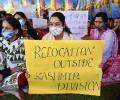
Kashmiri Pandits in Srinagar continued their protests on Wednesday, May 18, 2022, in the wake of the killing of government employee Rahul Bhat, who was shot dead by terrorists inside his office in central Kashmir's Budgam district on May 12.
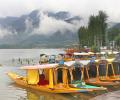
Reviving the memories of the glorious traditions of communal harmony in Jammu and Kashmir, Muslim neighbours in this town helped perform the last rites of a Kashmiri Pandit who died last evening.
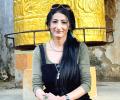
The BJP also went on to label Kaul a "Pakistani sympathiser" and posted headings of a couple of her writings on X.

The institute recently announced the 'Journalism for Peace' award for three independent journalists - Tora Agarwala, Safina Nabi and Sonal Pateria. The awards were scheduled to be given on October 18.

A Kashmiri Pandit himself, Kaul feels, it is time now for the people to move forward, after more than 30 years of unbridled violence.
A tale of terror, courage, and humanity -- one father's desperate escape, a mother's sacrifice, and Kashmiris who saved lives.

It's the Season For Biryani. During Ramzan many might have already dug into the best of biryanis. But as Eid al-Fitr approaches and the faithful wait for the moon, preparations will begin for the most glorious editions of biryani of all.

Sheikh Sajjad Gul, the head of Lashkar-e-Taiba proxy The Resistance Front (TRF), has been identified as the mastermind behind the Pahalgam terror attack that killed 26 people in April. Gul, who is based in Pakistan, has a history of planning terror attacks in Kashmir, including targeted killings, grenade attacks, and ambushes of police personnel. He was designated a terrorist by the NIA in 2022 and a reward of Rs 10 lakh was placed on his head. The TRF claimed responsibility for the Pahalgam attack, where tourists were shot at point-blank range after being asked their religion. Gul's history includes a 2002 arrest in Delhi for planning serial blasts and a subsequent 10-year prison sentence. After his release, he moved to Pakistan and became the leader of the TRF in 2019, a move orchestrated by the ISI to present a facade of an indigenous terror movement in Jammu and Kashmir.

'I think the part we are waiting for is the return of the stolen part of Kashmir which is under illegal Pakistani occupation'

Several prominent newspapers in Kashmir on Wednesday printed their front pages black to protest the brutal terrorist attack that left 26 people, mostly tourists, dead in the Pahalgam hill resort the previous day.

"We saw missiles in the sky and heard bombs in our neighbourhood... We were petrified," said MBBS student Mir Khalif, his voice still trembling with fear, as he stepped out of the Delhi airport after being evacuated from war-hit Iran under Operation Sindhu.

'Depicting the genocide of 3 lakh #KashmiriHindus cannot be called vulgar.'

The BJP legislative party staged a protest demanding the revocation of a government order mandating Urdu as a compulsory language for the Naib Tehsildar recruitment examination in Jammu and Kashmir, calling the order discriminatory and detrimental to the interests of Jammu's youth.

A new book reveals that India and Pakistan discussed a communal division of Jammu & Kashmir along the Chenab river before the Kargil war in 1999.

'There's a lot of sense in what Prime Minister Modi did, but the Indian government has to be really prepared for a really sharp escalation spiral.'

In a press note issued earlier in the day, the Raj Niwas officials said Saxena had approved an increase in the adhoc monthly relief to Kashmiri migrants in the national capital from Rs 10,000 to Rs 27,000 per month.
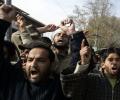
'Use of the word 'genocide' for Kashmiri Pandits is absolutely wrong.'
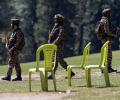
The officials said that intelligence agencies had been alerted about the possibility of a terror attack, but the inputs were utilised at another place, some 90 kilometres away from the site where the attack took place, resulting in a key security lapse.
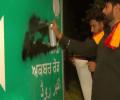
A signboard on Akbar Road in Lutyens' Delhi was defaced on Thursday by unidentified individuals protesting against the alleged vandalism of Maharana Pratap's statue at Kashmiri Gate ISBT. The signboard, under NDMC jurisdiction, was cleaned by civic authorities. An FIR will be filed after a probe, and police are reviewing CCTV footage to identify the culprits. Authorities have urged citizens to maintain peace.
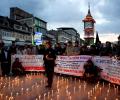
'A terrorist has no religion -- they are nothing but the face of evil. When you offer namaz for a terrorist, attend their funeral, or give them a grave, you affirm that they belong to a religion. That must stop'
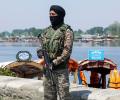
'Diplomatic and economic responses are first announced and then implemented. A military response is announced only after it is done.'
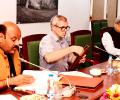
Jammu and Kashmir Chief Minister Omar Abdullah has stated that the conversation regarding the restoration of statehood to Jammu and Kashmir has not been stalled. He claims the issue was raised at the recent NITI Aayog governing council meeting, and the formal speech distributed at the meeting includes a mention of the return of statehood. Abdullah also addressed concerns about the impact of the Pahalgam terror attack on tourism, emphasizing the importance of local Kashmiris visiting tourist spots first to revive the industry and ensure a sense of security.
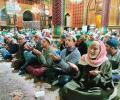
Kashmiri Muslims offered Shab-e-Qadr (The Night of Power and Forgiveness) prayers for the first time after the abrogation of Article 370 in August 2019 at the historic Jamia Masjid in Srinagar on the night of 27 Ramadan.

Scores of protesting Kashmiri Pandit prime minister's package employees on Monday reiterated their demand for relocation outside the valley, saying their worst fears have come true with the latest killing of a community member in Pulwama.

The Pandits congratulated the hajis for completing the pilgrimage and sought their blessings. They offered roses to the pilgrims.
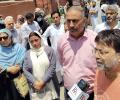
'The Indian embassy did send a bus to evacuate us along with an Indian embassy official, but Urmia University is not giving us permission to leave.'

New Delhi looks to be testing Omar's endurance with unconcealed glee, never feeling shy to bite whenever a moment comes its way. After all, ruling the country's only Muslim-majority UT/state has been the BJP's burning desire, points out Mohammad Sayeed Malik, the distinguished commentator on Kashmir affairs.
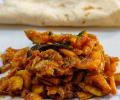
Very small prawns can be made into a kind of chutney that greatly soups up your average meal.
