Hyderabad police on Thursday arrested two senior executives of scam-hit Karvy Stock Broking Pvt Ltd for allegedly involving in diverting funds raised from banks by pledging clients' securities as collaterals. According to a police press release, Rajiv Ranjan Singh, chief executive officer and G. Krishna Hari chief financial officer of Karvy were arrested basing on a complaint by IndusInd bank.

Karvy group's commodity broking arm, too, is facing a liquidity crisis because of some issues related to NCDEX, said people in the know.

Leading bourse BSE has also declared Karvy Stock Broking as a defaulter and expelled the brokerage house from its membership after a similar action was taken by the NSE. Investors having any outstanding claims against the brokerage can file their claims with the exchange within 90 days from the date of issue of the notice -- by February 22, 2021 -- the BSE said in a circular on Tuesday.
In case of any grievance, file a complaint with Sebi on its SCORES (Sebi Complaints Redress System) web site, suggests Sanjay Kumar Singh.
The Enforcement Directorate (ED) on Thursday said it has arrested Karvy Stock Broking Limited (KSBL) CMD C Parthasarathy and group CFO G Krishna Hari in connection with a money laundering investigation linked to alleged diversion of clients' securities of over Rs 2,873 crore. The agency produced the two-- already lodged in central jail, Bengaluru after being arrested by the police-- before a special Prevention of Money Laundering Act (PMLA) court in Hyderabad on January 20 and on January 25 it remanded them to four days of ED custody from January 27-30, it said in a statement. The ED case, filed under the criminal provisions of the PMLA, is based on multiple Telangana Police FIRs filed by the HDFC Bank, few other banks and investors alleging clients' securities were illegally diverted by Karvy Stock Broking Ltd and these were later pledged with banks and non banking financial companies (NBFCs) for loans which were later "defaulted".

The total default is said to be in excess of Rs 3,000 crore - making this the largest default by a broker.

In the aftermath of the Karvy incident, lending against third-party collateral facility raises questions over regulations concerning banks and brokers which are at loggerheads. While Sebi and NSDL have ordered the transfer of securities, which were kept as collateral, lenders followed the old business model of sanctioning loan against shares and allegedly overlooked certain parameters. Legal experts feel that this could lead to a collapse of the loan-against-shares market as it raises questions over the sanctity of the pledged securities.

Karvy DP, which is already busy tackling a ban slapped on it by the Securities and Exchange Board of India, is now busy warding off campaigning to poach its clients.
Karvy Computershare Pvt Ltd engaged in fraudulent activities with respect to certain initial public offerings in 2005, market regulator Sebi said.

What's required is proper implementation of the rules and better coordination between market intermediaries such as stock exchanges and clearing members who play a key role in monitoring brokerages.
After considering the facts and circumstances of the case including enormity of the prima facie violations observed against Karvy, Sebi in an order passed late night Friday said it would not be prudent to allow the use of PoA by Karvy given to it by its clients.
Capital markets regulator Sebi has penalised stock exchanges -- BSE and NSE -- for "laxity" on their part in detecting misuse of clients' securities worth Rs 2,300 crore by Karvy Stock Broking Ltd (KSBL). In two separate orders, the Securities and Exchange Board of India (Sebi) has imposed a fine of Rs 3 crore on BSE and Rs 2 crore on NSE. The matter relates to KSBL misutilising client securities worth Rs 2,300 crore, belonging to more than 95,000 clients, by pledging them from just one demat account. The funds raised against the pledge were used by KSBL for itself and its group entities.

The wealth of individuals in the country is expected to double to Rs 1.79 lakh crore (Rs 1.79 trillion) in the next four years, according to a report by Karvy Wealth.
A case has been registered against Karvy Stock Broking Ltd promoter C Parthasarathy and others for allegedly cheating ICICI Bank to the tune of Rs 563 crore.
ICICI Ventures and Baring Private Equity Asia have picked up around 20 per cent stake in Hyderabad-based Karvy Stock Broking, a leading financial services enterprise, for around Rs 440 crore (Rs 4.4 billion). The acquisition of stake, which adds to the string of big deals in the Indian stock broking industry this year, values the company at Rs 1,760 crore (Rs 17.60 billion), said sources close to the development.

Exchanges will have to facilitate a more direct interface between clients and the clearing corporation, bypassing intermediaries such as brokers, under this new proposed framework.
BMA's clients allege that depository firm CDSL and stock exchanges did not act on their complaints, prompting them to protest before Sebi. They say their shares have been transferred to a pool account without their knowledge and have been used to avail loans. Clients alleged that BMA has pledged their securities with a leading private bank, who could have sold their holdings.

The Sebi is currently is in the process of selecting an In-Person Verification Agency to conduct face-to-face verification of an estimated three crore bondholders of two Sahara group firms, by checking their identify and address proofs.
The Securities Appellate Tribunal on Monday dismissed Karvy Consultants' appeal against the Sebi order barring it from opening fresh demat accounts.

What beauty means to Rakul... Malavika is tired of adulting... Sobhita introduces us to her Avengers...

Madhabi Puri Buch, the first female chairperson of Sebi, doesn't plan to rest on her laurels in her third and final year in office and has set out an ambitious goal, such as moving towards a same-day and instantaneous settlement cycle for the secondary market.

Do you have Budget related queries? Ask Finance Expert Ambareesh Baliga.

Brokers have requested for a three-month extension from the Securities and Exchange Board of India (Sebi) for the validation of Know Your Client (KYC) records. In a letter to Sebi, industry body -- Association of National Exchanges Members of India (Anmi) -- has cited various issues and concerns raised by its members that have hampered the smooth completion of the validation process within the stipulated timeline. The Sebi circular had given KYC Registration Agencies (KRAs) a timeline of 180 days, ending on April 30, 2023, to validate client KYCs.
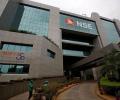
The National Stock Exchange (NSE) has made a fresh attempt at settling a regulatory investigation into the misuse of Trading Access Point (TAP) software at the bourse. The Securities and Exchange Board of India (Sebi) rejected a similar application in 2022. "NSE and its employees have filed a consolidated settlement application dated May 4, 2023, with Sebi.

'...similar to the 2008 global financial crisis, the 2012 taper tantrum, or the 2018 midcap crash.' 'This could lead to a substantial decline in activity and revenues for the broking industry.' 'When this will happen is uncertain, but as brokers, we must be prepared for such a downturn.'

Karvy expects individual wealth in India to grow to Rs 558-lakh crore at a CAGR of 12.9% over the next five years.

Ajit Mishra, vice president, Research, Religare Broking, answers your queries.

Against the backdrop of Karvy crisis where securities worth Rs 2,300 crore of more than 95,000 clients were transferred into its account, NSE has asked investors to register for online applications provided by depositories for online delivery of securities as an alternative to PoA.

The number of ultra rich falls to 2.56 lakh in 2018 from 2.63 lakh. As much as Rs 262 lakh crore of the wealth possessed by the high networth individuals are in the form of financial assets, while the rest are parked in physical assets.
Individual wealth of Indians is expected to triple by financial year 2016 to Rs 249 lakh crore.

Eleven years on, while 80% of scam-hit investors have been fully compensated, more than 50% of the sum is yet to be distributed.
The BSE benchmark Sensex can possibly touch 1,00,000-mark in the next six years if the infrastructure cycle is revived quickly by the new government and the corporate earnings grow by 20-25 per cent, claimed a report by Karvy Stock Broking.

Long-term investors should consider moving into smaller stocks. Rather than try to pick stocks, it makes sense to build a diversified portfolio by exposure across midcap and small caps funds, suggests Devangshu Datta.

If you are not already lost in the zeros this wealth stands at Rs 257 lakh crore or Rs 257 trillion, according to a report unveiled by Karvy Private Wealth for the year 2014.
From a low of 7,697 in October 2008, Sensex tripled to its current 25,000 during one of the most trying times.
According to a research report by Karvy Stock Broking, "the GDP growth for the second quarter of this fiscal is estimated to drop to nearly three and a half year low of 5.1 per cent."

Those who have crossed 50 must show the greatest urgency. They need to achieve a corpus that can sustain them and their spouses for at least 25-30 years after retirement.
