Global investors have cited the ongoing war and high valuations of Indian equity markets as a reason to skip the IPO.
LIC's public offer, the country's biggest-ever IPO, witnessed full subscription of the retail portion on day three on Friday. The overall issue was subscribed 1.38 times, according to data posted on stock exchanges on 7 pm. Against 16,20,78,067 shares on offer, 22,36,98,915 bids were received. However, the Qualified Institutional Buyer (QIB) and Non-Institutional Investor (NII) portions are yet to be fully subscribed.

Ola Electric's initial public offering (IPO), of Rs 5,500 crore, is essentially aimed at ensuring the company maintain its top position in the electric two-wheeler segment, with incumbent players TVS and Bajaj Auto giving a fight to the number one player in market share. Most experts and competitors say the amount being raised is in line with the investment required to expand the electric-vehicle (EV) business. There are two discernible trends in the competitive electric two-wheeler market.

The Tata Tech IPO will be the first from the Tata group since TCS listed its shares in 2004.
Paytm's Rs 18,300 crore IPO was oversubscribed 1.89 times on the last day of India's biggest share sale on Wednesday, making it one of the country's most valued companies. The initial public offering of Paytm's parent company One97 Communications Ltd received bids for 9.14 crore equity shares against the offer size of 4.83 crore shares, according to information available from stock exchanges. While the portion set aside for retail investors was oversubscribed early, institutional buyers including FIIs flooded the share sale with offers on Wednesday, seeking 2.79 times the number of shares reserved for them.

Clearly, some of the bullishness of the early days has gone missing. Ola's market share is slipping amid rising competition from incumbents like Bajaj Auto and TVS.

TCS's mcap crossed $100 billion in 2018, 13.5 years after the IPO. It took only four more years to double its mcap to $200 billion.

Just 14 companies raised Rs 35,456 crore through main-board primary share sales in the first half of the fiscal, down 32 per cent from the year-ago period when 25 issues had mopped up Rs 51,979 crore. But according to Prime Database, the IPO pipeline is strong with 71 issues worth Rs 1,05,000 crore having Sebi approvals and another 43 worth about Rs 70,000 crore are awaiting approval. Of these 114 planned issues, 10 are new-age tech companies, which are looking to raise roughly Rs 35,000 crore.

In the hottest sector of AI, where most global VC funding is going currently, the country's record has not been anything to write home about.

Ola Electric is conducting an restructuring exercise which is expected to affect over 500 employees across various roles within the organisation, according to sources. This would be over 12 per cent of staff at the firm which has about 4,000 people. "This is a restructuring exercise ongoing for the last few months and is expected to conclude by next month," said a person familiar with the development.
The government is expected to defer the mega initial public offering (IPO) of LIC to the next financial year as the ongoing Russia-Ukraine war has dampened fund managers' interest in the public issue, market experts said on Sunday. The government was looking to sell 5 per cent stake in Life Insurance Corporation (LIC) this month, which could have fetched over Rs 60,000 crore to the exchequer. The IPO would have helped meet the curtailed divestment target of Rs 78,000 crore this fiscal.
The three companies have been issued observations by the watchdog, according to the update on the processing status of draft offer documents as on October 8. An observation letter is mandatory for an initial share sale. In Sebi parlance, the issuance of observations implies its go-ahead for the IPO. One Mobikwik Systems Ltd is a leading mobile wallet (MobiKwik Wallet) and Buy Now Pay Later (BNPL) player in India.
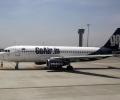
Markets regulator Sebi has kept in abeyance the processing of Go Airlines' draft papers for an initial public offer worth Rs 3,600 crore. Go Airlines (India) Ltd, which has announced rebranding itself as 'Go First', filed preliminary papers for an initial share sale worth Rs 3,600 crore in May. The proceeds will be mainly used to repay dues. The "issuance of observations (has been) kept in abeyance", according to Sebi's latest update on processing status of Go Airlines' draft offer documents. The information was updated on June 25. In Sebi parlance, issuance of observations implies its go-ahead for the IPO.

'...hesitate to support the risk-taking it requires.'

Venture capital (VC) and private equity (PE) funds had, in 2024, taken bets on traditional businesses rather than tech-first domains like consumer tech, software as a service (SaaS) and software. According to data from Bain & Co, Pitchbook, Venture Intelligence, VCC Edge and AVCJ, prominent VC funds like PeakXV saw their share in this traditional space go up sharply from 14 per cent in 2023 to 23 per cent in 2024.

Seven companies, including lifestyle retail brand FabIndia and specialty chemical company Aether Industries, have received capital markets regulator Sebi's go-ahead to raise funds through initial share sales. Syrma SGS Technology, Asianet Satellite Communications, Sanathan Textiles, Capillary Technologies India and Harsha Engineers International too received the watchdog's nod to float Initial Public Offerings (IPOs). These companies, which filed their preliminary IPO papers with Sebi during December 2021 and February 2022, obtained observations during April 27-30, an update with the regulator showed on Monday.
'Binary fission will happen -- startups will lead to more startups.'
The Supreme Court on Thursday refused to grant any interim relief and stay the Life Insurance Corporation (LIC) IPO share allotment on a batch of pleas filed by some policy holders. A bench of Justices DY Chandrachud, Surya Kant and PS Narasimha said that the court should be reluctant to grant any interim relief in matters of commercial investments and IPO. "We are not inclined to grant any interim relief", the bench said as it issued notice to the Centre and LIC on the batch of pleas seeking their response within eight weeks.

The Securities and Exchange Board of India (Sebi) has mulled introduction of confidential initial public offering (IPO) filings and "pre-filing" of offer documents, a move aimed at giving issuers flexibility and alleviating concerns around privacy. Industry players said the concept, if implemented, would give a fillip to the domestic capital markets, ease the process and encourage more companies to go public. To be sure, the proposals are still at a discussion stage with Sebi just floating a consultation paper seeking public feedback.
'Had there been no war, maybe, we would come out with a 7.5 per cent stake sale.' 'At this point in time, a 3.5 per cent stake sale looked good.'
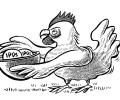
HNI investors need an optimal mix of oversubscription and listing-day gain to make money on leveraged bets, notes Sanjay Kumar Singh.

The National Stock Exchange of India (NSE), which is still awaiting regulatory approval for its initial public offering (IPO), is now planning to streamline the process of buying the unlisted stocks of the company, thereby reducing the time taken for such deals from about four months to just a week. The management of India's biggest stock exchange has affirmed that it is working to reduce the time taken. According to the analysts, certain approvals required at present from NSE for buying stocks, are adding to the processing time.

The expected interest rate hike in the US and the resultant volatility in the domestic secondary market could play a dampener to the over Rs 2-trillion initial public offering (IPO) pipeline in 2022. IPOs in 2022 look promising, with as many as 35 companies holding the Securities and Exchange Board of India's approval to raise roughly Rs 50,000 crore. Another 33 companies are waiting for the regulator's nod to raise around Rs 60,000 crore next year.
Retail investors-those investing up to Rs 200,000-lapped up all the four initial public offerings (IPOs) that opened for subscription on Wednesday. This is the first time since 2007 that four IPOs have been launched on a single day, according to information provided by Prime Database. KFC and Pizza Hut franchisee Devyani International (size Rs 1,838 crore); Diagnostic chains Krsnaa Diagnostics (Rs 1,213 crore), pharmaceutical firm Windlas Biotech (Rs 401 crore) and vitrified tiles manufacturer Exxaro Tiles (Rs 161 crore) are the four companies whose IPOs opened on Wednesday.
LIC's public offer, the country's biggest-ever IPO, saw the policyholders' portion being oversubscribed on the first day itself on Wednesday, though overall subscription stood at just 66 per cent. The government aims to generate about Rs 21,000 crore by selling 3.5 per cent stake in the insurance behemoth. The LIC initial public offering (IPO), open for retail and institutional investors, is set to close on May 9. The issue period also includes bidding on Saturday, May 7.
The government is likely to take a call on the timing of LIC initial public offering within this week, a senior official said. The sale of 5 per cent stake or 31.6 crore shares in the country's largest insurer was originally planned for in March, but was postponed in view of the geopolitical tension. The government has time till May 12 to launch the IPO without filing fresh papers with markets regulator Sebi. The official said it would be a tough call to decide whether to go ahead with the retail and domestic investor demand or to wait for geopolitical tension to ease and FIIs to return to market.
A total of 49 companies raised Rs 81,615 crore in Samvat 2077, more than the preceding four years and almost double the amount raised in the previous year. Samvat 2078 appears even more promising with mega issues of Paytm and Life Insurance Corporation (LIC) of India. However, Paytm's record could be short-lived as state-owned LIC is planning to launch a Rs 1-trillion IPO by March 2022.

The company, backed by China's Ant Group, is planning to issue fresh shares worth Rs 7,500 crore in the IPO. This will make this India's third-largest offering after Reliance Power and DLF.
The Securities and Exchange Board of India (Sebi) has cleared the draft red herring prospectus (DRHP) of the state-owned Life Insurance Corporation of India (LIC). According to investment banking sources, the so-called final observations were issued by the market regulator on Tuesday evening. Following the market regulator's nod to the IPO papers, the insurer can launch its share sale. However, LIC may not launch its IPO immediately given the current volatile market conditions.

MobiKwik employees exercised their ESOPs (Employee stock ownership) in a recently opened window by selling part of their shares in a secondary sale. "The secondary round was led by ex-Blackstone India head, Mathew Cyriac, who topped up his holding at almost double of his previous price," the sources said.
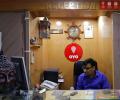
IPO-bound hospitality major Oyo's India Chief Executive Officer (CEO) Ankit Gupta and the head of its Europe business Mandar Vaidya have resigned. A company spokesperson told Business Standard that the two had moved on from their roles six months ago in March 2023. During the same period, Oyo had rejigged its top management, where the company's COO Abhinav Sinha was reassigned as Chief Product and Technology Officer, while Chief Business Development Officer Anuj Tejpal was reappointed as Global Chief Merchant Officer.

Shares of Hyundai Motor India Ltd, the Indian arm of South Korean automaker Hyundai, on Tuesday made a muted market debut and further fell by nearly 6 per cent against the issue price of Rs 1,960. The stock listed at Rs 1,931, reflecting a decline of 1.47 per cent from the issue price on the BSE. Later, the stock made some recovery and hit a high of Rs 1,968.80, up 0.44 per cent.
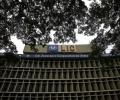
The government may have to rework the valuation of Life Insurance Corporation of India (LIC) for its initial public offering (IPO) if the listing is pushed beyond May, an official said. The current embedded value of LIC, pegged at Rs 5.4 trillion as of September 30 and for the six-month period ended September, will have to be re-evaluated if the issue is pushed beyond May 12, as approved by the Securities and Exchange Board of India (Sebi). This would impact the market value of LIC, that is currently being internally estimated at 3-4 times of the embedded value.
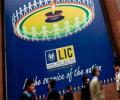
The government has shortlisted Cyril Amarchand Mangaldas for giving legal advice on upcoming mega IPO of India's largest insurance company LIC, an official said. Four law firms - Crawford Bayley, Cyril Amarchand Mangaldas, Link Legal and Shardul Amarchand Mangaldas & Co - had made presentations before the Department of Investment and Public Asset Management (DIPAM) on September 24. Following presentations, Cyril Amarchand Mangaldas has been selected as legal advisor for the initial public offering (IPO) of Life Insurance Corporation (LIC), the official told PTI.

After a prolonged winter, the Indian edtech sector seems to be witnessing some signs of a thaw. The sector has received $608.8 million of funding across 68 deals in 2024 so far - 153 per cent more than the $240.9 million across 106 deals during the same period last year - according to data from market intelligence platform Tracxn.

Electric two-wheeler (e2W) maker Ather Energy has submitted preliminary papers to the Securities and Exchange Board of India to raise funds through an initial public offering (IPO). According to the draft red herring prospectus (DRHP), the IPO will comprise a fresh issue of equity shares valued at Rs 3,100 crore, alongside an offer for sale of 22 million equity shares by its promoters and investor shareholders.
A December 28 board meeting of the Securities and Exchange Board of India (Sebi) may tighten norms for initial public offerings (IPOs). The board may look to prescribe a minimum 5 per cent gap in IPO price bands, extend the lock-in period for anchor investors to 90 days and cap the amount a majority investor can sell through offer for sale. The regulator is looking at whether there can be a preferred allocation for anchor investors who opt for a longer lock-in period, said a person familiar with the matter.
Shares of all the 14 companies are currently trading above their issue price.

Zomato's initial public offer (IPO) is scheduled to open for subscription on July 14 and is priced between Rs 72 - 74 per share. At the upper end of the price band of the offering, the company aims to raise Rs 9,350 crore. Most analysts have given a 'subscribe' rating to the issue for listing gains.
'Sebi has to make sure that investor interests are protected and at the same time, there isn't over-regulation so that companies don't get discouraged to list here.'
