
Zomato's initial public offer (IPO) is scheduled to open for subscription on July 14 and is priced between Rs 72 - 74 per share. At the upper end of the price band of the offering, the company aims to raise Rs 9,350 crore. Most analysts have given a 'subscribe' rating to the issue for listing gains.

'Sebi has to make sure that investor interests are protected and at the same time, there isn't over-regulation so that companies don't get discouraged to list here.'

'We work with a very large restaurant base, we make sure that we're doing the right thing by them, and we're helping them grow because we'll grow only when they do.'

India's Venture Capital (VC) ecosystem exhibited robust growth in 2024, with funding surging 43 per cent year-on-year to $13.7 billion, according to a report. This recovery was fuelled by a 45 per cent rise in deal activity, with 1,270 transactions recorded, reinforcing India's position as the second largest market for venture capital and growth funding in the Asia-Pacific region, the report by Bain & Company and IVCA said.
The number of draft red herring prospectuses (DRHPs) filed with the markets regulator - Securities and Exchange Board of India (Sebi) - jumped nearly fivefold to 145 in 2021-22 (FY22), compared with just 30 in the preceding financial year (2020-21, or FY21). This was on account of companies rushing to take advantage of a favourable market sentiment towards initial public offerings (IPOs), triggered by an influx of new investors, surge in the secondary market, and encouraging performance of newly listed stocks. In fact, DRHPs filed in FY22 was 4x the previous 10-year average and the highest since 2007-08, according to primary market tracker PRIME Database.

It's raining IPOs, with eight issues hitting the market in a span of six days. However, the pace of new filings points to a deluge during the latter part of the year. So far this year, 58 companies have filed their draft red herring prospectus (DRHP) with the market regulator for initial public offerings (IPOs), exceeding the combined tally of 50 in the last two years. Industry participants said the filing count could cross 100 this year, setting a new benchmark in terms of amount mobilised in a calendar year.
Bolstered by bullish investor sentiments, India witnessed companies mopping up a whopping $9.7 billion through initial share sales in the first nine months of 2021, the highest amount for the nine-month period in two decades, says a report. As many as 72 initial public offerings (IPOs) hit the stock market during the January-September period this year in India and strong sentiments were visible in the global markets as well, according to leading consultancy EY. EY, in its latest report, said the global IPO market continued to boom through Q3 2021 resulting in the most active third quarter by deal numbers and proceeds in the last 20 years.

Capital markets regulator Sebi on Wednesday streamlined the payment of processing fee through the Unified Payments Interface (UPI) system for shares applied for and allotted during an initial public offering (IPO). In addition, the regulator has devised a new reporting format for capturing the data of all ASBA (Application Supported by Block Amount) applications unblocked by Self Certified Syndicate Banks (SCSBs) and their corresponding date of actual unblock. The new format has been put in place after reviewing the performance of SCSBs on timely unblocking of application amounts and feedback received from market intermediaries, Sebi said in a circular.
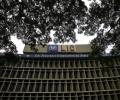
The government has appointed 10 merchant bankers including Goldman Sachs (India) Securities, Citigroup Global Markets India, and Nomura Financial Advisory and Securities India to manage the mega initial public offering of country's largest insurer LIC. Other selected bankers include SBI Capital Market, JM Financial, Axis Capital, BofA Securities, JP Morgan India, ICICI Securities, and Kotak Mahindra Capital Co Ltd, a circular on the divestment department website said. "Government has finalised the book running lead managers and some other advisors for the IPO of LIC," DIPAM Secretary Tuhin Kanta Pandey tweeted. The divestment department had invited applications for the appointment of merchant bankers on July 15.

Hyundai Motor India Ltd has become the country's fifth most valuable auto firm by market valuation in its debut trade on Tuesday. Shares of Hyundai Motor India Ltd, the Indian arm of South Korean automaker Hyundai, listed at Rs 1,931, reflecting a decline of 1.47 per cent against the issue price of Rs 1,960 on the BSE earlier in the day. The stock slumped 7.80 per cent to Rs 1,807.05 during the day and finally ended at Rs 1,820.40 apiece, down 7.12 per cent.
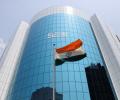
Gensol Engineering, the beleaguered firm that came under market regulator Sebi's lens for fund diversions and governance lapses, said that its independent director Arun Menon has resigned with immediate effect.
LIC public offer, the country's biggest-ever IPO, on Wednesday opened for subscription for retail and institutional investors. The government aims to generate about Rs 21,000 crore by diluting its 3.5 per cent stake in the insurance behemoth. The LIC initial public offering (IPO), now open for retail and institutional investors, is set to close on May 9. LIC has fixed the price band at Rs 902-949 per equity share for the issue.
The shareholders have approved raising of Rs 12,000 crore during the initial public offer and sale of secondary shares will take the total amount to Rs 16,600 crore. "Shareholders have approved all the proposals at the extraordinary general meeting. "The shareholders have approved the proposal to raise capital and the fresh issue of shares of up to Rs 12,000 crore during the IPO.
The initial public offering (IPO) market has come to a grinding halt due to sharp correction in the broader markets and uncertain outlook created by the Russia-Ukraine offensive. So far this year, only three companies have managed to launch their maiden share sales. In comparison, close to 10 companies were able to come out with their IPOs during the same period last year. Investment bankers say it will be challenging to launch a single deal in March as large institutional investors have turned extremely risk-averse and don't wish to commit any capital.

'My father was asking me what an IPO is. He has no clue and he has never been an investor.' 'My mother, who was the one to ring the bell, has been an investor in Policybazaar for the past 6-7 years and I would say she has made good returns.'
The government is unlikely to come up with the IPO of Life Insurance Corporation (LIC) in the current financial year ending March 2022, as the valuation of the state-owned behemoth is taking more than anticipated time, and the preparatory work is still far from complete. There are still some issues that need to be addressed with regard to the valuation of LIC, a senior official of one of the merchant bankers said. Even after the valuation, there are several regulatory processes that have concluded, the official said.

The strong response for the IPOs, however, has shifted liquidity away from the secondary markets, with the benchmark Sensex falling 1.3 per cent in the previous two trading sessions.
The IPO lane will continue to be busy in December as 10 companies have lined up initial share-sale plans worth more than Rs 10,000 crore, merchant banking sources said on Wednesday. Moreover, the initial public offerings of Star Health and Allied Insurance and Tega Industries are currently open for public subscription. This comes after 10 firms successfully concluded their initial public offerings (IPOs) in November. Among the companies that scheduled their IPOs in this month include RateGain Travel Technologies, travel and hospitality technology services provider, and Anand Rathi Wealth Ltd, part of Mumbai-based financial services group Anand Rathi.
Through anchor allotment, a firm can demonstrate the demand for shares by getting marquee investors on board.

Barbeque Nation IPO: The promoters hold 60.24 per cent stake, CX Partners owns 33.79 per cent and Rakesh Jhunjhunwala's investment firm Alchemy Capital holds 2.05 per cent in the company.
Oravel Stays, the parent company behind the travel tech brand Oyo, is eyeing to clock Rs 100 crore in Q4FY24 profit after tax (PAT) and a 20 per cent revenue growth for FY24, according to informed sources. These numbers were part of an internal review meeting between founder Ritesh Agarwal and senior management earlier this week, where he spoke about the company's profitability trajectory and growth in business.
Fundraising activity in the upcoming financial year 2022-23 may even surpass FY22 when 52 Indian companies raised a record Rs 1.11 trillion via initial public offerings (IPOs). According to a note by PRIME Database, 54 companies (including LIC) plan to raise Rs 1.4 trillion and currently hold the Securities and Exchange Board of India's (Sebi's) approval. Another 43 companies, the note said, are looking to raise about Rs 81,000 crore but waiting for Sebi nod.
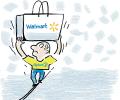
US retail giant Walmart has said it is "open to an IPO" for its Indian e-commerce arm Flipkart but there is "no specific timeline" for the share sale. Both Flipkart and payment app PhonePe continue to do well, Walmart International president and CEO Judith McKenna said while speaking at the DB Access Global Consumer Conference on June 7. "We always made it clear from the day we made the acquisition or the investment, that we would be open to an IPO," said McKenna. However, she noted that there is no specific timeline for the IPO.
The Centre's decision to not reduce the face value of shares of India's Crown Jewel - Life Insurance Corporation (LIC) - was taken to make shareholders feel they are acquiring something 'precious'. The face value of LIC's shares was retained at Rs 10, quoted in the draft prospectus, as it would also align the insurer's shares with those of its private sector peers. Even as the LIC Act was amended to "consolidate or reduce the nominal or face value of the shares", with the Centre's approval, it was decided to stick to the current face value of shares at Rs 10 without splitting the existing 6.32 billion shares.
The government and the Life Insurance Corporation of India (LIC) are planning a campaign to give a big push to participation by retail investors, that includes opening of demat accounts for policyholders in IDBI Bank, in the run-up to its initial public offering (IPO). The campaign will aim to make retail investors as well as LIC policyholders aware of India's largest public offering, said an official. In an effort to give LIC policyholders a chance to own a part of the insurance company, the government has reserved 10 per cent of the issue of IPO for its policyholders.
E-commerce platform Snapdeal is looking at filing its Draft Red Herring Prospectus (DRHP) in the next few weeks to launch an initial public offering in first half of next year, according to sources. Sources close to the development said the company is looking at a $250 million (around Rs 1,870 crore) IPO that could value Snapdeal at about $1.5-1.7 billion. Snapdeal is looking at filing the DRHP in December-January time frame, and launch the IPO in the first half of 2022 after the necessary approvals, they added. One of the sources said the founders will not be selling shares as part of the IPO, and major shareholders are also expected to hold onto their shares.

'While investors need to be prepared for making some losses, they should not lose big money chasing euphoria amid fear of missing out.'

Framing the next chapter in Swiggy's journey as a responsible corporate citizen, co-founder and chief executive officer (CEO) Sriharsha Majety unveiled the company's eagerly awaited public listing. Majety, who has largely shunned the spotlight, shared reflections on his entrepreneurial path and the strategic pivots he and his co-founders navigated in building Swiggy. "We started with code aggregation, then pivoted to logistics, and that became Swiggy.

'Whenever markets rally, the IPO pricing gets aligned to the prevailing market conditions.'
The government is likely to file draft papers for the mega initial public offering of LIC with market regulator Sebi by next week, while a portion of the issue would be reserved for anchor investors, a top official said on Wednesday.
Shares reserved for Qualified Institutional Buyers (QIB), including banks and mutual funds in the LIC's public offer were subscribed fully on Monday morning, taking the overall subscription of the issue to a little over 2 times. Against 3,95,31,236 reserved, 4,61,62,185 bids were received, reflecting a subscription of 1.17 times, according to data posted on stock exchanges at 12:12 pm. Non institutional investors' portion was subscribed 1.38 times.

More cos could join the likes of Burger King and Antony Waste in giving listing another shot.
LIC's $2.7-billion initial public offering (IPO) shall be the fifth-biggest globally in CY22. South Korean EV battery maker LG Energy Solution holds the record for the year's largest IPO at $10.8 billion, while Chinese mobile communications provider China Mobile IPO, which raised $8.6 billion, comes second. Dubai Electricity and Water Authority's (DEWA's) $6.1-billion IPO in March is currently the third biggest public offering for the year, followed by China National Offshore Oil Corporation's (CNOOC's) IPO; the firm had raised $5.1 billion by issuing shares in Mainland China after delisting from the American bourses.
Once stability returns to the secondary market, companies that have obtained approval from Sebi will start tapping the market.
Easier dilution norms for mega initial public offerings (IPOs) have come into effect. Companies with post-listing market capitalisation (m-cap) of more than Rs 1 trillion will not be required to dilute a minimum of 10 per cent. The move to relax dilution norms is seen as a precursor to Life Insurance Corporation's IPO. The central government has said companies with an m-cap exceeding Rs 1 trillion will have to dilute Rs 5,000 crore and at least 5 per cent of their m-cap. Experts said the earlier framework discouraged large companies from listing since they were forced to offload a large volume of shares during the time of their IPO.
Digital firm One97 Communications, which operates under Paytm brand name, on Thursday said its IPO will open on November 8 for subscription in the price band of Rs 2,080-2,150 apiece, which implies that the firm's valuation stands at Rs 1.44 lakh crore-Rs 1.48 lakh crore. The initial public offer (IPO) subscription will close on November 10.

Shares of online food delivery aggregator Zomato rose above their initial public offering price after more than a year. The stock hit an intraday high of Rs 76.3 per share before settling at Rs 75.8. The company had priced its shares at Rs 76 during Rs 9,375-crore IPO in July 2021.

On average, stocks that debuted last year are down 37 per cent from their peak levels.
The government is planning to soon file the final papers for LIC IPO with market regulator Sebi, which will provide details about the price band, discount for policyholders and retail buyers, and the actual number of shares to be put on the block, an official said. The government is presently in the wait-and-watch mode because of the market volatility induced by the Russia-Ukraine war and will decide on the timing of the initial public offering (IPO) of Life Insurance Corporation (LIC). "We have got the approval of the DRHP and the next step would be to file the RHP, which will give details of the price band and the actual number of shares.
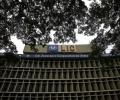
Reserve Bank of India (RBI) has said that all ASBA-designated bank branches will remain open for public on Sunday to facilitate processing of applications for LIC's initial public offering. State-owned LIC's Initial Public Offering (IPO), the country's biggest ever offer, opened for subscription by retail and institutional investors on Wednesday. The offer will close on May 9 and there will be bidding on May 7 (Saturday) also.
