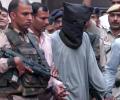
The National Investigation Agency has informed a Delhi court that Mumbai attack accused Tahawwur Rana could spill the beans on the ongoing and future terror plans of outfit Lashkar-e-Taiba and its chief Hafiz Saeed for India.

Kamindu Mendis bowled both left-arm spin and right-arm off-spin in the same over, delighting the crowd with his versatility.

A Delhi court on Monday extended by 12 more days the NIA custody of 26/11 Mumbai attack accused Tahawwur Hussain Rana.

Investigators suspect that similar terror plots were devised for multiple cities across India.To piece together the full scope of the conspiracy, officials may take Rana to various locations, retracing events from 17 years ago.
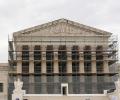
The US Supreme Court has denied the application of Tahawwur Rana, a Canadian national of Pakistani origin accused in the 2008 Mumbai terror attacks, seeking a stay on his extradition to India. Rana, currently detained in Los Angeles, had submitted the application after Associate Justice Elena Kagan initially denied it. Despite a renewed appeal, the Supreme Court ultimately rejected the request.

Tahawwur Rana has the answers to festering questions on the 26/11 terror attacks and the NIA must pry it out of him, even if they have to feed him biryani, advocates Athimuthu Ganesh Nadar.

A multi-agency team has gone to the US and all paperwork and legal issues are being completed with US authorities to bring him to India, they said.

A total of nine terror sites in Pakistan, including five in Pojk, linked to Lashkar-e-Taiba (Let) and Jaish-e-Mohammed (Jem), were targeted with meticulous planning to avoid civilian casualties.

Senior advocate Dayan Krishnan, who led India's arguments for the extradition of 26/11 accused Tahawwur Rana in a United States court, is set to lead the National Investigation Agency's (NIA) prosecution in Delhi.
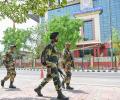
The 64-year-old Pakistani-origin Canadian businessman would also be questioned on his suspected links with the officials of Pakistan spy agency Inter-Services Intelligence (ISI) and his association with terror group Lashkar-e-Taiba (LeT), which had orchestrated the attacks.
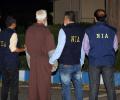
A court in New Delhi has sent Tahawwur Hussain Rana, the mastermind behind the 2008 Mumbai terror attacks, to 18 days of National Investigation Agency (NIA) custody. The court cited the need for sustained interrogation to uncover the extent of the conspiracy and the involvement of multiple targets across India, including New Delhi. Rana, a Pakistani-origin Canadian businessman and close associate of 26/11 conspirator David Coleman Headley, was extradited to India after the US Supreme Court dismissed his review plea against his extradition.

Over 100 terrorists, including high-value targets such as Yusuf Azhar, Abdul Malik Rauf and Mudasir Ahmed, were eliminated during Operation Sindoor on May 7, the Indian military said on Sunday.

The nine targets struck under 'Operation Sindoor', four in Pakistan and five in Pakistan-occupied-Kashmir, were chosen by the IAF after receiving intelligence inputs about terror camps operating under the guise of health centres to evade detection at these sites, officials said on Wednesday.

Tahawwur Rana, accused in the 2008 Mumbai terror attacks, has renewed his application to the US Supreme Court seeking a stay of his extradition to India. The Supreme Court will hear the application next month. Rana, currently detained in Los Angeles, claims his extradition would violate US law and expose him to torture in India due to his health and Muslim background. The US government has denied these claims and authorized his surrender to India, citing the Extradition Treaty between the two countries. The Supreme Court's decision will determine if Rana will face justice in India or remain in the United States.

The United States has extradited Pakistani-Canadian Tahawwur Hussain Rana to India to face charges for his alleged involvement in the 2008 Mumbai terrorist attacks. Rana, 64, was convicted in the US in 2011 for providing material support to Lashkar-e-Taiba, the Pakistani militant group responsible for the Mumbai attacks. The US Department of State said it has long supported India's efforts to bring those responsible for the attacks to justice and that the extradition is a critical step towards seeking justice for the victims. Rana's extradition comes after the US Supreme Court denied his last-ditch attempt to evade extradition. He will now face justice in India for his role in the attacks which killed 166 people, including six Americans.

Devika Rotawan, a survivor of the 26/11 Mumbai terror attacks, has demanded the death penalty for Tahawwur Hussain Rana, a key accused extradited from the US. Rotawan, a key witness in the case, identified terrorist Mohammed Ajmal Kasab in court during the trial. She believes the extradition is a "big win" for India and called for further action against other conspirators in Pakistan.
The hugely significant development comes just days after Rana's last-resort attempt to evade extradition to India failed after the US Supreme Court justices denied his application, moving him closer to being handed over to Indian authorities to face justice in the dastardly attacks.
'The government has to explain (to the army, air force and navy chiefs) whether they want a punitive strike, a deep punitive strike, or whether they want limited war or an all-out war, will it be a circumscribed war or will it be a shallow attack along the border.'

Tahawwur Rana, accused in the 2008 Mumbai terror attacks, has been extradited to India after the US Supreme Court denied his last-ditch effort to avoid being sent back. Rana, a close associate of David Coleman Headley, another key conspirator in the attacks, was expected to be extradited "shortly" after his legal appeals failed. This decision comes after a multi-agency team from India traveled to the US to complete all necessary paperwork and legalities with the US authorities. Rana's extradition marks a significant development in the pursuit of justice for the victims of the Mumbai attacks.
Mumbai terror attack accused Tahawwur Rana has moved an 'emergency application' with the United States Supreme Court against his extradition to India, claiming that he will be tortured there since he is a Muslim of Pakistani origin.
This was Rana's last legal chance not to be extradited to India. Earlier, he lost a legal battle in several federal courts, including the US Court of Appeals for the North Circuit in San Francisco.

"We are burning the midnight oil, working our fingers to the bone," he said, to ensure access to Headley for India, as it was "so important to India, the Indian people, the Indian government."
The arraignment for Pakistan-origin US national David Coleman Headley charged with criminal conspiracy in the 26/11 Mumbai attacks has been scheduled for December 9.
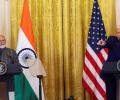
United States President Donald Trump on Thursday announced the extradition of the 26/11 Mumbai terror attack accused Tahawwur Rana to India and said he will face justice.
Days after Pakistani-American Lashkar-e-Tayiba operative David Headley implicated Inter-Services Intelligence in the Mumbai attacks during his testimony in a United States court, Interior minister Rehman Malik has described him as a convict who has "no credibility and cannot be trusted."
'It is ensured that no adversaries or people who oppose Tahawwur Rana's philosophy are housed in the same ward or jail.' 'Additionally, it is ensured that he does not have any prior contacts within that jail.' 'So, the lodgment of such a high-profile prisoner is done very carefully.'
'The bond between Rahul and David was a powerful one. While Rahul saw a father figure in Headley, the latter saw Rahul only as a codename for Mumbai. Rahul had spent approximately 1,000 hours with Headley and planned to spend more, when Headley was finally busted in the US. Rahul was devastated. He had lost a father figure for the second time in his life...' Exclusive excerpts from S Hussain Zaidi's latest book, Headley and I.
David Headley dominated the discussions between the CIA and their Indian counterparts on Monday.

'His deposition shows that the dividing line between Pakistan's State and non-State actors had completely blurred in Mumbai's 26/11 terror strikes.'

To a question, Headley further clarified that he had informed the NIA that 'this woman (Jahan) was an Indian and an LeT operative' but could not explain why this was not recorded in his statement.
The deposition was meant to secure more information and revelations on the 26/11 terror attacks that would make India's case against Pakistan stronger. Instead, the internal conflicts within India's security establishment stood exposed.

akistani-American David Coleman Headley outline how the Lashkar-e-Tayiba and the Inter-Services Intelligence wanted to spread terror in India.
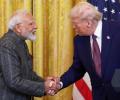
Opposition leaders in India have expressed hope that Prime Minister Narendra Modi raised the issue of the deportation of Indian illegal immigrants from the United States during his recent visit. They criticized the manner in which the Indians were sent back, shackled and handcuffed on a military aircraft. The leaders also discussed the need for India to address the root causes of migration and the importance of national interest in diplomatic relations with the United States.
Media reports had said that Headley was attacked by two inmates at a Chicago prison on July 8.
In a long battle, this is Rana's last legal chance not to be extradited to India.
Demanding death penalty for Lashkar-e-Tayiba terrorist David Headley, Bharatiya Janata Party on Friday said he should be extradited to face trial in Indian courts for the killing of 166 people in the 2008 Mumbai terror strikes.
It was earlier scheduled for Tuesday.

Union Home minister Rajnath Singh asked Opposition parties if they were prepared to apologise to the nation for their "malicious campaign" against PM Modi over the killing of Ishrat Jehan.
Sebastian Rotella, the award-winning reporter relentlessly exposing the David Headley case, in an exclusive interview with Rediff.com's Vicky Nanjappa.

While Intelligence Bureau is relying on David Headley's testimony, the CBI is seeking clarification from the NIA, which rejects the claim that Headley spoke to Ishrat Jahan. Vicky Nanjappa reports
