
The two chief ministers had lunch together and discussed various issues, including the current political situation in the country.
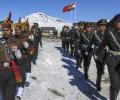
The decision to disengage the forces, locked in a bitter standoff for the last six weeks in eastern Ladakh, was taken at a nearly 11-hour-long meeting between senior Indian and Chinese commanders in Moldo on the Chinese side of the Line of Actual Control (LAC) on Monday.
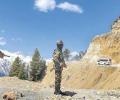
In the next few days, Indian Army will carry out a detailed verification to check actual implementation of the disengagement process, he said. It is learnt that the mutual disengagement in Gogra (patrolling point 17A) is expected to be completed by Thursday.

Jaishankar, who arrived in Santo Domingo on his first official visit to the Dominican Republic, also said that India has seen a dramatic expansion in connectivity, contacts, and cooperation across the region.
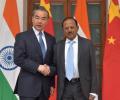
'Both sides had candid and in-depth discussions over easing the current border situation and reached positive common understandings,' it said. 'Both sides welcomed the progress achieved in the recent military and diplomatic meetings, agreed to stay in dialogue and consultation, and stressed the importance to promptly act on the consensus reached in the commander-level talks between Chinese and Indian border troops, and complete disengagement of the front-line troops as soon as possible,' it said.

After India firmly told China that its violation of the border pacts has "eroded" the entire basis of bilateral ties, China's defence ministry on Friday said the situation at the border is "generally stable" and both sides should put the boundary issue in an "appropriate position" and promote its transition to "normalised management".

'We have to be prepared on the borders to withstand Chinese expansionist designs.'
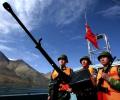
Both the Indian and Chinese armies have brought in more troops in sensitive locations like Demchok, Daulat Beg Oldie and areas around Galwan river as well as Pangong Tso lake in Ladakh, the sources said. The area around Galwan has been a point of friction between the two sides for over six decades.

The shelters were installed in locations near Tashigong, Manza, Hot Springs and Churup among others, in reflection of simmering tensions between the two sides in the region.
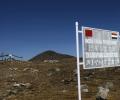
The resolution condemns additional Chinese provocations, including China's use of military force to change the status quo along the Line of Actual Control, construction of villages in contested areas, publication of maps with Mandarin-language names for cities and features in the Indian state of Arunachal Pradesh, and expansion of Beijing's territorial claims in Bhutan.
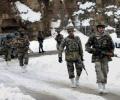
Within the army, there is growing concern that New Delhi will allow the Chinese to retain the territory they have occupied in the last month.

The resolution was introduced by Senator John Cornyn, Republican Senate Majority Whip, and Senator Mark Warner, ranking member of the Senate Select Committee on Intelligence.

'It is unfortunate that aspersions are being cast on how our brave Armed Forces are treated. The armed forces give the best possible treatment to their personnel'

Prime Minister Narendra Modi arrived in Bali on Monday for the G20 Summit and bilateral meetings on its sidelines with key leaders attending this annual conference of the world's major economies.

Legal battles initiated by 1,000-odd former employees of the Talegaon plant continue to present a challenge for the acquisition process.
Experts have said the economic cost of China's misadventure in the last couple of months in eastern Ladakh and South China will be "massive" as it has "exposed" Beijing's "real face" when the entire world is fighting coronavirus.
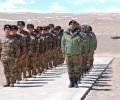
The last contact between India and China was the military talks at the Corps Commander level in October this year.

The meeting comes against the backdrop of demands by the opposition seeking details of the violent face-off between Indian and Chinese troops in the Galwan Valley in Ladakh which left 20 Indian Army personnel dead.
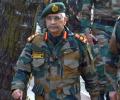
Gen Naravane reviewed the overall security situation in the region with Northern Army Commander Lt Gen Yogesh Kumar Joshi, commander of the 14 Corps Lt Gen Harinder Singh and other senior Army officials.
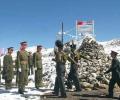
The two armies had mutually decided not to resort to use firearms during face-offs in sync with provisions of two agreements on border management.

The former Congress president has been questioning the government over the martyrdom of Indian soldiers and has demanded answers from the prime minister.

At a media briefing in Beijing, Chinese Foreign Ministry spokesman Wang Wenbin said the two sides have maintained smooth communication on border-related issues through diplomatic and military channels.

No one can capture an inch of Indian land till the Narendra Modi government is in power, Home Minister Amit Shah said Tuesday and claimed the actual reason behind the Congress disrupting Lok Sabha proceedings was not the clash between Indian and Chinese soldiers but a question on the cancellation of Foreign Contribution (Regulation) Act (FCRA) registration of the Rajiv Gandhi Foundation.

"After the Major General-level talks on Wednesday, the talks are expected to be held over the next few days in Chushul at multiple levels to find solutions to the dispute in specific areas," sources said.
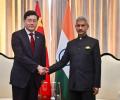
Qin's first in-person meeting with Jaishankar on Thursday came on the sidelines of the G20 foreign ministers conclave in New Delhi amid the over 34-month-long border row in eastern Ladakh.

The discussions took place on the sidelines of the G20 Foreign Ministers' Meeting.
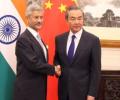
Wang said the two sides should follow the important consensus reached by the leaders of the two countries and strengthen the communication and coordination on the proper handling of the border situation through the existing channels so as to jointly maintain peace and tranquility in the border area, the Chinese foreign ministry said in a statement.

The marathon fourth round of Lt Gen-level talks also focussed on steps for pulling back large number of troops and weapons from rear bases along the Line of Actual Control in eastern Ladakh.
Chinese foreign ministry spokesman Geng Shuang told a media briefing in Beijing that "at the moment the situation in the boundary region between China and India is overall stable and controllable".

India has repeatedly called on Russia and Ukraine to return to the path of diplomacy and dialogue and end their ongoing conflict.

With the two armies again in a face-off at multiple points, there is apprehension of renewed clashes.
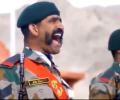
The video comes just days after 20 Indian soldiers lost their in a "violent face-off" with Chinese troops in the LAC across Galwan Valley of Ladakh.

'However, a lot of preparatory work would have to go in and China must be prepared to announce an end to the standoff by disengaging from the remaining areas along the LAC.'

By offering aid to China in its hour of need we will create an opening to Xi Jinping to rectify his policy towards India, argues Colonel Anil A Athale (retd).

Last year, China held a meeting with some South Asian countries on COVID-19 vaccine cooperation without the participation of India.
At the talks, the Indian side insisted on complete disengagement of Chinese troops at the earliest and immediate restoration of status quo ante in all areas of eastern Ladakh prior to May 5 when the standoff began following a clash between the two armies in Pangong Tso, they said.

The navy has significantly expanded its deployment in the Indian Ocean Region deploying a plethora of warships and submarines to create pressure points on China as the maritime space around the Malacca Strait is very critical for its supply chain through sea routes.
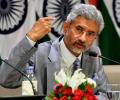
Chinese Foreign Minister Wang Yi and his Russian counterpart Sergei Lavrov will be the other two participants at the conference. Uncertainty had loomed over the meeting following the cross border clash between Indian and Chinese troops in Galwan Valley on Monday evening.
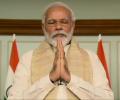
In a statement, the Prime Minister's Office (PMO) said the focus of Modi's remarks at the meeting on Friday was the events of June 15 at Galwan that led to the loss of lives of 20 Indian military personnel.

'When armies start attacking with clubs and batons, then at some point this can take an escalatory spiral and spin out of control.'
