
TRAI Chairman Anil Kumar Lahoti has called for robust safeguards, human oversight, and intervention capabilities as Artificial Intelligence becomes increasingly integrated into telecom networks. While acknowledging AI's potential to transform network management and threat detection, Lahoti stressed the need for responsible AI deployment, risk assessments, and clear accountability to ensure consumer trust and prevent misuse, especially in combating online fraud.

The Supreme Court has directed the Reserve Bank of India to prepare a standard operating procedure (SOP) within four weeks to deal with bank accounts linked to cyber frauds, including mule accounts. This directive is part of a broader effort to strengthen responses to cyber-enabled financial frauds, with the court also urging states and UTs to adopt and operationalise grievance redressal and money restoration modules.

Can your money be protected against online frauds like hacking, digital arrests, etc?

Gujarat's Director General of Police, KLN Rao, has emphasised the importance of a proactive approach in combating cybercrime, focusing on technology, coordination, and public awareness.

The policy unveiled by the home ministry is based on seven key pillars to counter the terror threats emanating from India or abroad -- prevention, responses, aggregating internal capacities, human rights and "Rule of Law"-based processes.

The panel also recommended unified Financial Redress Agency under Finance Ministry for customer grievances.

The University Grants Commission's (UGC) new regulations on promoting equity in higher education institutions have sparked protests and legal challenges. This article explains the regulations, the concerns raised, and the government's response.

The Financial Sector Legislative Reforms Commission, chaired by Justice B N Srikrishna, has suggested a non-sectoral, principle-based approach to revamp the existing framework.

'Just like oral hygiene, cyber hygiene must become a daily habit,' says Beena Vaheed, executive director, Bank of Baroda. 'It is not enough to rely only on banks, companies, or the government. Each of us must play our part.'

CPGRAMS -- an online platform available to citizens 24x7 to lodge their grievances to public authorities on service delivery -- has existed for close to two decades. But it has never been this active, points out Tamal Bandyopadhyay.

The three main regulators have different approaches to grievance redressal and different standards to stop harmful from coming pitched at the consumer.

The always dependable Pratik Gandhi finds a match in Sunny Hinduja and they are surrounded by a top notch supporting cast, observes Deepa Gahlot.

Khelo Bharat Niti: Regulatory bodies for better sports administration but will IOA, NSFs play ball?

The abolition of wealth tax is again a welcome step.

In a pump and dump operation, fraudsters artificially inflate the price of a stock by spreading misleading or false information, creating a frenzy among unsuspecting retail investors.

User protection and a proposal for a licensing framework for companies seeking to operate in the cryptocurrency area will be part of an upcoming consultation paper on the sector, said a senior industry executive. Even as specific regulations around crypto are yet to take shape, companies are setting up baseline user protection processes, including a redressal mechanism, fraud detection, regular filing of suspicious transaction reports (STRs), among others.

The finance ministry has put out a revised draft in public domain.

The Supreme Court of India directed the government to establish a legal framework to protect domestic workers and address their exploitation.

Scams happen with high regularity because the price of getting caught is insignificant. Aggrieved investors run from the police to already clogged courts to find redress for issues for which financial regulators have been specifically set up. For over 3,750 years we have known what to do, but we don't do it, observes Debashis Basu.
.jpg)
Stating that there are strong inter-linkages between banks, NBFCs and other deposit-taking entities, he said for monetary policy to be effective and financial markets to remain stable, they should be regulated by the central bank.
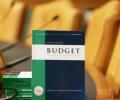
Experts have started giving comments on provisions that the govt must make in Budget 2016-17.
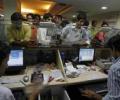
The proposed IFC disrupts existing regulatory structures.

For the time being, digital lending remains a grey area, notes Tamal Bandyopadhyay.

The agency had received Rs 946.51 crore to manage its affairs in the Budget Estimates for 2023-24, which was later increased to Rs 968.86 crore in the Revised Estimates.

The Reserve Bank on Thursday asked card companies not to issue unsolicited credit cards or upgrade an existing card without the explicit consent of the customer, failing which they will have to pay double the billed amount as penalty. It also asked card issuers and third-party agents not to resort to intimidation or harassment during recovery of dues from customers. In its master directions on credit card and debit card issuance, the RBI said "the issue of unsolicited cards/upgradation is strictly prohibited".

Per capita income has more than doubled to Rs 1.97 lakh in around nine years. Indian economy has increased in size from being 10th to 5th largest in the world in the past nine years. Seven priorities of the Budget, 'Saptarishi', are inclusive development, reaching the last mile, infrastructure and investment, unleashing the potential, green growth, youth power and financial sector.

A new law that defines how companies should process users' data came into force with the President giving assent to the Digital Personal Data Protection (DPDP) Act passed by Parliament in the just-concluded monsoon session. The law arms individuals with greater control over their data while allowing companies to transfer users' data abroad for processing, except to nations and territories restricted by the Centre through notification. It also gives the government power to seek information from firms and issue directions to block content.

Markets regulator Sebi on Thursday came out with detailed modalities for implementation of the accredited investors framework, a move expected to open up a new channel of raising funds from sophisticated investors. The regulator has issued guidelines on eligibility criteria for accredited investors (AIs), procedure as well as validation for accreditation, procedure to avail benefits linked to accreditation and flexibility to investors to withdraw "consent", according to a circular. Sebi had earlier this month introduced the concept of "accredited investors" in the Indian securities market.

If raters get away by moving from AAA to D overnight after companies default, as happened with DHFL, YES Bank, RCom, and IL&FS, it shows a complete breakdown in the rating system. It calls for exemplary punishment, not kid glove treatment, says Debashis Basu.
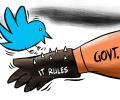
The Madras High Court on Thursday stayed the operation of certain sub-clauses of the recently introduced Information Technology (Intermediary Guidelines and Digital Media Ethics Code) Rules, 2021.
As all regulators are part of it, individuals don't need to worry about approaching the right authority

The superintendent of Taloja jail has just been transferred. Does that signal a more human phase in prison for the Bhima Koregaon accused? asks Jyoti Punwani.
The assessment of PMJDY should be done within the context of the programme.

Rajan said expecting the government to provide all solutions wasn't right.

The delay in receiving the revised pension was due to problems in calculation at his bank's end.


The judiciary has started going beyond the technicalities of the agreements and awarding compensation to buyers.

Though not a blockbuster budget it does not undermine the fact that key issues were addressed and the finance minister certainly did not under-deliver, says Vatsal Srivastava.

'The Modi government has been taking credit for improvement in respect of the ease of doing business in India.' 'But when I look at the scams I cannot help feeling that it is too easy to do business with banks in India, if one is a Harshad Mehta, Vijay Mallya or Nirav Modi and their tribe,' says former Union home secretary Madhav Godbole.

Indian economy about to take-off
