
There is no direct impact of the Russia-Ukraine crisis on India in terms of bilateral trade but a surge in oil prices poses considerable risk to the economy, an analyst report said on Friday. International oil prices which have surged past $100 per barrel "pose risks to external stability and currency movement," a Bank of Baroda Economics Research report said. Russia has launched military operations against Ukraine, stoking fears of significant disruption in the region, including loss of life. The West is ramping up financial sanctions against Russia and support for Ukraine.

Leading economists have pencilled in a high 13-15.7 per cent uptick in the economy in the first quarter of 2022-23 with an upward bias. Soumya Kanti Ghosh, the group chief economic adviser at State Bank of India, on Tuesday said he expects the GDP to clip past 15.7 per cent in the first quarter with more chances of the final numbers printing in higher, while Aditi Nayar, the chief economist at the rating agency Icra, said the economy will grow much lower at 13 per cent in the June quarter. The national statistical office will announce the first quarter GDP numbers later next week.

Market estimates suggest the airline has already totted up Rs 1,800 crore of losses in FY20, and FY21 is expected to see losses in the region of Rs 2,500 crore to Rs 3,000 crore Many in the sector say that Vistara lacks the light-footedness of the airlines with which it competes, reports Anjuli Bhargava.

Low home loan rates by banks could put large players in an advantageous position over smaller non-bank players, believe analysts.

Gold jewellery demand in India is likely to decline in the second and third quarters of this fiscal due to hike in import duty, high volatility in prices and inflationary pressure, according to a report. While demand is likely to contract by 8 per cent year-on-year in the second quarter of FY23, the decline is expected to be higher at 15 per cent in the third quarter due to the exceptionally high base in the same period of FY22, Icra said in a report. According to the report, the exceptional third quarter performance in FY22 was due to the post-Covid reopening of the economy and the substantially high demand in the wedding and festive seasons.

The Tata group firm has enhanced its product portfolio through "targeted acquisitions" as it aspires to be a formidable player in the FMCG category, said Chandrasekaran, who is also the chairman of Tata Sons. Besides, it has stepped up the pace of innovation across markets in line with consumer trends such as health and wellness and convenience, he said in his message to shareholders in the latest annual report of TCPL.

Individuals flew the flag for philanthropy in FY20, escalating their contribution significantly in comparison with company and foreign fund donations, according to the Dasra/Bain & Co India Philanthropy Report of 2021. Funding by individual philanthropists went up by 42 per cent from Rs 21,000 crore in FY19 to Rs 30,000 crore in FY20.

Experts attribute the lower target to increased allocation under the credit guarantee scheme for small businesses. Out of the Rs 3.21 trillion worth loans sanctioned under the Pradhan Mantri Mudra Yojana (PMMY) in the last financial year, Rs 3.12 trillion were disbursed to entrepreneurs, according to official data.

'The numbers are null and void now. Look, we can give out projections now, but we know that a week later those numbers will also be irrelevant. So we need to wait,' a top government official said.

Mukesh Ambani, who took over the reins of Reliance Industries Ltd (RIL) after the sudden demise of his legendary industrialist father Dhirubhai Ambani, completes 20 years at the helm during which the company saw a 17-fold jump in revenues, 20-times surge in profit and has become a global conglomerate.

The impact of economic slump was visible in the Budget's fine print, as this step-by-step explanation show how the Budget math was worked out, reports Abhishek Waghmare.

Public sector banks (PSBs) have written off a massive Rs 8 trillion of loans in the seven years of the Narendra Modi government in office. This is more than twice the capital infused by the Bharatiya Janata Party-led government during the period. Between 2014-15 and 2020-21 (FY21), the Centre had infused Rs 3.37 trillion into PSBs. At Rs 1.06 trillion, FY19 saw the highest capital infusion.

Fitch Ratings director Thomas Rookmaaker said India's debt-to-GDP ratio is likely to rise to 76 per cent from 70 per cent currently due to wider fiscal deficit and low economic growth.

Citing some news reports about alleged unfair business practices, and that the lender had also missed analysts' estimates on profits for the first quarter ended June FY21, Rosen Law Firm said it is preparing a securities lawsuit.
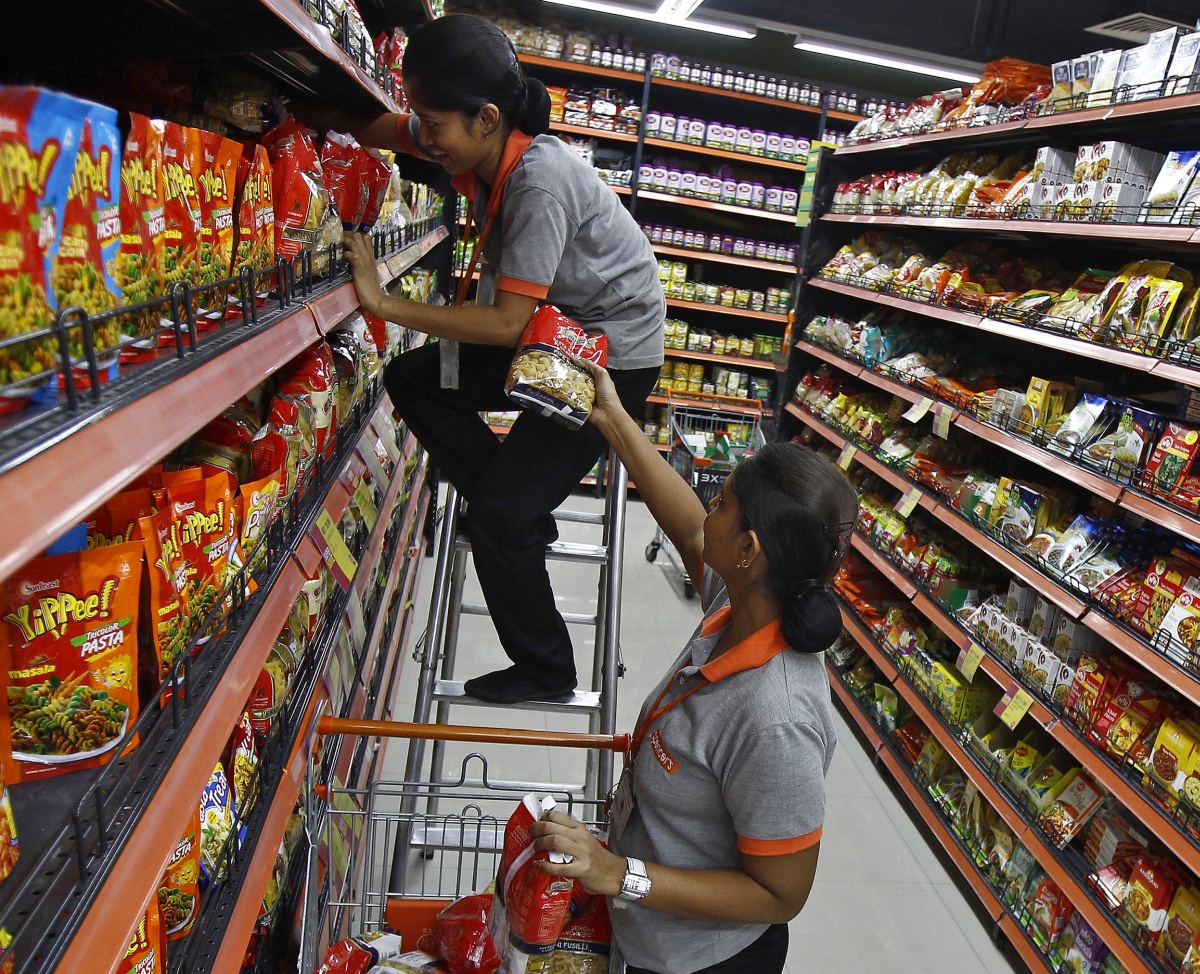
However, rural demand continued to remain a concern for FMCG companies during the quarter.

In 2020-21, business activities were hit by the coronavirus pandemic. Biyani's annual remuneration stood at Rs 3.86 crore in 2019-20, according to Future Retail Ltd's (FRL) annual report for 2020-21. FRL's managing director Rakesh Biyani also saw his remuneration decline by 4.82 per cent to Rs 3.75 crore in the financial year ended March 31, 2021.
This permission was given some time late last month, before the Reserve Bank of India (RBI) on March 31 issued the indicative borrowing calendar for the states for April-June and the one for the Centre for April-September.

Almost all infrastructure ministries continued spending on capex throughout the lockdown, even as the Centre tried to maintain some semblance of economic normalcy.

'They have started becoming an important player, but not at the same level as they were in the earlier part of the decade.'

Attrition is driving the hiring effort on campuses.

'As valuations of large-caps appeared to be out of whack, investors started lapping up quality mid-caps and small-caps, which were available at relatively comfortable valuations.'

GMR Group is currently investing Rs 20,000 crore to expand the existing airports and developing new aerodromes, GM Rao, chairman of the infra major has said. "Airport Development and Construction: GMR Group has set benchmarks for development of world class Airport infrastructure... Your company is currently investing approximately Rs 20,000 crore to expand the existing airports and develop new Aairports," he said in the group's latest annual report. GMR's airport business comprises four operating airports - Indira Gandhi International Airport, Delhi, Rajiv Gandhi International Airport, Hyderabad, Bidar Airport at Karnataka and Mactan Cebu International Airport in the Philippines.

'Given the 50 per cent or thereabouts increase in borrowing that has been announced, it is a reasonable estimate to say that at this time, an increase of 1.7-1.8 per cent on the 3.5 per cent budgeted fiscal deficit target is being anticipated,' Chief Economic Adviser Krishnamurthy Subramanian said on Friday.

Indian GDP will grow at 8.5 per cent in 2021-22, and the rate will accelerate further to 9.8 per cent in 2022-23, a foreign brokerage said on Tuesday. The GDP had contracted by 7.3 per cent in the pandemic-hit FY21, and is widely expected to grow at a faster pace due to the base effect in 2021-22. The Reserve Bank of India (RBI) expects a 9.5 per cent growth in 2021-22, and the same to slow down to 7.8 per cent as things normalise.

A rise in petrol and diesel consumption can help the government cut cesses on the fuels by Rs 4.5 a litre without impacting revenue collections of FY21, and help cool off the pressure on inflation, domestic rating agency ICRA said on Friday. Petrol consumption is estimated to increase 14 per cent in 2021-22 and diesel by 10 per cent on the lower base, rise in mobility and economic recovery, ICRA said. The rating agency added that it will result in an additional Rs 40,000 crore in revenue for the government through higher collections of the cess.

Amit Shah's net worth grew 32 per cent to Rs 37.91 crore, mainly due to 80 per cent appreciation in the market value of his securities.

India's top listed companies reported their best-ever quarterly net profit of Rs 2.39 trillion in the September quarter of FY22, up 46.4 per cent year-on-year. The earnings were driven by a big surge in the profitability of banks, non-banking financial companies & insurance (BFSI), oil & gas, and metal & mining firms. The combined net profit of these three cyclical sectors were up 87 per cent YoY to a record high of Rs 1.53 trillion, up from Rs 82,000 crore a year ago and Rs 1.08 trillion in Q1FY22.

There are multiple near-term worries for the stock of India's largest listed consumer company, Hindustan Unilever (HUL). While inflationary pressures will weigh on its profitability, demand pressures - especially in the rural market - are expected to hit the firm's revenues. This is why brokerages have cut the earnings estimates for financial year 2022-23 (FY23) by 7-10 per cent.

The stock, which is a play on the growth story of Indian Railways, has corrected 15 per cent from its 52-week high level of Rs 2,072.95 scaled on March 9. Yet, this has not deterred brokerages from holding a bullish view on the stock.

Telecom operator Bharti Airtel on Friday said it has paid Rs 15,519 crore to the government towards prepayment of its entire deferred liability pertaining to spectrum acquired in the 2014 auction. The company had acquired 128.4 MHz spectrum (including Telenor spectrum) for a consideration of Rs 19,051 crore in the 2014 auction, Airtel said in a statement. The company estimates that the prepayment to Department of Telecom (DoT) will likely result in interest cost savings of at least Rs 3,400 crore over the residual life for fully substituted capital.
Given that there has been no negative news flow around Zomato, analysts believe it's time to lap up the shares at lower levels.

The excise duty cuts on diesel and petrol will cost Rs 45,000 crore and lead to a 0.3 percentage point widening on the Centre's fiscal deficit, a foreign brokerage said on Thursday. Going by the overall consumption, the costs of the surprise move - which came after months of concerns over high payouts at filling stations - for the entire fiscal will come at Rs 1 lakh crore or 0.45 per cent of GDP, economists at Japanese brokerage Nomura said in a report. For the remaining months of the ongoing FY22, the cost will come at Rs 45,000 crore, which leads to an upward review of the fiscal deficit target.

Finance Minister Nirmala Sitharaman will kick start the customary pre-Budget consultation exercise with stakeholders from Wednesday by holding the first such meeting with experts of agriculture and agro-processing industry. She will be seeking inputs from various stakeholders, including industry bodies, farmer organisations and economists for reviving consumption and boosting growth hit by the COVID-19 pandemic. The growth this year is expected to be in the double-digit during the current fiscal.

Shares of Adani Green Energy (AGEL) continued their upward movement, hitting a new high of Rs 1,955.90, up 2.6 per cent on the BSE in Wednesday's intra-day trade in an otherwise weak market. The S&P BSE Sensex was down 0.77 per cent at 60,285 at 11:01 am. In the past 14 trading sessions, the stock of the renewable energy arm of the diversified Adani Group has zoomed 50 per cent from Rs 1,307.05 on December 30, 2021. In comparison, the S&P BSE Sensex was up 4.3 per cent during the same period.

'When you plot the growth, -- 7.5 per cent for Q2, 0.4 per cent for Q3, 1.6 per cent for Q4 and 20.1 per cent for Q1 now -- all you see is a 'V'.' 'You don't see any other alphabet in the shape there.'

Among the lot, Rallis India, Escorts, Jubilant Life Sciences, and Crisil added half of the total gains made in the ace stock-picker's portfolio.

Investors are pushing back more often against companies' resolutions on what is paid out to top executives. In the first four months of financial year 2022-23 (FY23), there have already been five such rejections, according to shareholder voting data from tracker Adrian, a platform maintained by the proxy advisory firm Institutional Investor Advisory Services India (IiAS). Two of these have been at multiplex chain PVR and direct-to-home company Dish TV India.

An immediate RBI rate cut will lower lending rates for banks' MSME/retail/mortgage loans before the 'busy' industrial season ends in March.

Mihir Tanna, Associate Director, S K Patodia & Associates, answers your income tax queries.
