
The trend in corporate earnings suggests that index earnings could fall to the levels last seen in early 2014.

If the government cuts wasteful expenditure as it is trying now, the deficit would at most fall to 8 per cent, not less than that.

IT services major Wipro on Friday said it will give wage hikes to junior employees with effect from September 1, 2021. "Wipro Limited will initiate merit salary increases (MSI) for all eligible employees up to Band B3 (assistant manager and below), effective September 1, 2021. "In January 2021, the company had announced salary hikes for eligible employees in these bands, who form 80 per cent of the company's workforce - this is the second hike in this calendar year," Wipro said in a statement. As announced earlier, all eligible employees above band C1 (managers and above) will receive pay hikes effective June 1, it added.

In 2017, when Infosys announced that Salil Parekh would be its next chief executive officer (CEO) and managing director (MD), very few in the industry or the analyst community doubted his ability to bring the company back to a healthy growth trajectory, improve morale within the company and, more importantly, win the promoters' trust and investor confidence. There were reasons for this confidence. He was not only the deputy CEO of the Paris-headquartered IT services major Capgemini, but also one of the only non-European faces on the executive board of the company.

The government has revised its divestment target downwards from Rs 2.1 trillion, as its ambitious privatisation programme has been deferred to next year.

Housing sales mostly declined during the first and the second wave of the coronavirus pandemic but prices did not fall in most of the cities but rather increased in some cities, according to the Economic Survey 2021-22. The pre-Budget document also highlighted that the housing demand recovered after both the waves on the back of pent up demand, low interest rates on home loans and reduction in stamp duty by some states. The survey has analysed the National Housing Bank's data on change in housing transactions in Q1FY21 (first COVID-19 wave) and Q1FY22 (second COVID-19 wave) over the pre-pandemic levels of Q1FY20. It also looked into change in housing prices index during this period.

Baba Ramdev-led Patanjali Ayurved Ltd will sell its food retail business to group firm Ruchi Soya Industries Ltd for Rs 690 crore as part of its strategy to focus on non-food, traditional medicine and wellness business.
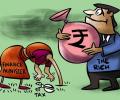
While the tax-to-GDP ratio of 9.88 per cent has been assumed for FY21, the same as last year, when it touched a decadal low, for FY22 a ratio of 10.7 per cent has been assumed, an average of the last five years.

For Tata Consultancy Services (TCS) - India's largest and the world's second-largest IT services provider - the attrition rate touched an all-time high of 17.4 per cent in Q4FY22. The management, following the announcement of the Q4 results, has warned that the attrition situation could become even worse before any improvement. According to analysts, the short term, the attrition rate at TCS could even touch 20 per cent.
The economy has shown sharp resilience in the past and has also bounced back in good time. We could hence expect a similar trajectory next year, observes Madan Sabnavis, chief economist, CARE Ratings.

India is now much ahead of other large railway networks in the world in terms of electrification -- with the US at just 1 per cent, China at 72 per cent and Europe at 60 per cent.

After the hit of the pandemic, India Inc is now worried about the adverse impact of inflation and higher commodity prices on their revenues and margins. The inflation scare is the strongest among manufacturers of consumer goods such as automobiles, consumer durables, and fast-moving capital goods (FMCG). Companies across sectors fear they will not be able to pass on the hike in input costs to their consumers due to weak demand, which, in turn, would lead to a hit on margins and profitability in the forthcoming quarters.

Rakesh Jhunjhunwala-backed Nazara Technologies is all set to hit the primary market with its Rs 583-crore IPO on Wednesday. The diversified and online gaming firm's three-day issue will run through March 17-19 and will be entirely an offer for sale (OFS). While 5.29 million equity shares will be offloaded via OFS by some of the shareholders, Rakesh Jhunjhunwala, who owns 3.29 million shares or 11.51 per cent stake in the company as of September 30, 2020, has decided to hold on to his stake. The issue has a price band of Rs 1,100-1,101 and will be available in lots of 13 shares and multiples thereof.

India's GDP estimates for 2020-21 show that the economy is expected to perform much better than earlier projections by different agencies, indicating a sustained V-shape post-lockdown recovery, experts said. The first Advance Estimates (AE) by the National Statistics Office (NSO) has projected a contraction of 7.7 per cent in the real GDP during 2020-21. This was better than the projections by certain international agencies like the IMF and World Bank.

Yes Bank CEO said the private lender is disposing some of the properties in many other cases as well. He, however, declined to elaborate on borrowers against whom such action was underway.

The ongoing key reforms such as sops for manufacturing, easier labour laws, wooing FDI inflows and privatisation will help improve productivity and support long-term growth at 7.5-8 per cent levels, which if played out well, can help India contribute 15 per cent of global GDP growth by FY2026, says a report. According to a report pencilled by the India economist at UBS Securities, Tanvee Gupta Jain, the country has the lowest manufacturing costs among peers, even though China retains significant ecosystem advantages and despite that India and Vietnam appear most likely to benefit from a shift out of China.
Corporate India's credit quality showed a sharp improvement in the second half of FY22, but high input prices and withdrawal of pandemic-related relief measures can pose pressures in the new year, rating agencies said on Friday. Crisil Ratings, which rates a large number of financial sector entities, reported an improvement in the credit ratio -- the number of upgrades to downgrade -- to 5.04 times in the second half of this financial year, from the 2.96 per cent in the first half of the fiscal. It attributed the improvement to a sustained rebound in demand, which lifted revenues of most sectors to pre-pandemic levels and proactive relief measures by the government that cushioned the pandemic blow.

The flow of deposits from non-resident Indians (NRIs) hit a four-year low in the financial year 2020-21 mainly due to contraction in foreign currency deposits, latest data released by the Reserve Bank of India (RBI) shows. Total NRI deposits during FY21 were $7.3 billion as compared to $8.6 billion in FY20 - the lowest since 2016-17, when such deposits had contracted by $12.3 billion. Indian banks have three kinds of deposit accounts where NRIs or PIOs (persons of Indian origin) can park their funds: non-resident external-rupee account (NRE); non-resident ordinary rupee account (NRO); and foreign currency non-resident bank account (FCNR [B]).

Measures that quickly boost demand and increase employment are needed to push up growth. Moreover, without announcing new planss, the government should strengthen schemes such as PM KISAN, MNREGA and programmes to build rural roads.

By the end of the June quarter, the top four - TCS, Infosys, Wipro and HCL Tech employed 10,15,000 employees - down by 9,144 employees over the previous quarter.

FDI equity inflows into the country during April-January 2020-21 grew by 28 per cent to $54.18 billion, according to the Commerce and Industry Ministry data released on Monday. Foreign direct investment (FDI) inflows during April-January 2019-20 stood at $42.34 billion. Total FDI (which includes reinvested earnings) during the 10-month period in FY21 increased by 15 per cent to $72.12 billion over the year-ago period.

The government's total liabilities rose to Rs 128.41 lakh crore in December quarter from Rs 125.71 lakh crore in the three months ended September 2021, according to the latest public debt management report. The increase reflects a quarter-on-quarter increase of 2.15 per cent in October-December 2021-22. In absolute terms, the total liabilities, including liabilities under the 'Public Account' of the government, jumped to Rs 1,28,41,996 crore at the end of December 2021.

In November, DRL registered growth of 28 per cent year-on-year (YoY), which was the highest among peers and double that of the industry growth (14.5 per cent).
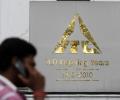
A hotel in 1975, entry into paperboards in 1979, India's dominant cigarette maker, ITC, read the tea - or tobacco - leaves early, leveraged its enterprise strengths and stepped up the diversification agenda to create multiple drivers of growth. Some failed, some faltered, some were transformational, adding steadily to the top line. Now those efforts are making a difference: margins from non-cigarettes - FMCG, hotels, agri, paperboards, paper and packaging - are expanding and profits are kicking in more significantly than ever before.
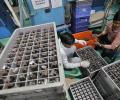
Auto component makers in India are bracing for a tough time. High absenteeism among workers owing to Covid-19, shortages of critical parts, and temporary closures of plants by automobile manufacturers have thrown a spanner in the works for the Rs 3.2-trillion sector, which derives 60 per cent of its revenues from automobile original equipment manufacturers (OEMs), with the balance split equally between replacement demand and exports. Car market leader Maruti Suzuki India on Saturday said it was extending the maintenance shutdown, which was from May 1 to 9, till May 16, "keeping in view the current pandemic situation". Some activities will continue in the plants.

The life insurer tinkered with its business strategy - raised the share of protection plans and reduced dependency on ULIPs in the past four years.

HDFC was the top gainer in the Sensex pack, spurting over 2 per cent, followed by Bajaj Finserv, M&M, NTPC, Bharti Airtel, UltraTech Cement and ONGC. NSE Nifty rose 98.35 points to 14,823.15.

'Last year (FY21), we had about 1 million intimated claims for Covid.' 'This year (FY22), in six months, we got about 1.6 million claims.'

Hospitality and travel-tech firm OYO is looking to launch its initial public offer after September and has written to stock market regulator Sebi, seeking to file updated and restated consolidated financial information. The company, which had filed preliminary papers with Sebi to raise Rs 8,430 crore through an initial share sale in October last year, is now prepared to settle for a lower valuation of around $7-8 billion against the $11 billion it was targeting initially, according to people in the know of the development. OYO's move to launch the IPO after the September quarter is mainly driven by the expectation of improvement in its financial performance and the current volatile nature of the market, they said.

Free provision of food, cash transfers, and jobs in villages see enhanced flow of funds despite a precipitous fall in revenue. Till May, defence spend was nearly 30 per cent less than the previous year.

Indirect emissions account for a major chunk of emissions by Indian IT firms. Business travel and commutation, together, are a key reason for it. If travel and daily commuting go down, so does carbon emissions.

Zomato's initial public offer (IPO) is scheduled to open for subscription on July 14 and is priced between Rs 72 - 74 per share. At the upper end of the price band of the offering, the company aims to raise Rs 9,350 crore. Most analysts have given a 'subscribe' rating to the issue for listing gains.

Passenger vehicle wholesales in India declined nearly 4 per cent to 279,501 units last month, auto industry body SIAM said on Wednesday. Passenger vehicle (PV) dispatches from factories to dealerships in March 2021 stood at 290,939 units. As per the latest data by the Society of Indian Automobile Manufacturers (SIAM), two-wheeler sales also fell 21 per cent to 11,84,210 units as compared with 14,96,806 vehicles in March 2021.

The world's biggest lockdown that shut a majority of the factories and businesses, suspended flights, stopped trains and restricted movement of vehicles and people, may have cost the Indian economy Rs 7-8 lakh crore during the 21-day period, analysts and industry bodies said.

'Money that came into mutual funds near the previous peaks -- the second half of 2017 and 2018 -- has in most cases experienced unflattering returns.' 'A large proportion of redemptions could be such inflows exiting when the market recovered sharply from July 2020 onwards.'
Mihir Tanna, Associate Director, S K Patodia & Associates, answers your income tax queries.

Asian Paints was the top gainer in the Sensex pack, advancing over 3 per cent, followed by Titan, Bajaj Finserv, ONGC, Infosys and TCS.

Anil Rego, CEO, Right Horizons, answers your personal income tax queries.
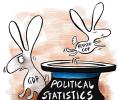
India Ratings and Research on Friday revised down India's FY22 real GDP growth forecast to 10.1 per cent, from earlier projection of 10.4 per cent, citing the second wave of COVID-19 infections and slower pace of vaccination. At a time when large parts of the country are experiencing tremendous pressure on medical infrastructure, the agency said it expects the second wave to start subsiding by mid-May. Earlier this month, the Reserve Bank maintained its 10.5 per cent GDP growth estimate, but Governor Shaktikanta Das has flagged the rising cases as the biggest impediment to recovery.

These five stocks, which have lagged the markets over the last two years, have doubled in value since March 23.
