
CBDT feels 30% growth in income-tax not feasible.

With infrastructure claiming a larger share, movement and distribution of cement is bound to change.

In the past few months, 45 companies have signalled their intent to raise money through the institutional placement route.
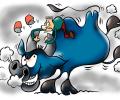
Going ahead, experts say, the fundraising trend in the primary market will depend on how the secondary market performs against the backdrop of the outcome of general elections and global cues.

YES Bank, Bank of Baroda, SBI, IndusInd Bank, and RBL Bank are amongst the banks, Jefferies says, are most prune to "high risk" emanating from ADAG, Cox & Kings, CG Power, DHFL and Essar Shipping.

Experts say the party is undoing what it achieved through MNREGA by targeting beneficiaries
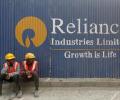
Reliance announced a rights issue of Rs 53,125 crore, which it said was the biggest in India.

Collapse of the mobile operator could translate into total loss of nearly Rs 44,000 crore for the AV Birla group.

Despite a steady collection rate, the government faces a steep Budget target of Rs 6.1 trillion for CGST for 2019-20.

A study by second-hand car dealer CARS 24 showed 42 per cent of the consumer feel the need for a car to travel safely now. Those who used cabs to commute before the pandemic want to buy a car for the family and a two-wheeler for shorter runs.

Durable, automobile and real estate players have been lobbying hard for a tax cut, saying it will boost demand.

'The effect will be seen two-three quarters down the line.'

In the past one week alone, Rajasthan, Madhya Pradesh, Chhattisgarh, and Andhra Pradesh have issued orders to take over private hospitals in some districts. Sohini Das, Vinay Umarji and Gireesh Babu report.

Hopes of revival and earnings growth in 2020, surprise tax cuts, and robust foreign flows - thanks to easy global monetary policies - are a few reasons why the markets have managed to digest the low GDP footprint. Select bluechips such as Reliance Industries, Bajaj Finance, Asian Paints, and ICICI Bank have gained sharply this year. On the other hand, YES Bank, Zee Entertainment, and Indiabulls Housing have seen a sharp fall.

Top gainers in the Sensex pack included Hero MotoCorp, Maruti, M&M, Bajaj Auto, HUL, HCL Tech, Bajaj Finance, ITC, HDFC and L&T, rising up to 7.51 per cent.

Ajit Mishra, Vice President, Research, Religare Broking, answers readers' stock market queries. Ajit will offer his unbiased views on a weekly basis

'The current economic contraction is certainly due to the lockdowns as a response to the pandemic, which is an act of God.' 'Nobody has seen such a thing in the last 100 years.' 'Saying that this was an act of mismanagement is largely incorrect'

The 'mystery' of the education business sale by Cox & Kings is part of an Enforcement Directorate investigation, which is also examining the siphoning-off of funds to the tune of Rs 21,000 crore to dozens of so-called related-parties, highlighted by the forensic auditor.

The first half of 2019-20 will be under pressure, since prices are expected to go up by Rs 7,000-8,000 at a time when sentiment is poor.

Private hospitals, especially smaller standalone ones, are staring at a crisis that they were not prepared for. Analysts say larger corporate chains have to brace up for at least six months for business to return to normal.

While the COVID-19 pandemic has completely halted production and new orders, exporters say that payments have also been delayed for the shipments sent before the lockdown. Exporters say some customers are not taking delivery of the shipments because they have shut shop. Ready-made garment players had been hoping for a revival in demand in China but with the virus spreading to Europe, the US and other major markets, there are no orders coming from the major retailers.

There will be pressure on the fiscal situation, especially at a time when the monsoon can also disappoint. More populist expenditure is on cards if the mandate is a hung Parliament or a coalition government.

'You can put 25 per cent right now; put another 25 per cent when Nifty corrects another 500 points.' 'At 13,500 put another 25 per cent and at 13,000 one can get fully deployed.'

According to a survey by community platform LocalCircles, early-stage start-ups, funding dependent start-ups and many small businesses will soon be fighting for survival as the spurt in coronavirus cases hits them hard.

Analysts attribute this fall to the recent moderation in energy (mainly crude oil) and commodity prices, lowering of input costs for companies in sectors such as FMCG, consumer durables, and automobiles, reports Krishna Kant.
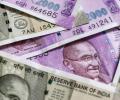
Post office savings deposit, recurring deposit accounts and the senior citizen savings scheme account have shown the highest growth in the current financial year.

Xiaomi plans to bring global component suppliers to India and this could potentially bring investment of at least Rs 15000 crore
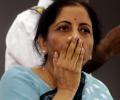
The immediate revenue loss could worsen the Centre's fiscal deficit, from the budgeted 3.3 per cent of gross domestic product (GDP) to 3.7 per cent of GDP -- a massive 40-basis-point increase. It was stabilised at 3.4 per cent since 2016-17, report Abhishek Waghmare and Dilasha Seth.

The list of companies skipping dividends in FY19 includes some of the country's largest firms and industry leaders such Tata Motors, Avenue Supermart, Future Retail and Vodafone Idea, among others.

The 13 firms under consideration had nearly a million employees as of March 2018, including contractual and temporary workforce.

The demand has gradually shifted from 16-tonners to 25-tonners and is further shifting in favour of 31-t and 37-t trucks.

Company's revenue rises 3-fold to touch $206 million while total cost jumps over 6 times to $500 million

India is currently under the 21-day lockdown since March 25, with only essential services exempted to contain the fast-spreading virus.


'The business of investing is essentially about competent doubt management: If the market knocks off 3,000 points, the doubt will be whether it will ever rebound (making it one man's doubt against another man's conviction),' says Mudar Pathreya.
'... Whether an incumbent is voted back or a coalition forms a new government except for a temporary disruption for a few weeks.'

The increase in bookings has also meant a significant reduction in overall costs for the online travel agencies and a consequent narrowing of losses.

'Young people are digital natives.' 'Hence, their ability to learn coding and to become a full stack engineer is far more.' 'The demand for such people is more as we feel that if we hire people from campuses, we can train them to become what we want.'

Investors turn their attention to export-driven sectors.

While asserting that the growth of coronavirus cases in the country has been more or less linear and not exponential, it also said testing has been ramped up consistently.
