
Economists have said if a stimulus is needed it should be different from what was provided in 2008-09, when the economy faced the ripple effects of a global meltdown following the Lehman Brothers collapse.

While companies continue to face regulatory pressure leading to higher costs, they see an uptick from the launch of differentiated and high-margin products

US private equity firm Silver Lake Partners will invest an additional Rs 1,875 crore in the retail arm of Reliance Industries, the Indian firm said in a statement on Wednesday.

The government has sold SGBs worth Rs 1,990 crore in April and May alone.

In a curious move, Reliance Industries' (RIL) executive director and Mukesh Ambani's trusted aide PMS Prasad pledged 600,000 shares of the company last month, which is 93.75 per cent of the total shares he owns in RIL. Prasad owned a total of 640,000 RIL shares and his compensation stood at Rs 11.15 crore in FY20.

Domestic ratings agency Icra on Monday forecast a 2 per cent GDP growth in the fourth quarter of 2020-21, and a 7.3 per cent contraction for the full fiscal year. From a GVA or gross value added perspective, the agency pegs Q4 growth at 3 per cent and the full year contraction at 6.3 per cent. According to the agency, the 2 per cent projected GDP growth will help the economy avoid a double-dip recession as indicated by the National Statistical Office (NSO) for Q4. Icra's projection is better than the 8 per cent contraction forecast by the NSO as it sees Q4 growth at only 1.1 per cent.

The company is also planning to create an Indian subsidiary to enhance communications and services with players for which it will hire over 100 employees specialising in business, e-sports, and game development.

Going forward, the February factory output may be impacted as several industries such as automobiles, technology, pharma and fashion have some exposure to imports of raw and intermediate materials from China.

As on July 31, the valuation of his shareholding in the company stood at Rs 9,830 crore.

Zomato's initial public offer (IPO) is scheduled to open for subscription on July 14 and is priced between Rs 72 - 74 per share. At the upper end of the price band of the offering, the company aims to raise Rs 9,350 crore. Most analysts have given a 'subscribe' rating to the issue for listing gains.

A common feature in India is the lag between the occurrence of frauds and the time they are actually reported.

Auto component makers in India are bracing for a tough time. High absenteeism among workers owing to Covid-19, shortages of critical parts, and temporary closures of plants by automobile manufacturers have thrown a spanner in the works for the Rs 3.2-trillion sector, which derives 60 per cent of its revenues from automobile original equipment manufacturers (OEMs), with the balance split equally between replacement demand and exports. Car market leader Maruti Suzuki India on Saturday said it was extending the maintenance shutdown, which was from May 1 to 9, till May 16, "keeping in view the current pandemic situation". Some activities will continue in the plants.

The bank, which has suffered reverses following a massive spike in dud assets and also the dismissal of its chief executive Chanda Kochhar over governance issues, however, hinted that the worse is behind.

The current slowdown has lasted for over 18 months and is the longest incident of sluggishness since 2006.

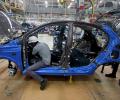
Automobile industry in India is going through a long-term structural slowdown as the compound annual growth rate (CAGR) across all major vehicle segments has witnessed a decline over the last three decades, as per industry body SIAM. The auto industry has been facing headwinds even before the COVID-19 pandemic derailed the entire sector last year, a research conducted by the Society of Indian Automobile Manufacturers (SIAM) has revealed. The study clearly shows that the pandemic is not the only reason for the auto sector slowdown, which is facing deeper structural issues that need attention, the industry body noted.

Historically, Tata Steel has always been among the biggest companies in the group in terms of m-cap, revenue, and profit but its fortunes began to decline after 2010 due to a sharp decline in the profitability of its European operations that it had acquired in 2007. The company was hit by a sharp rise in its debt level after this acquisition. First, it lost out to Tata Motors in terms of revenue in FY11 and then in March 2015, Titan beat it to become the third-biggest firm in the group in terms of m-cap. In FY20, TCS reported higher revenue and Tata Steel had become the third biggest company in that terms.

Together, the top 10 business groups reported a pre-tax loss of Rs 19,342 crore during the January-March 2020 quarter, as against a profit before tax of around Rs 48,500 crore in the year-ago period and Rs 39,600 crore during the December quarter. While Vedanta was the worst hit. others included Aditya Birla, Bharti, Adani, Mahindra, and Tata.

Nirmala Sitharaman has designed the revenue mix in such a way that while Centre's share in taxes would grow a massive 25 per cent, states' share would grow a dismal 6 per cent.

Even as regulatory focus has zeroed in on foreign e-commerce giant Amazon, a domestic retail giant has been created almost below the radar in Reliance Retail (RR), one of the most crucial businesses for the group's future. From doorstep delivery of groceries, apparels to branded jewellery, medicines, toys, furniture to high street retailing, RR's presence in the world's fourth largest consumer market is just one part of the story.

The ongoing key reforms such as sops for manufacturing, easier labour laws, wooing FDI inflows and privatisation will help improve productivity and support long-term growth at 7.5-8 per cent levels, which if played out well, can help India contribute 15 per cent of global GDP growth by FY2026, says a report. According to a report pencilled by the India economist at UBS Securities, Tanvee Gupta Jain, the country has the lowest manufacturing costs among peers, even though China retains significant ecosystem advantages and despite that India and Vietnam appear most likely to benefit from a shift out of China.

In 2020-21, Indian firms offered to buy back shares worth Rs 39,295 crore, or 97% more than Rs 19,972 cr proposed in the previous financial year.
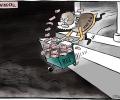
RBI Governor Shaktikanta Das has assured Finance Minister Nirmala Sitharaman that the Rs 12.05-trillion gross borrowing programme for FY22 will go through smoothly.

It is advisable to stick to mid-caps with sustainable financial metrics rather than those offering the promise of faster growth.

MEIL has become one of the fastest growing and most successful infrastructure and engineering, procurement, and construction companies in the country in recent times.
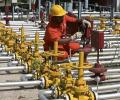
India's natural gas production is projected to jump by 52 per cent to 122 million standard cubic metres per day by 2024 as state-owned Oil and Natural Gas Corporation (ONGC) and Reliance Industries Ltd-BP combine raise output from the KG basin fields. Natural gas production in 2019-20 was 85 mmscmd, which is estimated to have fallen to 80 mmscmd in the following year, HDFC Securities said in a report. The output is projected to rise in the current fiscal that started on April 1 to 93 mmscmd, 107 mmscmd in the following year and 122 mmscmd in 2023-24, the brokerage estimated.

Experts attribute the lower target to increased allocation under the credit guarantee scheme for small businesses. Out of the Rs 3.21 trillion worth loans sanctioned under the Pradhan Mantri Mudra Yojana (PMMY) in the last financial year, Rs 3.12 trillion were disbursed to entrepreneurs, according to official data.

The fairy tale turnaround story has, however, taken a few knocks after a second wave of the pandemic has brought a series of default notices and has posed the toughest test for the 55-year old Singh to save the airline he founded and sold to the Marans only to assume control later.

While it took UPI three years to reach a billion transactions in a month, the next billion came in just a year. Digital payments, especially UPI, saw increased adoption in 2020 due to the Covid-19 pandemic.
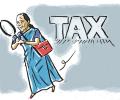
The continuing fiscal stimulus is heavily tilted towards capex, to the extent that it chips away a part of revenue spending. Accounting for other areas of revenue expenditure, such as salaries, pensions, subsidies and defence (committed spend), the room to spend on welfare schemes, health and education will narrow in FY22.

For large start-ups the US market is considered to be a preferred destination, as Indian investors were seen as hesitant to pay the kind of valuation private equity investors or the US markets pay. However, Zomato's listing has quashed these notions.

The government must also look at rationalising the levies on the sector and close long standing legal disputes that are a big drag on performance of operators, he said.

The robust revenue collection reinforces hope of a good economic performance in the third quarter of financial year 2020-21 after the surprising pickup seen in Q2.

M&M, which owns a 75 per cent stake in SYMC, rescued the sport-utility vehicle (SUV) maker from near-insolvency in 2010 but has struggled to revive its fortunes.

Zero-coupon bonds don't give out interest but are issued at a deep discount to the face value, making it difficult to ascertain the net present value.

India's harsh lockdown has left companies grappling with temporary closure, chaotic supply chains and depressed demand. Consequently, business plans have been modified.

RBI said the improvement in asset quality was driven by state-run lenders which saw a drop both in both GNPA and in the net NPA ratios.

Two powerful US Senators have urged President Joe Biden not to impose provisions of the punitive Countering America's Adversaries Through Sanctions Act against India for buying the S-400 surface-to-air missile system from Russia.
Sectors such as electronics, pharmaceuticals and automobiles can see supply disruptions in value chain, which may lead to a derailment of the domestic economic growth.

Mutual funds (MFs) are set to be net sellers of Indian equities for the first time in the past seven financial years, having sold stocks worth about Rs 1.27 trillion so far in 2020-21 (FY21), making it the highest net sales on record in a financial year. MFs had been net buyers in the previous six financial years, including purchases of over Rs 1.41 trillion in FY18, Rs 88,152 crore in FY19, and Rs 91,814 crore in FY20. The last time they offloaded Indian equities was in FY14, when they net sold stocks worth Rs 21,159 crore. In contrast, foreign portfolio investors (FPIs) have ramped up buying in FY21, purchasing more than Rs 2.6 trillion worth of shares.
