
If the new MDR regime is rolled out from the middle of this month, as scheduled, it should count as one of the boldest political actions by the Modi government on an economic-policy issue, and a signal that it is less worried about erosion of political capital it draws from one of its key constituencies, notes A K Bhattacharya.

The Enforcement Directorate (ED) has filed a chargesheet against FIITJEE and its directors, Dinesh Kumar Goel and Monila Goel, on money laundering charges. The case involves the alleged misappropriation of over Rs 85 crore collected from students for coaching programmes. The ED seeks their conviction under the PMLA and confiscation of properties worth Rs 71.88 crore.

The US Citizenship and Immigration Services (USCIS) has announced a significant increase in fees for the EB-5 Immigrant Investor Programme, effective November 30. This programme allows foreign investors, including many from India, to obtain permanent residency by investing in US commercial enterprises and creating jobs. The fee hikes, some more than doubling, are intended to fund USCIS operations, which are largely supported by fees rather than taxes.

Punjab & Sind Bank MD and CEO Swarup Kumar Saha clarified that merchants cannot pass on Merchant Discount Rate (MDR) charges to customers for UPI payments, ensuring consumers only pay the displayed price. The new MDR structure, effective October 15, applies a 0.4% charge on P2M transactions above Rs 2,000, with specific flat rates for certain sectors, but small-value transactions remain free.

Former Haryana Chief Minister Bhupinder Singh Hooda has criticised the newly introduced fees on UPI payments, stating they will lead to increased inflation for the common man. He dismissed government claims that customers would not be burdened, arguing that merchants would pass on the costs. Hooda demanded the immediate withdrawal of these fees, highlighting that the government's move contradicts its 'Digital India' initiative.

The goal is to ensure that your bank works for you, providing liquidity and convenience without charging you for the privilege of holding your own money.
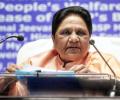
BSP chief Mayawati has criticised the Centre's decision to introduce a 0.4 per cent fee on UPI merchant transactions exceeding Rs 2,000, effective October 15. She termed it a "capitalist profiteering attitude" that burdens the common people, while the government clarified that the charge is on merchants and not customers for person-to-person transactions.
Opposition MPs have voiced strong concerns regarding the government's decision to levy a 0.4 per cent fee on UPI payments above Rs 2,000 made to merchants, effective October 15. They argue that this "anti-people" move will negatively impact a large segment of the population, despite the finance ministry clarifying that the charge is on the merchant ecosystem and not directly on customers for P2P or small payments.

The Supreme Court registry has identified over 10 defects in the petition filed by Congress leader Rahul Gandhi and other opposition leaders concerning alleged large-scale voter deletions and irregularities in electoral rolls. Issues include missing ID cards, illegible pages, and a court fee shortfall. The petition seeks an independent audit of the Special Intensive Revision process.

The GST Council is set to discuss the application of GST on merchant fees for UPI transactions exceeding Rs 2,000. This comes as a new Merchant Discount Rate (MDR) of 0.4% (capped at Rs 300) is effective from October 15 for such transactions, which, as a service, would typically attract an 18% GST levy. The Council's decision is anticipated to consider consumer interests, with merchants potentially able to claim Input Tax Credit.

The Indian government has challenged Congress leader Rahul Gandhi's criticism of levying fees on UPI payments above Rs 2,000 to merchants. The government highlighted that a parliamentary standing committee, which included Congress MPs, had previously backed a tiered Merchant Discount Rate (MDR) framework for UPI. This move aims to ensure the financial sustainability of the UPI ecosystem and reduce its dependence on government subsidies, a concern raised by the committee due to the significant funding gap between allocations and operational costs.

Former NITI Aayog vice-chairman Rajiv Kumar has urged the government to maintain zero-fee UPI transactions for several more years, arguing that the benefits of UPI as a public good outweigh the costs. This comes amidst the government's recent decision to introduce a 0.4% fee on person-to-merchant UPI transactions above Rs 2,000 from October 15, a move that has drawn criticism.

The Indian government has introduced a 0.4% transaction fee on UPI payments above Rs 2,000 for merchants, effective October 15, sparking a political row. The Congress party has labelled it a "Modi tax" and accused the government of succumbing to US pressure, while the BJP has defended the move, clarifying that consumers will not be charged and small vendors are protected. The finance ministry reiterated that the charge is on merchants, not customers.

The Indian government has introduced a 0.4% transaction fee on Unified Payments Interface (UPI) payments exceeding Rs 2,000 for merchants, effective October 15, marking the end of nearly six years of free service. Person-to-person transfers and small-value transactions below Rs 2,000 remain free. The new Merchant Discount Rate (MDR) is capped at Rs 300 for transactions above Rs 75,000, with differentiated rates for essential sectors and investments, and safeguards to prevent costs from being passed to consumers.
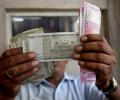
Government sources clarify that the 0.4% merchant discount rate (MDR) on UPI transactions above Rs 2,000, effective October 15, will not be passed on to consumers. The charge, paid by merchants, aims to create a sustainable revenue framework for the digital payments ecosystem, with funds shared among banks and UPI entities. Small merchants using QR codes for up to Rs 1 lakh monthly are exempt.

The Congress party has strongly refuted government claims that its MPs on the Parliament Standing Committee on Finance supported a fee on high-value UPI payments. Congress leaders, including Gaurav Gogoi and Manish Tewari, stated that the "UPI tax" proposal was not specifically discussed by the committee, accusing the Modi government of diverting attention from public backlash and appeasing US companies. The government, however, cited the committee's report which pressed for a tiered Merchant Discount Rate (MDR) framework.

The BCCI has significantly revised the pay structure for umpires and match referees after a decade, introducing new categories and substantially increasing per-day fees. A merit-based promotion and relegation system has also been implemented to ensure high standards in domestic cricket officiating. Additionally, the board addressed its stance on the National Sports Governance Act, updated age-fraud policies, and called for support for physically challenged cricketers.

US President Donald Trump has extended the USD 100,000 fee on employers for H-1B foreign workers for another year, citing a significant decrease in registrations from large IT outsourcing firms. This move, aimed at protecting American jobs and ensuring highly-skilled workers, also includes a separate proclamation for enhanced scrutiny of H-1B applications, particularly concerning potential layoffs of US workers.

BJD MP Santrupt Misra has voiced strong concerns over the Centre's decision to impose a 0.4 per cent Merchant Discount Rate (MDR) on UPI transactions above Rs 2,000, arguing that the government or large financial institutions could easily absorb the costs of maintaining the digital payment network instead of burdening merchants and consumers.
The Indian government has introduced a 0.4% fee on UPI transfers above Rs 2,000 made to merchants, effective October 15, ending nearly six years of free merchant payments. This move led to initial rallies in fintech stocks like Paytm and Mobikwik, though some later pared gains. Person-to-person transactions and small payments remain free for customers, with the fee being a Merchant Discount Rate (MDR).

The central government has introduced a 0.4 per cent fee on UPI transactions exceeding Rs 2,000, prompting traders' associations to advocate for cash payments to avoid additional costs on digital payments. This move ends the zero-Merchant Discount Rate (MDR) regime, with traders expressing concerns about operating on tight margins and the potential for increased charges.

A member of the National Traders' Welfare Board (NTWB) has urged the central government to withdraw its decision to impose a 0.4 per cent Merchant Discount Rate (MDR) on UPI transactions exceeding Rs 2,000, effective from October 15. He warned that the new charge, which will be borne by merchants, could negatively impact business growth and lead to higher prices, contradicting the government's 'ease of doing business' policy.

Shares of fintech firms, particularly Paytm, saw significant movement after the Indian government introduced a 0.4 per cent fee on UPI transfers exceeding Rs 2,000 made to merchants, effective October 15.
The Congress party has criticised the government's recent notification regarding UPI transactions, alleging it paves the way for users to be charged fees, particularly for transactions above Rs 2,000. The party claims the government lacks transparency and questions if the move is to benefit American firms. The government, however, states that charges are necessary for the system's sustainability and infrastructure upgrades, with the Finance Minister clarifying that Merchant Discount Rate (MDR) applies to merchants, not customers.
The Congress party has criticised the Modi government over a notification regarding UPI transactions, alleging it paves the way for imposing fees, especially on transactions above Rs 2,000. Rahul Gandhi claimed the government is surrendering to American pressure, while Mallikarjun Kharge highlighted the potential burden on common citizens amidst inflation. The government's notification prohibits charges on UPI transactions up to Rs 2,000 but remains silent on higher amounts, sparking fears of a "Digital Payments Tax."

The RSS-affiliated Swadeshi Jagran Manch (SJM) has urged the government to reconsider imposing a merchant discount rate (MDR) on UPI transactions above Rs 2,000, arguing that the costs do not warrant such a move. This comes after the government announced a 0.4 per cent fee on merchant transfers over Rs 2,000 from October 15, while assuring that person-to-person and small payments remain free. SJM co-convener Ashwani Mahajan highlighted that banks have not demanded MDR and that UPI has reduced their transaction costs.

Players who participated in the 2026 World Cup generated over $3.3 billion in international transfer fees during the recent mid-year transfer window, contributing to a record $9.89 billion spent in men's football, FIFA announced.

Mobile phone retailers across India, represented by AIMRA, are protesting the 0.4% Merchant Discount Rate (MDR) on UPI transactions exceeding Rs 2,000 for merchants. They plan to observe 'No UPI Day' on October 2, 2026, arguing that this fee will significantly impact their income and burden small businesses, advocating for a continued Zero MDR structure for UPI merchant payments.

Pakistan's cricket team has been fined 50 per cent of their match fee and docked 11 World Test Championship points due to a slow over-rate during their third Test against England in Birmingham, a match they lost by 8 wickets, contributing to a 0-3 series whitewash.

The US Department of Homeland Security has proposed an additional fee of USD 103,265 for all H-1B visa cap-subject applications, including those eligible for the advanced degree exemption. This new fee aims to recover interagency costs for immigration programmes and would be paid in addition to existing fees. The proposal is open for public comments for 30 days and has drawn criticism from immigration advocates.
The opposition has intensified its criticism of the government's decision to impose a 0.4 per cent Merchant Discount Rate (MDR) on UPI transactions above Rs 2,000, effective October 15. Leaders like Rahul Gandhi and Jairam Ramesh allege the move is a result of US pressure, particularly from American card companies, and demand an immediate rollback, warning of increased costs for consumers.

The National Payments Corporation of India (NPCI) stated that the Merchant Discount Rate (MDR) "is distributed only amongst the UPI ecosystem, to further invest into infrastructure resilience, innovation, cybersecurity (protecting the UPI infrastructure with banks and non-banks) and customer service."

Manchester City have agreed a Man City Match Transfer Record With $169m Fernandez Blockbuster million deal for Chelsea midfielder Enzo Fernandez, matching the Premier League record and taking their summer spending close to 400 million.

The Retailers Association of India (RAI) has voiced concerns that the government's new 0.4 per cent Merchant Discount Rate (MDR) on UPI transactions above Rs 2,000 could reverse the progress of digital payment adoption among small retailers. This fee, effective October 15, places the burden on merchants operating on thin margins, potentially pushing them back to cash transactions and undermining the government's formalisation agenda, especially ahead of the festive season.

The National Testing Agency (NTA) has clarified its 'answer key challenge' system, stating it is designed for fairness and that the fee charged is to deter frivolous challenges, with refunds issued for successful objections. This comes amidst recent criticism regarding exam conduct.

Petrol pump dealers seek exemption from the proposed 5 UPI charge on fuel purchases above 2,000, citing pressure on their margins.

Choose a car loan that fits your budget, keeps EMIs manageable and saves you money on interest, not just one with attractive festive offers.

The US is reportedly considering a USD 100,000 fee for Optional Practical Training (OPT) visas, which allow international students to work in the US after graduation. This move by the Trump administration follows a rejected H1-B visa fee proposal and could significantly impact foreign graduates and tech companies. The Department of Homeland Security is also exploring a USD 100,000 bond for green card applicants.

Left-arm pacer T Natarajan has been traded back to Sunrisers Hyderabad, while leg-spinner Zeeshan Ansari has moved to Delhi Capitals in a player trade between the two IPL franchises. Natarajan returns to SRH for a revised fee of Rs 5 crore, having previously been bought by DC for Rs 10.75 crore at the IPL 2025 auction. Ansari joins DC at his existing fee of Rs 40 lakh.

Abhijeet Dipke, convenor of the Cockroach Janta Party (CJP), has initiated the 'School Thik Karo' campaign from his native village in Hingoli, Maharashtra, to address the alleged neglect of government schools and advocate for a fee cap on private educational institutions.
