
A report in the Reserve Bank of India's (RBI's) monthly bulletin suggests that satellite-based night-time lights data and Google search trends can significantly improve quarterly economic growth estimates for Gujarat, Maharashtra, and Karnataka, reducing errors by up to 62 per cent.

Union Finance Minister Nirmala Sitharaman expressed strong confidence in India achieving over 10 per cent economic growth, advocating for increased technology adoption and innovation. She urged overcoming scepticism and highlighted technology's transformative role in agriculture and public sector reforms, while also launching a new fund and book at an IIT Madras event.

Preeti Lobana, Google India VP, stated on Wednesday that Google views AI as an "economic equaliser" and a democratic technology. Speaking at Google Cloud Day, she highlighted AI's potential to empower businesses, especially SMEs, in India's journey towards Viksit Bharat 2047. Google has committed USD 15 billion to scale India's digital and AI infrastructure, including an AI hub in Visakhapatnam, to support the IndiaAI Mission.

Arundhati Bhattacharyya, Salesforce President and CEO for South Asia, highlighted how cloud and AI are democratising capabilities, offering India a unique opportunity to leapfrog in the technology revolution. Speaking at the IMC Chamber of Commerce, she emphasised that AI will create more jobs by addressing unmet business demands and could significantly boost India's GDP, with NITI Aayog estimating a USD 500-600 billion addition by 2035. She urged Indian businesses to transform using technology, focus on data, redesign work, and invest in skills, stressing that AI is not just for large corporations.
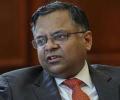
N Chandrasekaran, chairman of Tata Consumer Products (TCPL), stated that India continues to experience credible economic growth, driven by strong demographic fundamentals and accelerating digital public infrastructure, despite a fragmented global landscape.

Citing India's 7 percent GDP growth rate and low interest rates by the central bank (RBI), US President Donald Trump on Friday (local time) criticised the American central bank for keeping borrowing costs high, arguing that the US economy could achieve growth of 15 to 20 per cent if interest rates were lowered.
Finance Minister Nirmala Sitharaman announced that India's real GDP grew by 7.8 per cent in the April-June quarter, surpassing the RBI's forecast. She attributed this strong performance to government reforms and agile economic management, reaffirming the government's commitment to expanding economic opportunities.

The Bangalore Chamber of Industry and Commerce (BCIC) has welcomed the Karnataka Budget 2026-27, highlighting its focus on economic growth, support for MSMEs, and infrastructure development. Industry leaders have expressed optimism about the budget's potential to boost manufacturing, create jobs, and drive innovation in the state.

UBS analysts indicate that Indian stocks' valuation premium over emerging markets remains high, despite concerns over crude oil prices and tighter monetary policy impacting India's growth outlook. They suggest a potential slowdown in AI capital expenditure and moderation in oil prices could alleviate these pressures.

The Royal Swedish Academy of Sciences announced on Monday that it has decided to award the Nobel Prize in Economics 2025 to Joel Mokyr, Philippe Aghion, and Peter Howitt "for having explained innovation-driven economic growth." The 2025 Sveriges Riksbank Prize in Economic Sciences in Memory of Alfred Nobel goes to the trio, with one half awarded to Mokyr "for having identified the prerequisites for sustained growth through technological progress" and the other half jointly to Aghion and Howitt "for the theory of sustained growth through creative destruction."

RBI Deputy Governor Poonam Gupta stated that India's economic growth momentum remains strong despite various global and domestic shocks, attributing this resilience to a diversified growth base and improved policy responses. She highlighted the economy's 7.8 per cent growth in Q1 and continued momentum into Q2, suggesting potential upgrades to growth forecasts.

Central Public Sector Enterprises (CPSEs) have achieved nearly 60 per cent of their FY27 annual capital expenditure (capex) target of approximately 8.43 trillion during April-October, broadly aligning with the previous financial year's performance. This significant spending, up 13 per cent year-on-year, is a crucial component of India's investment-led growth strategy.
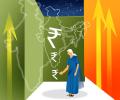
The International Monetary Fund (IMF) has increased India's growth forecast to 7 per cent for 2026-27, up from 6.4 per cent, attributing this robust outlook to resilient domestic demand and strong services activity, positioning India as one of the fastest-growing major economies.

Market consensus suggest earnings growth of 11-12 per cent for large caps, 14-15 per cent for mid-caps and 18-19 per cent for small caps over the next two years.

Addressing a fireside chat in New York's Columbia University, Rahul Gandhi issued a stark warning about India's economic future, declaring the nation is on the brink of an "economic disaster" due to rampant unemployment, a failing manufacturing sector, and systemic issues within its education system.

Boeing projects Southeast Asian airlines will require 4,985 new commercial aircraft by 2045 due to expanding fleets and replacements. The region's air passenger traffic is expected to grow 6.7% annually, outpacing economic growth, driven by rising incomes, tourism, and connectivity. Most new aircraft will be single-aisle, with a significant portion supporting fleet growth.

Analysts predict that the Indian stock market's direction in the upcoming holiday-shortened week will be primarily influenced by foreign investor activity, crude oil prices, and broader global economic trends, with significant FPI inflows already observed.

'The outlook for the next Samvat is more constructive, as many of the earlier drags are gradually becoming supports.'

Amazon has announced plans to invest an additional $7 billion in renewable energy projects in India by 2030, building on its existing USD 4 billion commitment. This new investment will fund four major wind and solar projects with a combined capacity of 934 megawatts, making Amazon a leading corporate purchaser of carbon-free energy in the country.

The BJP has strongly criticised Congress leader Rahul Gandhi for his comments on the Indian economy made at Columbia University, where he described India as facing an "economic disaster." The ruling party accused Gandhi of engaging in "anti-India propaganda" and repeatedly portraying the nation negatively on foreign soil, despite global agencies recognising India as a fast-growing economy. BJP leaders highlighted India's economic progress and questioned Gandhi's motives for undermining the country's image internationally.

Prince William, speaking at the Earthshot Prize 2026 Impact Assembly in Mumbai, lauded India's progress in sustainable development and climate solutions. He highlighted India's achievement of 50% non-fossil fuel electricity capacity ahead of schedule and its innovative Earthshot Prize winners and finalists, showcasing how growth and environmental protection can coexist.

India needs to move beyond ease and cost of doing business and focus on the "speed of doing business" as the next leg of reforms to sustain economic growth and private investment, Confederation of Indian Industry (CII) President R Mukundan said.

India's industrial production growth decelerated to 6.7 per cent in September, down from 7.8 per cent in August, primarily due to a contraction in mining activity and a slowdown in manufacturing, according to government data. Experts attribute the moderation to a high-base effect, anticipation of festive sales, and concerns over rising inflation.

India's Next-Gen GST reforms are proving instrumental in driving robust economic growth, simplifying tax compliance, and fostering a more inclusive business environment across the nation, aligning with the vision of a 'Viksit Bharat', writes Finance Minister Nirmala Sitharaman.
Ministry of Information and Broadcasting Secretary Chanchal Kumar outlined the critical factors for the media and entertainment sector's next growth phase, including robust intellectual property, sustainable revenue models, and disciplined investments. Speaking at the CII Big Picture Summit, he emphasised the government's role in fostering an environment for creative enterprises and addressing challenges posed by digital platforms and AI. The CII White Paper also projected a USD 100 billion Indian M&E sector, advocating for stronger IP and regulatory reforms.

Finance Minister Nirmala Sitharaman stated that India is likely to sustain economic growth of 7 per cent or more in 2026-27, continuing the pace recorded since the Covid-19 pandemic, despite geopolitical uncertainties and supply-chain disruptions.

The Reserve Bank of India (RBI) has increased its GDP growth forecast for the current fiscal year (FY27) by 40 basis points to 7.1 per cent, acknowledging the resilience of domestic economic activity despite global headwinds and geopolitical tensions.

Nepal Prime Minister Balendra Shah is on a two-day visit to India, focusing on energy, economic cooperation, and infrastructure development. This marks his first official bilateral foreign visit since taking office. Discussions will cover expanding connectivity, trade, and investment, with several MoUs expected to be exchanged. The visit aims to strengthen the deep-rooted ties between the two nations.

Foreign portfolio investors (FPIs) withdrew Rs 34,843 crore from Indian equities in October, marking the second consecutive month of heavy outflows due to concerns over crude oil prices, global interest rates, and corporate earnings. However, a notable shift occurred towards the end of the month, with FPIs turning net buyers and infusing approximately Rs 6,300 crore between October 26-30.

Growth in India's currency in circulation (CiC) has reached a five-year high, primarily due to deposits under the Foreign Currency Non-Resident (Bank), or FCNR(B), scheme, leading to a robust increase in reserve money, according to the Reserve Bank of India's (RBI) 'State of the Economy' report.

Oracle NetSuite identifies India as one of its highest-priority markets, noting that small businesses, particularly outside major metros, are increasingly leveraging artificial intelligence (AI) and cloud technologies to expand domestically and internationally. This adoption is driven by India's young, tech-native population, which is less burdened by legacy systems, allowing smaller firms to compete more effectively with larger enterprises.
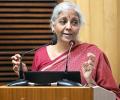
Finance Minister Nirmala Sitharaman has criticised Congress leader Rahul Gandhi for alleging the 'criminal destruction' of the Tata Group, urging him to refrain from 'politicising' commercial and legal matters and accusing him of trying to incite business leaders.

India's private equity (PE) industry is transitioning from a 'spray and pray' approach to a more selective investment model, focusing on established businesses, greater strategic influence, and operational transformation to generate definitive returns, according to industry leaders Renuka Ramnath and Amit Chandra.

India's economy is projected to lose momentum in the second half of fiscal 2026-27, with tighter financial conditions, elevated energy prices, and broadening inflation pressures posing significant risks, according to DBS Bank economist Radhika Rao.

ISRO Chairman V Narayanan announced India's plan to significantly expand its space operations with four functional launch pads by 2029, including a new SSLV complex at Kulasekarapattinam. He stressed the importance of private sector partnerships to meet global demand and foster economic growth. Narayanan also detailed upcoming Gaganyaan uncrewed tests within the next two months and revealed plans for a collaborative Chandrayaan-5 lunar mission with Japan.

RBI Governor Sanjay Malhotra reiterated India's cautious stance on cryptocurrencies due to concerns over monetary sovereignty and capital flows, while actively promoting underlying technologies like distributed ledger technology and tokenisation. He also addressed the global rise in public debt and hardening bond yields, attributing it to increased government and private spending, including that driven by AI, and noted the implications of global interest rates on India's monetary policy.
Finance Minister Nirmala Sitharaman criticised commentators who express pessimism about India's demographic dividend, asserting that the country's youth are actively driving economic growth and innovation. She also highlighted the dual nature of AI and the need for robust safeguards in emerging technologies like quantum computing to balance innovation with safety.

Prince William and Princess Catherine of Wales are set to conclude their three-day visit to India next week with a meeting with Prime Minister Narendra Modi in New Delhi. Their trip will also include attending the 2026 Earthshot Prize ceremony in Mumbai, focusing on climate action, innovation, and strengthening UK-India ties across various sectors.
Researchers at NIT Rourkela have devised an electrochemical method to extract struvite, a phosphate mineral fertiliser, from human urine. This innovative process addresses waste disposal and resource conservation challenges by offering a sustainable, chemical-free alternative to traditional energy-intensive fertiliser production.

Moody's Ratings has sharply increased India's GDP growth forecast for fiscal 2026-27 to 7 per cent, making it the fastest among G20 economies, driven by economic resilience despite the Middle East conflict. However, the agency flagged significant inflation risks stemming from elevated oil prices and potential El Nino disruptions.
