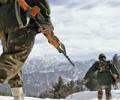
"Negotiations are going on at various levels to resolve the issue peacefully," Defence Minister A K Antony told media persons in Bengaluru.

Chinese troops are reinforcing their posts in large numbers, increasing their patrolling, stepping up violations in the Tawang and Walong areas.

China and India should "examine" the recent border stand off in Depsang Valley in Ladakh and be able to resolve such incidents "much quicker" in the future, External Affairs Minister Salman Khurshid said on Friday.
India will take up with Chinese Premier Le Kequiang the issue of the recent intrusion by the People's Liberation Army troops into Depsang valley in Ladakh and wants to push ahead with the bilateral dialogue on settling the border row.

External Affairs Minister Salman Khurshid arrived in Beijing on Thursday on a two-day visit to hold talks with Chinese leaders, just days after the resolution of a row over Depsang Valley in Ladakh, where the troops of People's Liberation Army intruded recently.

In an exclusive interview to Rediff.com, Khurshid refuted reports that the flag-level talks were not moving forward. He also dismissed suggestions that he should call off his visit to Beijing if there's no progress in the talks.
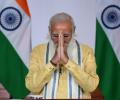
A report by the Azim Premji University showed that during the pandemic 270 million Indians were pushed into poverty. Meaning that they were not poor according to the government poverty line before, but have become now. Aakar Patel mulls on the state of the nation as the Modi government enters its eighth year.
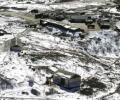
Bharatiya Janata Party President Rajnath Singh on Sunday demanded cancellation of External Affairs Minister Salman Khurshid's May 9 visit to China till it withdraws its army personnel from DepsangValley in Ladakh where they intruded a fortnight back
External Affairs Minister Salman Khurshid will go ahead with his visit to China on May 9 notwithstanding the ongoing standoff between Indian troops and Chinese forces which intruded deep inside Depsang Valley in Ladakh ten days back.

Ignoring India's demand to revert to a status-quo in Depsang Valley, China on Wednesday firmly stuck to its stand that its troops have not violated the Line of Actual Control "by a step" in the Ladakh region.

'Their deteriorating economic and international situation is also responsible for being more reasonable.'

External Affairs Minister Salman Khurshid on Wednesday claimed there was no deal between India and China for ending the 21-day stand-off between the armies of the two countries in Ladakh. "No deals in international levels... we do not do deals at this level," he said when asked if India and China had inked a deal to end the stand-off.
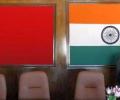
The Indian delegation at Thursday's talks is likely to be led by Naveen Srivastava, Joint Secretary (East Asia) in the external affairs ministry, they said.

The formal process of disengagement of troops began on July 6, a day after a nearly two-hour telephonic conversation between National Security Advisor Ajit Doval and Chinese Foreign Minister Wang Yi on ways to bring down tensions in the area.

China remains in firm control of an estimated 600-800 square kilometres of Indian territory.
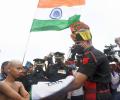
'This Chinese behaviour we have not seen for a very long time.' 'This sort of build up on the border, this pattern in Chinese behaviour, and especially the aggression and brutality with which our people were attacked on the 15th of June, this is not something we have seen before.'
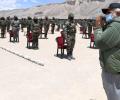
'By not even acknowledging China's occupation of Indian territory Modi signalled to Beijing that he was not prepared to used forceful means to vacate the Chinese occupation, and that his government was reconciled to this loss of territory and accepted the fait accompli engineered by the PLA.'

The Indian Army has shown it can face down the PLA, but is too often held back by a political leadership that lacks boldness, asserts Ajai Shukla.

The two sides have also agreed for a joint mechanism to verify the progress in the disengagement process through delegation meetings as well as using unmanned aerial vehicles.

The Army has also further bolstered overall surveillance mechanisms in all areas along the Line of Actual Control (LAC) in eastern Ladakh after foiling China's fresh attempt to occupy an area on the southern bank of Pangong lake, they said.
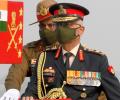
The Army Chief replied in the affirmative when asked by the moderator whether he concurs with Prime Minister Narendra Modi's remarks after the border standoff that the Chinese have not come into control of Indian territory.

'The immediate attempt by China is to get its way and gain territory through small steps without having a full-scale war.'
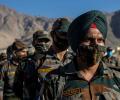
The Indian side also told the Chinese delegation that the talks on disengagement should include Depsang as well as all face-off sites, insisting that it should be a simultaneous process and not a selective one.

The Chinese military has already completed moving back its troops from the face-off sites in Galwan Valley, Gogra and Hot Springs in line with the first phase of the disengagement process from the friction points on the LAC in eastern Ladakh, sources said. The main focus now shifts to Pangong Tso. India has been insisting that China must withdraw its forces from areas between Finger Four and Eight.

Sibal asked Modi to stop doing the politics of "illusion and delusion" and showing "red eyes" to China, and protect Indian territory.

It is difficult to recall an Indian minister in modern times pushing back at the US publicly, observes Ambassador M K Bhadrakumar.

'If you behave like a nail, the adversary will behave like a hammer.'
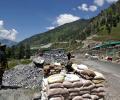
The meeting was attended by National Security Advisor Ajit Doval, Chief of Defence Staff General Bipin Rawat, Army Chief General M M Naravane, Navy Chief Admiral Karambir Singh and Indian Air Force Chief Air Chief Marshal R K S Bhadauria.

The Chinese military is now desperately attempting to give "ex post facto strategic meaning" to its actions in eastern Ladakh.
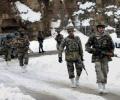
Within the army, there is growing concern that New Delhi will allow the Chinese to retain the territory they have occupied in the last month.

The marathon fourth round of Lt Gen-level talks also focussed on steps for pulling back large number of troops and weapons from rear bases along the Line of Actual Control in eastern Ladakh.

India has told China that disengagement at all friction points is necessary to contemplate de-escalation of troops in eastern Ladakh even as the foreign ministers of the two countries agreed to establish a hotline for "timely" communication and exchange of views.
Who knows, the moment of truth in Ladakh may also augur for a giant leap toward boundary settlement with China in the fulness of time. The news that the special representatives of the two countries are planning to meet gives a positive signal, suggests Ambassador M K Bhadrakumar.

China on Monday said Defence Minister A K Antony's visit Beijing has given both countries an opportunity to enhance their "strategic cooperative partnership" and jointly maintain peace and tranquillity in the border areas through increased military-to-military coordination.

The Chinese have only created limited defences for protection of their posts which are located well in depth and much away from the Line of Actual Control, notes Colonel S Dinny (retd).
India's top military and strategic brass on Tuesday reviewed the overall situation in eastern Ladakh amid indications that the latest round of talks between senior military commanders of Indian and Chinese armies on the next phase of disengagement of troops may not have produced encouraging results, people familiar with the developments said.

Members of the Congress also walked out of the Lok Sabha and staged a sit-in in the Parliament House complex after they were not allowed to speak following a statement by Defence Minister Rajnath Singh on the border standoff with China in eastern Ladakh.
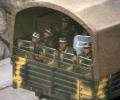
The intrusions into India were likely carried out by the PLA's better trained and equipped 'mobile operational units'.
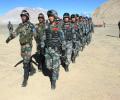
During the course of the intense and complex negotiations between senior commanders of the two armies that ended at 2 am on Wednesday, the Indian delegation also apprised the Chinese PLA about the "red lines" and conveyed that the onus was largely on China to improve the overall situation in the region, the sources said.

The Ministry of External Affairs (MEA) spokesperson Anurag Srivastava said complete disengagement requires re-deployment of troops by each side towards their regular posts on their respective sides of the Line of Actual Control(LAC) and this can be done only through mutually agreed actions.
