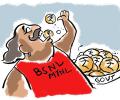
Monetising real estate assets is part of the overall relief package that would be used to retire debts, upgrade networks, and offer VRS aimed at reducing the telcos' employee strength by half.

This is the fourth extension given by the government for putting in bids.

Post handing over of Air India to the Tatas, government officials will be free to book their travel with any airline that offers them the best price. And, the Centre will not have a tie up with any carrier, department of investment and public asset management (DIPAM) secretary Tuhin Kanta Pandey said. "The government is not mandating travel by any particular airline, going forward, after handing over Air India because there won't be any state-owned airline," he said. The department of expenditure (DoE) will soon issue instructions to government departments for official travel as this needs to be done before handing over Air India to the new buyer, he said.

Industry body CII has pitched for a reduction in personal income tax rates, decriminalisation of the goods and services tax and a relook at the capital gains tax rates as part of its agenda presented to the government for the forthcoming Budget. Arguing that the GST law already contains adequate penal provisions for deterrence against evasion of taxes, CII has suggested decriminalisation of GST law. Also, the applicability of prosecution provisions should not be based on the absolute amount of tax evasion but should be based on real intent to evade the taxes and a certain percentage of the tax payable, it stated.
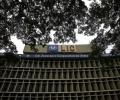
The government may have to rework the valuation of Life Insurance Corporation of India (LIC) for its initial public offering (IPO) if the listing is pushed beyond May, an official said. The current embedded value of LIC, pegged at Rs 5.4 trillion as of September 30 and for the six-month period ended September, will have to be re-evaluated if the issue is pushed beyond May 12, as approved by the Securities and Exchange Board of India (Sebi). This would impact the market value of LIC, that is currently being internally estimated at 3-4 times of the embedded value.
Sixteen merchant banks are in the fray to act as book running lead managers (BRLM) for the initial public offering of Life Insurance Corporation of India (LIC). These merchant banks will have to make a presentation before the Department of Investment and Public Asset Management (DIPAM) on August 24-25. The shortlisted banks are BNP Paribas, Citigroup Global Markets India, BofA Securities, Goldman Sachs (India) Securities, HSBC Securities and Capital Markets(India), J.P. Morgan India, Nomura Financial Advisory and Securities (India), Axis Capital, DAM Capital Advisors, HDFC Bank, ICICI Securities, IIFL Securities, JM Financial, Kotak Mahindra Capital, SBI Capital Market, and Yes Securities India.

Salt-to-software conglomerate Tata group was among "multiple" entities who on Monday put in preliminary bids for buying the government's stake in loss-making carrier Air India.

Finance Minister Nirmala Sitharaman on Tuesday said monetisation of Central Public Sector Enterprises (CPSE) assets is based on the principle of value creation for the government and investors and would bring about a paradigm shift in infrastructure augmentation and maintenance. Chairing the National Workshop with the states/UTs on Asset Monetisation organised by Niti Aayog, the minister sought the collaboration of states for the holistic development of infrastructure. She said India can become a $5 trillion economy, while striking the right balance between fiscal imperatives and socio-economic welfare, through active collaboration between the public and private sector.
The Union Cabinet has cleared disinvestment of the country's largest insurer LIC and a panel headed by the finance minister will now decide on the quantum of stake dilution, a senior official said on Monday. The Department of Investment and Public Asset Management (DIPAM) had in January appointed actuarial firm Milliman Advisors LLP India to assess the embedded value of LIC ahead of the IPO (initial public offering), which is touted to be the biggest public issue in Indian corporate history. The Budget amendments to the LIC Act has been notified and the actuarial firm is expected to finalise the embedded value of the life insurer. Under the embedded value method, the insurance company's present value of future profit is also included in its present net asset value.
The government is likely to file draft papers for the mega initial public offering of LIC with market regulator Sebi by next week, while a portion of the issue would be reserved for anchor investors, a top official said on Wednesday.

The divestment of Bharat Petroleum Corporation (BPCL) may hit a fuel price hurdle, according to officials dealing with the matter. They pointed out that the inconspicuous administered price regime could hamper the prospects for potential buyers of BPCL. A senior oil ministry official said public-sector oil-marketing companies (OMCs) take a hit when they sell petrol, diesel, and liquefied petroleum gas (LPG), three of the most popular petroleum products in the country.

The number of times public sector undertakings (PSUs) have held conference calls with investors, their capital management, and debt financing are among the parameters that the Centre will use to judge their performance for the first time, a senior official in the know said. The government will evaluate PSUs for FY22 based on new parameters that were finalised by the Department of Public Enterprises (DPE) in consultation with the Department of Investment and Public Asset Management (DIPAM) last year, the official said. The government had included more conditions in the memorandum of understandings (MoUs) - used to set annual targets - that public sector enterprises sign with the DPE every year. These included a consistent dividend policy, which seeks to transfer dividends by PSUs every quarter; and market capitalisation or share price improvement over the sectoral index on an annual average basis for listed companies.

State-owned companies have been set stiff targets to increase accountability as they get ready for divestment. Nikunj Ohri explains why meeting them will be challenging.

Domestic capital market will see the launch of India's largest-ever initial public offering (IPO) next week. Life Insurance Corporation of India's (LIC's) landmark Rs 21,000-crore IPO will open for subscription on Wednesday. Here's a look at some unique features of this mega offering, which are not typically seen in other IPOs.

The country's largest insurer LIC on Tuesday listed its shares at a discount of 8.11 per cent at Rs 872 per share on the NSE. On the BSE, the shares got listed at Rs 867.20 apiece, down 8.62 per cent over the issue price of Rs 949 a share. LIC had fixed the issue price of its shares at Rs 949 apiece after a successful initial public offering, which fetched Rs 20,557 crore to the government.

Dipam is conducting the selection of merchant bankers and legal advisors, and planning roadshows.

Apart from the main company, five of Air India's subsidiaries and a joint venture firm have been included in the strategic sale plan.
The government is looking to sell shares of Reliance Industries (RIL) held through Specified Undertaking of the Unit Trust of India (SUUTI) and is soon going to appoint an intermediary to manage it. The plan is to sell about 8 lakh shares of RIL that will help the government garner around Rs 180 crore. The Department of Investment and Public Asset Management (DIPAM) will appoint an intermediary that will act as a custodian of these shares. The intermediary, based on its market analysis, will offload these shares at the best price, said an official. A final approval on the proposal is expected soon.

The government is selling its entire 100 per cent stake in Air India but wants effective control to stay with Indian nationals.

The amount of money lying unclaimed with the Life Insurance Corporation of India dwarfs the budgets of many ministries. There was Rs 21,539.5 crore which lay unclaimed with India's largest insurance company, according to details in the initial public offer (IPO) document it filed over the weekend. The regulatory documentation is ahead of LIC selling shares to the public through the stock exchange for the first time this financial year. This will be India's largest ever public listing.
The 2022-23 Budget has projected a disinvestment target of Rs 65,000 crore for next financial year. This is significantly lower than the estimated Rs 1.75 lakh crore budgeted for 2021-22. In the revised estimates, the target for 2021-22 has been cut to Rs 78,000 crore.

'Let us hope that this Budget delivers.' 'It needs 10 per cent plus real GDP growth in 2021-22, the rebound year,' notes Omkar Goswami.
An official said the government is preparing the financial statements and getting the data room ready for the sales, suggesting that such aspects take time.

'It will be a cat and mouse game between investors and the government.' 'The issue will be launched only if there is sufficient demand from investors and the government is in agreement with the bankers on the valuations.'

This comes at a time when the COVID-19 crisis is expected to derail the government's revenue maths for 2020-21, hitting the mop-up from sources such as taxes and divestment.

The government has received three preliminary bids for buying of controlling stake in India's second-largest fuel retailer Bharat Petroleum Corporation Ltd (BPCL), Oil Minister Dharmendra Pradhan said on Wednesday. Mining-to-oil conglomerate Vedanta had on November 18 confirmed putting in an expression of interest (EoI) for buying the government's 52.98 per cent stake in BPCL. The other two bidders are said to be global funds, one of them being Apollo Global Management.
Life Insurance Corporation of India (LIC) has increased the size of its shareholders' fund to Rs 6,600 crore from Rs 100 crore in a bid to accommodate a larger shareholder base ahead of its public listing. The size of the fund has been enhanced by retaining two years' of dividend and issuing fresh capital, said an official. Increasing the size of the shareholders' fund will help boost the number of shares for allotment in the insurer's initial public offering (IPO). The corpus represents the amount of equity in a company that belongs to its shareholders.

Shares reserved for Qualified Institutional Buyers (QIB), including banks and mutual funds in the LIC's public offer were subscribed fully on Monday morning, taking the overall subscription of the issue to a little over 2 times. Against 3,95,31,236 reserved, 4,61,62,185 bids were received, reflecting a subscription of 1.17 times, according to data posted on stock exchanges at 12:12 pm. Non institutional investors' portion was subscribed 1.38 times.

In a bid to resurrect Air India privatisation, the government is planning to give flexibility to potential investors to decide on the humongous debt with the national carrier, a top official has said. The flexibility to potential investors on the quantum of the Rs 60,074 crore debt that they want to absorb will replace the current condition of the buyer taking over more than a third of the debt and transferring the rest to a special purpose vehicle, Department of Investment and Public Asset Management (DIPAM) secretary Tuhin Kanta Pandey said.

Traditionally, most PSUs have been cash-rich, which added to their value. However, the government has been tapping regularly into their cash resources to boost revenue for the exchequer
The government is working towards further review and simplification of the foreign direct investment (FDI) policy to facilitate the proposed initial public offering (IPO) of the Life Insurance Corporation (LIC), Department for Promotion of Industry and Internal Trade (DPIIT) secretary Anurag Jain said on Thursday. The final decision will be taken by the Cabinet. The industry department is working together with the finance ministry's department of financial services (DFS) and department of investment and public asset management (DIPAM) towards a successful listing of the life insurer on the domestic bourses, which is expected to be the largest in India.

Pawan Hans, Dredging Corp on list to meet target of Rs 800 bn for 2018-19
A chunk of divestment till now has come from follow-on offerings in the Centre's two ETFs, Bharat-22 and CPSE. Now, there will be initial public offerings of Mazagon Docks, rail companies RVNL and IRFC and MSTC.

The government has notified the agreement between Air India and special purpose vehicle AIAHL for the transfer of non-core assets, ahead of the national airline's takeover by the Tata Group. The government had in October last year, inked the share purchase agreement with the Tata Group for the sale of national carrier Air India for Rs 18,000 crore. The Tata Group is expected to take full control of the airline, it founded in 1932, on Thursday. The cash component of the deal would come once the handover process is completed. The Tata Group would pay Rs 2,700 crore cash and take over Rs 15,300 crore of the airline's debt.

'The government will take proactive steps to see that their participation in the equity market, especially in PSU stocks, is rewarding.'

The government in January restarted the divestment process of Air India and invited bids for selling 100 per cent of its equity in the state-owned airline, including Air India's 100 per cent shareholding in AI Express Limited and 50 per cent in Air India SATS Airport Services Private Ltd.

India Inc on Thursday pitched for continuation of reforms while ensuring tax and policy stability in the forthcoming Budget to prop up the economy hit hard by the COVID-19 pandemic. In the virtual pre-Budget consultation held with Finance Minister Nirmala Sitharaman, industry chambers said that government measures will help firmly entrench the nascent signs of recovery being currently seen in private investment. Capital expenditure by the government through enhanced infrastructure spending should in the meantime continue to support growth, CII president TV Narendran said.

At the customary post-Budget media interactions, Finance Minister Nirmala Sitharaman and her topmost bureaucrats touched upon a number of issues. The minister said the government taxing income from digital virtual assets did not give them legitimacy and that issue was being dealt separately in the planned cryptocurrency Bill. She also expressed confidence that the Budget targets were achievable.

The government on Monday issued a letter of intent (LoI) confirming the sale of its 100 per cent stake in loss-making Air India to Tata Group for Rs 18,000 crore, a senior official said. Last week, the government had accepted an offer by Talace Pvt Ltd, a unit of the holding company of salt-to-software conglomerate, to pay Rs 2,700 crore in cash and takeover Rs 15,300 crore of the airline's debt. Subsequent to that, an LoI has now been issued to Tata confirming the government's willingness to sell its 100 per cent stake in the airline.

The changes are in view of the requests received from interested bidders and the prevailing situation arising out of COVID-19.
