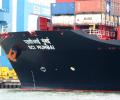
The mandatory use of the Indian flag on SCI's ships has been a bone of contention with prospective buyers, on account of the costs it will entail in terms of taxation and vessel registration.

The railways heritage lines that are part of the UNESCO-accorded sites list include Darjeeling Himalayan Railway, Nilgiri Mountain Railway, and Kalka Shimla Railway.
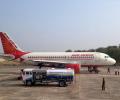
The government on Monday signed the share purchase agreement with Tata Sons for the sale of national carrier Air India for Rs 18,000 crore. Earlier this month, the government had accepted an offer by Talace Pvt Ltd, a unit of the holding company of the salt-to-software conglomerate, to pay Rs 2,700 crore cash and take over Rs 15,300 crore of the airline's debt. Following that, on October 11 a Letter of Intenet (LoI) was issued to the Tata Group confirming the government's willingness to sell its 100 per cent stake in the airline.

Sources said valuation of all these assets was an ongoing process, and the mode and manner of disposal would be decided on a case-by-case basis

After more than two decades and three attempts, the government has finally sold its flagship national carrier Air India, and it is deja vu for Maharaja as it returned home to its founding father the Tata group. Jehangir Ratanji Dadabhoy (JRD) Tata founded the airline in 1932 and named it Tata Airlines. In 1946, the aviation division of Tata Sons was listed as Air India, and in 1948, the Air India International was launched with flights to Europe. The international service was among the first public-private partnerships in India, with the government holding 49 per cent, the Tatas keeping 25 per cent and the public owning the rest. In 1953, Air India was nationalised and for the next over four decades it remained the prized possession for India controlling the majority of the domestic airspace.
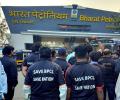
US private equity firm I Squared Capital is dropping out of the race to buy India's second-largest state oil firm, Bharat Petroleum Corporation Ltd (BPCL) owing to a complex deal structure and lack of financial backers for the transaction, sources said. I Squared Capital through its Indian arm, Think Gas was among the three suitors that had evinced interest in buying the government's near 53 per cent shareholding in BPCL. "The company has made a decision not to participate in the financial bidding," a source with direct knowledge of the development said.

A large number of officials and support staff, who are directly associated with the Budget making and printing process, are now required to stay in the ministry and remain cut off from their families till the presentation of the Budget in the Lok Sabha.
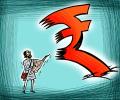
For first time in 8 yrs, stake sale proceeds could exceed Budget Estimates. ONGC's acquisition of HPCL alone could get the exchequer more than Rs 30,000 crore.
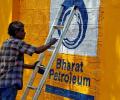
Privatisation-bound Bharat Petroleum Corporation Ltd (BPCL) on Thursday said it has no intention to sell a part of its stake in Petronet LNG Ltd and Indraprastha Gas Ltd (IGL) to help its new owner avoid making an open offer for the two gas companies. BPCL holds 12.5 per cent of the shareholding in India's largest liquefied natural gas importer, Petronet, and a 22.5 per cent stake in city gas retailer, IGL. It is a promoter of both the listed companies and holds board positions.

Finance Minister Nirmala Sitharaman will present her second Budget a little more than a month from now. Like any other FM, Sitharaman will depend on her team of bureaucrats and advisors to frame and present the Budget.

The government will press ahead with the sale of public sector companies that have been approved by the Cabinet, Finance Minister Nirmala Sitharaman said on Thursday. Highlighting that FDI flow into India is much higher compared to other emerging economies, she said India's strong macroeconomic fundamentals, ability to do reforms and a stable government help attract long-term foreign funds into Indian businesses.
"The strategic divestment transaction of Air India successfully concluded today with transfer of 100 per cent shares of Air India to M/s Talace Pvt Ltd along with management control," DIPAM secretary Tuhin Kanta Pandey said in a tweet. A new board, led by the strategic partner, takes charge of Air India, he added.
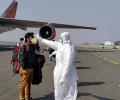
Within two weeks of many airlines deciding to roll back salary cuts encouraged by a steady increase in traffic flow, a second wave of coronavirus along with rules of compulsory RT-PCR test has hit forward bookings. The fears of last summer, when the pandemic had overturned all the wisdom of airline boardrooms, have returned to haunt the aviation industry. According to an official in the Ministry of Civil Aviation, flight occupancy is down to 60 per cent from 70 per cent in the first week of March. Airline lobby group IATA estimates that low cost airlines need to fly at 80 per cent occupancy to be profitable.

As part of the ritual, ''halwa'' is prepared in a big ''kadhai'' (large frying pot) and served to the entire staff involved in the Budget making exercise of the ministry. Halwa was served while maintaining COVID protocol with all present in mask and those distributing sweets were wearing gloves.
It is in no way a government of the economic Right. The Right is limited to religion and nationalism. The rest is as Left as the Congress or any other party, observes Shekhar Gupta.

Two aborted missions, three different ministers, multiple rule changes and two decades later, Indian taxpayers will no longer have to pay Rs 20 crore per day to keep the loss-making Air India flying. While opposition Congress expectedly attacked the decision as selling the family silver, DIPAM secretary Tuhin Kanta Pandey said what Tata is getting is not a cash cow but an airline which is bleeding where money needs to be pumped in to refurbish obsolete aircraft and dust up strangled ones while being unable to touch any employee for one year and only be able to resize staff after paying a VRS. "It won't be a very easy task there. Only advantage is they (new Air India owner) are paying the price which they think they can manage. "They are not taking the excessive debt accumulated to fund years of losses. We are continuing it as an ongoing concern.... This process has also saved huge amount of taxpayers money going forward," Pandey told PTI.

Using buyback as a divestment tool is not new, the amount raised this year is phenomenally high.

However, the number of renewals has grown by only 0.4 per cent, which means only high value and ticket size renewals are coming.

If the fiscal deficit for the year can be maintained at Rs 7.04 trillion, the deficit as a percentage of GDP will slip to 3.44 per cent
It was not immediately clear when Garg submitted his voluntary retirement scheme application to the government. It was also not known if the government would accept the application. If he hadn't applied for VRS, he would have retired from government service at the end of October 2020 on attaining of 60 years of age. Garg did not answer phone calls seeking his comments.
The previous highest divestment proceeds for the first half of a year was around Rs 21,000 crore in 2016-17.
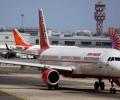
The airline's 100 per cent shareholding in profit-making budget carrier Air India Express as well as 50 per cent shareholding in equal joint venture Air India SATS Airport Services would also be sold.

The Tata group may have to deploy upwards of $1 billion to improve the airline's passenger reservation system, upgrade and refurbish Air India's fleet, primarily the wide-body aircraft which are the mainstay for the airline's international operations, people in the know said. While the group has not yet decided on how it intends to integrate Air India with its existing airlines AirAsia India and Vistara, sources said the first task will be to refinance Air India's existing loans, upgrade its aircraft gradually, and rewrite multiple business contracts with vendors and suppliers. "They will have to do 100 things to stabilise the airline and will have to put in a lot of money," DIPAM secretary Tuhin Kanta Pandey said, confirming that many aircraft are grounded.

A lot of work is needed to be done on the part of the insurance sector behemoth, and the government, before it is ready for its market debut.

While Road Transport Minister Nitin Gadkari has been dropped, the panel now has four ministers - Shah, Finance Minister Nirmala Sitharaman, Commerce and Railway Minister Piyush Goyal and Civil Aviation Minister Hardeep Singh Puri.
After the government sought Parliament's nod for a second batch of supplementary demand for grants that will cause a hit of Rs 2.99 trillion to the exchequer, doubts suddenly arose about the government's ability to meet the Budget projections of reining in its fiscal deficit at 6.8 per cent of gross domestic product (GDP), or Rs 15.06 trillion, for the current financial year. Till now, many were of the opinion that the government would succeed in checking the deficit at a much lower figure than what was given in the Budget Estimates (BE). The government had sought Parliament's approval to spend Rs 3.74 trillion extra, but Rs 74,517.01 crore will be matched by equal savings on other heads.
While the Union Cabinet had in November last year approved the sale of the government's entire 52.98 per cent stake in BPCL, offers seeking expression of interest (EoI), or bids showing interest in buying its stake, were invited only on March 7. The EoI submission deadline was May 2, but on March 31 it was extended up to June 13. On Wednesday, the government said this deadline is further being extended up to July 31.

Doubts over implementation of a Cabinet-approved strategic sale policy are puzzling.

The government is keen to close the sale before March 31, 2021, to help meet a record Rs 2.1 lakh crore target which Finance Minister Nirmala Sitharaman has set from divestment proceeds in the Budget for 2020-21.

Tuesday's meeting at the PM's residence, attended by all the five secretaries in the finance ministry besides top officials of other economic ministries and NITI Aayog, cleared a five-year vision plan for the government to make India a $5-trillion economy by 2024.

India Ratings expects long products demand growth to be sharp, supported by a demand push from the government-led infrastructure investments in affordable housing, railways, rural electrification and road networks.
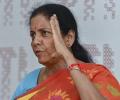
This is not her first stint in North Block or in leading a major economic ministry. She started Prime Minister Narendra Modi's first term as minister of state for finance, was made the commerce minister, and then became the defence minister.

Though this is part of the divestment drive, government's stake in these companies remains 100 per cent even after the buybacks
Centre working on open-ended lease agreement to enablesale of property at the end of the agreement period

The Vedanta group on Wednesday confirmed putting in a preliminary expression of interest (EoI) for buying the government's stake in Bharat Petroleum Corp Ltd (BPCL).
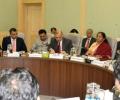
At a pre-Budget meeting, the FM was asked to ensure that NBFCs come out of the liquidity crisis they are facing with the help of RBI. They also spoke about the futility of trying to achieve a 3 per cent fiscal deficit target over the medium term.

Probable reasons that led to failure of the sale process include 24 per cent government stake and corresponding rights, high debt, volatile crude oil prices, fluctuations in exchange rate, changes in macro environment, profitability track record of bidders and restriction on bidding by individuals.
Failure to sell Air India, IDBI may have prompted a change in strategy.

According to officials, more clarity might be required with regard to foreign fund managers in the context of Air India divestment.

Concerned by GDP slowdown and unrealistic tax targets, the economists urged Finance Minister Nirmala Sitharaman to implement long-term structural steps like land and labour reforms. Warning against any off-Budget financing the economists said the government should prepare a statement of intent for its social, rural and welfare sector expenditure.
