
LG, Samsung, Videocon, Sony and Panasonic have instructed their trade partners that products sold through online marketplaces without their knowledge during flash sales will not get the benefit of after-sale service and warranties.

According to the Consumer Electronics and Appliances Manufacturers Association (CEAMA), the estimated Rs 35,000 crore (Rs 350 billion) Indian consumer durables market, which has giants like LG, Sony, Videocon, Samsung and Panasonic, did not grow as expected, with air-conditioners being the biggest spoilsport.

But it may come with a downside risk of further rise in prices of several products.

CEAMA will include the proposal in its pre-budget memorandum to the government.
The industry is expecting double-digit growth on a year-on-year basis, helped by a possible price correction after softening of raw material inputs and factors such as positive sentiments, pent up demand and improving economic conditions. Besides, a shift in consumer behaviour from price consciousness towards technologically advanced premium products with quality, value proposition and safety aspects leading to a rise in demand for home automation products is making the industry upbeat. With the government's production linked incentive (PLI) scheme for white goods, which has witnessed a committed investment of Rs 4,614 crore, in place, many manufacturers are gearing up to make the most out of the opportunity as well as take steps towards reducing their dependency on imports and make products more affordable.

From the rollback of customs duty on key electronic components to fast tracking delivery of goods imported from China, players are looking for incentives on several counts.

Panasonic India is set to increase the prices of its products by up to 7 per cent, while some others players have already increased it.

Sales of apparel were a mixed bag this festive season while those of consumer durables saw an uptick with mobiles, laptops, and air conditioners being in demand. In apparel, Tier-2 and -3 markets did better for some brands, because these have been witnessing an uptick for the past 18-20 months compared to metros. "The past two weeks have been good, and we saw a 13 per cent increase in value sales, and volume sales have also been similar," Manish Kapoor, managing director (MD) and chief executive officer (CEO), Pepe Jeans

Consumer Electronics and Appliances Manufacturers Association Consumer has also welcomed the move saying the it would improve the sentiments and strengthen the growth.

When missiles fly in this region, they are never just aimed at military targets.

The pharmaceutical and the consumer durables sectors, which depend on China for imports, have not been impacted yet due to unrest in China with people protesting against lockdowns. But the lockdown could have an impact on the supply of components used in consumer durables if it continues for the next fortnight. In the pharmaceutical industry, Indian players import 66-70 per cent of their bulk drug requirements from China.
Maharashtra, which contributes between 12 and 15 per cent of appliances sales, announced lockdown-like curbs, meaning there will be no business for the second half of the month as well from the state.

The government will set up expert groups to explore the adoption of common chargers for mobile and all portable electronic devices, and submit a detailed report in two months, Consumer Affairs secretary Rohit Kumar Singh said. The department of consumer affairs on Wednesday called a meeting with industry stakeholders. After the meeting, Singh said India can initially think of exploring shifting to two types of chargers, including a C-Type port.

The DTH industry has to pay entertainment tax to state governments and service tax to the central government.

The government hopes that the PLI schemes would provide 200,000-300,000 direct employment over five years, according to sources in the know.

The Rs 1.5-trillion-a-year industry has ended the year with a 30 per cent fall in sales because after a steady recovery in the festive season, multiple factors dashed its hopes of revival at the end of the year.
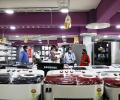
Durable goods companies and retailers say online sales won't compensate for the fall in offline sales.
The added burden on manufacturers for recycling e-waste is expected to impact their margins, which may further lead them towards hiking prices of other items.

The latest hike is likely to be followed by another such move next month, said industry players. Before the latest hike, companies had initiated price hikes to the tune of 12-13 per cent in 2021 but they weren't able to fully cover the increase in costs.

Top companies across sectors -- automobile maker Maruti Suzuki, consumer electronics giant Samsung to IT giant Infosys -- have reopened factories and offices as India took its first steps towards resuming economic activity after weeks under a near-total coronavirus lockdown.

According to the order, all factories producing essential goods and services will remain operational at full capacity.

Categories such as washing machines, refrigerators and television sets have seen sales growth of around 8-10 per cent in August compared to last year, industry sources said, with September also reporting a similar growth trajectory.

Top carmakers, including Maruti Suzuki India, Hyundai and Honda, are expecting a spike in their sales following the implementation of 7th Pay Commission recommendations.
In 2020 a round of hikes in customs duty on components like compressors, motors and printed circuit boards aggravated the situation, coronavirus crisis is now leaving manufacturers with no option but to hike prices despite fall in sales.

The steep rise in prices of key components, coupled with a ban on the import of finished sets, is expected to hit prominent Chinese brands, such as OnePlus, Xiaomi, TCL, and Realme.
Excise duty on most products has been capped at 12.5 per cent

Durable, automobile and real estate players have been lobbying hard for a tax cut, saying it will boost demand.

While the November 2017 round of rate revisions saw mainly eating joints unwilling to pass on GST benefits, this time round, sanitary napkin makers, TV manufacturers and even paint companies have said passing on GST benefits is not a feasible exercise.

With consumers staying indoors and e-commerce firms extending their reach to a larger number of pin codes, these giants have snatched a larger share from the offline traders this season.

Industry body to write to commerce ministry, seek regulation for e-tailers.

Sales of refrigerators were higher this year versus last year.

Since April, India has seen multiple strains of the coronanavirus sweep the nation, upending life and businesses alike. Out-of-home retail and discretionary categories such as durables, auto, fashion, lifestyle, hospitality, food services, travel, and tourism have been the worst-hit as Covid cases remain high, leaving state governments with no option but to curtail mobility and economic activity.
For India to be atmanirbhar, domestic manufacturers cannot remain merely assemblers of imported parts. Manufacturing in India cannot survive on support of imports forever.
A few days ago, Reliance Retail surprised the market by acquiring the Campa brand from Delhi-based Pure Drinks Ltd for Rs 22 crore. A successful cola brand in the eighties, especially in North India, Campa Cola thrived when Coke exited India in the late seventies. When the Atlanta-based major returned and PepsiCo set base in India, it went down fighting.

Which sectors will bounce back fast? Which will lag? Has the consumer changed forever? Here are some answers.

Recently, Apple did two things differently. First, it entered video streaming sector with cheaper options and second it has opened up its OTT service for non-Apple users too.

India was the flavour of the year, at least in the FMCG sector, as multinationals hiked stakes in their subsidiaries lured by long term potential of the country, while homegrown executives made their way to top hierarchy of global firms in 2013.

Sectors throw up a wishlist for the Finance Minister.

India on Sunday announced temporary suspension of e-visa facility for Chinese travellers and foreigners residing in the neighbouring country and issued a fresh advisory saying anyone with travel history to China since January 15 can be quarantined.

The primary and immediate impact of a depreciating rupee is on the importers who will have to shell out more for the same quantity and price. However, it is a boon for the exporters as they receive more rupees in exchange for dollars. The rupee depreciation has wiped away some of the gains that would have accrued to India from international oil and fuel prices dropping to pre-Ukraine war levels.
 © 2026 Rediff.com - Advertise with us - Disclaimer - Privacy Policy - Sitemap - Feedback - About us - Terms of use - Grievances