
India and the UK on Thursday inked a landmark free trade agreement (FTA) that will cut tariffs on British whisky, cars and an array of items, besides boosting bilateral trade by around $34 billion annually.
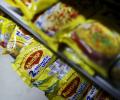
The turnover of FMCG major Nestle India's has grown 2.5 folds to Rs 20,100 crore in last one decade, post the Maggi crisis in 2015, according to the company's latest annual report. At the time of crisis, Nestle India's turnover was at Rs 8,100 crore.
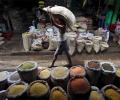
However, the areas under paddy - the biggest cereal grown during the kharif season - continue to be less than last year, mainly due to delayed onset of rains and also on account of shift towards the more lucrative maize.

Healthy eating is one of the most important habits to adopt if you want to avoid heart disease and stroke -- but just be sure to add whole-grain cereals in your breakfast.
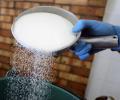
The Central Board of Secondary Education (CBSE) has directed schools to set up dedicated 'Sugar Boards' to raise awareness about sugar consumption and combat childhood obesity. Experts hail the initiative as a significant step towards promoting healthier dietary habits among students and families. The boards will display information on the sugar content in common snacks, drinks, and meals, helping children make informed choices. This move comes as data reveals alarmingly high sugar intake among Indian children, exceeding the World Health Organization's recommended limits.

The census will be carried out with a reference date of October 1, 2026 in snow-bound areas like Ladakh and March 1, 2027 in the rest of the country, the notification said.

India's trade relations with Turkey and Azerbaijan are expected to come under strain due to Ankara and Baku backing Islamabad and condemning India's recent strikes on terror camps in Pakistan. Following their support to Pakistan, calls for boycotting Turkish goods and tourism have surfaced across the country, with online travel platforms such as EaseMyTrip and Ixigo issuing advisories against visiting these nations.

The government will amend the six-and-a-half-decade old Essential Commodities Act to deregulate food items, including cereals, edible oil, oilseeds, pulses, onion and potato, Finance Minister Nirmala Sitharaman said on Friday. The amendment, besides deregulating production and sale of food products, will provide for no stock limit to be imposed on any produce.
Global warming has taken a heavy toll on major cereal crops and since 1981 it has caused a loss of $5 billion.
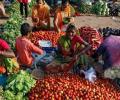
Retail inflation eased to a nearly six-year low of 3.16 per cent in April mainly due to subdued prices of vegetables, fruits, pulses, and other protein-rich items, creating enough room for the Reserve Bank to go for another round of rate cut in the June monetary policy review. The Consumer Price Index (CPI) based inflation was 3.34 per cent in March and 4.83 per cent in April 2024. It was 3.15 per cent in July 2019.
A decline in cereal production in several low-income food-deficit countries this year could lead to a tighter food supply situation with 28 countries facing serious food scracity, according to a new United Nations report.
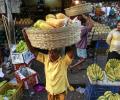
Wholesale price inflation rose to 2.37 per cent in December 2024, led by spike in manufactured products even though prices of food items eased, government data released on Tuesday showed.
The breakfast cereal category in India is heading for more competition.

Census exercise with caste enumeration will be carried out with the reference date of October 1, 2026, in snow-bound areas like Ladakh and of March 1, 2027, in the rest of the country, the Home Ministry announced on Wednesday.

Diets rich in sugar, processed foods, and unhealthy fats tend to result in quicker growth and earlier puberty, notes Dr Rohan Palshetkar, head of unit bloom IVF, DY Patil School of Medicine.

The official said there are both challenges and opportunities for India as many of its competitor countries in exports, such as China Vietnam, Bangladesh, Cambodia and Thailand, face higher duties.

Retail inflation dipped marginally to a nearly six-year low of 3.34 per cent in March due to a decline in prices of vegetables and protein-rich items. The Consumer Price Index (CPI) based inflation was 3.61 per cent in February and 4.85 per cent in March last year.

Goods from sectors, including agriculture, precious stones, chemicals, pharma, medical devices, electricals, and machinery may get impacted if the US will go ahead with imposing reciprocal tariffs on Indian products, according to experts. They said that these sectors could face additional customs duties from the Trump administration because of the high tariff differential or gap, which is the difference between the import duties imposed by the US and India on a product.

India's decadal census is likely to be further delayed after the budget allocated only Rs 574.80 crore for the exercise, a significant reduction from previous years. The census, originally scheduled for 2021, has been postponed due to the COVID-19 pandemic, and the government has not yet announced a new schedule. The budget allocation suggests that the exercise may not be carried out even after the delay. The upcoming census will be the first digital census, allowing citizens to self-enumerate using a dedicated portal. The exercise will be made compulsory for citizens who wish to self-enumerate, and Aadhaar or mobile numbers will be required. The census will include questions on household demographics, amenities, and economic status.

Food budgets in urban areas spent less on protein as compared to beverages and processed foods, reveals the Household Consumption Expenditure survey data for 2023-24.
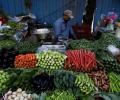
Continuing the downward trend, retail inflation fell to a five-month low of 4.31 per cent in January, mainly due to a decline in the prices of vegetables, eggs, and pulses. The Consumer Price Index-based retail inflation was 5.22 per cent in December and 5.1 per cent in January 2024. The previous low inflation was in August 2024 at 3.65 per cent.
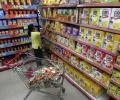
The GST rates for all but six items were finalised at the first day of the two-day meeting of the GST Council, headed by Union Finance Minister Arun Jaitley and comprising state representatives.

Week on week, food inflation climbed 0.36 percentage points from 15.10 per cent on September 4.

The most scathing criticism came from Dr. Cyriac Abby Phillips, a Indian hepatologist and social media influencer known as 'The Liver Doc' on X.

Retail inflation declined to a five-year low of 3.54 per cent in July mainly on account of subdued prices of food items, and base effect, according to official data released on Monday. The Consumer Price Index (CPI) based retail inflation was 5.08 per cent in June 2024 and 7.44 per cent in July 2023.

Amid low growth elsewhere, gross value added (GVA) growth in agriculture and allied activities recovered during the second quarter of the current financial year (Q2FY25) to 3.5 per cent year-on-year (Y-o-Y) due to strong monsoon. Experts feel that the rains have laid the foundation of an even better GVA performance in subsequent quarters. GVA growth in the first quarter of FY25 was 2.0 per cent.
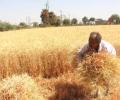
A report authored by UN's panel of scientists from across the world on climate change and sent to the governments of 197 countries has ominous news on the climate change front.

Start your day with walnuts, chia, fruit. You can't go wrong.

Suresh Narayanan, chairman and managing director of Nestl India, is set to retire on July 31 next year, marking the end of an era that began 26 years ago with the Nestl group, a multinational giant in the food and beverage space. His tenure is perhaps most famously defined by his role in reviving the Maggi noodles brand. When Narayanan stepped into leadership at Nestl India in 2015, the company was facing criticism: the Food Safety and Standards Authority of India (FSSAI) had ordered a nationwide recall of the popular Maggi noodles due to high levels of lead found in the product.

For diabetics those who prefer milk tea, rediffGURU Komal Jethmalani has a few suggestions.

The Hyderabad-based National Institute of Nutrition under the apex health research body on Wednesday released revised 'Dietary Guidelines for Indians' to meet the requirements of essential nutrients and prevent non-communicable diseases.

The revised Dietary Guidelines for Indians released by the National Institute of Nutrition explains how prolonged intake of large amounts of protein powders or consumption of high protein concentrate can damage the body.

Many individual states experienced higher inflation than the all-India figures during the financial year 2023-24 (FY24). Retail inflation figures in Telangana, Haryana, Rajasthan and Dadra and Nagar Haveli have been higher than national numbers every month of this financial year, shows a Business Standard analysis of state-wise figures, after the March inflation data was released on Friday. Experts noted that persistent high food inflation along with differences in the weights of rural and urban indices plays into the regional variation in inflation rates.

Vicky promotes Bad Newz... Alaya is in London... Sayani tries a new hairstyle...
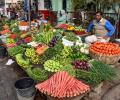
Increased production of pulses, oilseeds, and cereals will help boost domestic supplies and contribute to keeping inflation low in the coming months.
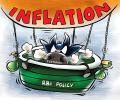
The Reserve Bank on Wednesday retained the retail inflation projection at 4.5 per cent for fiscal 2024-25, with Governor Shaktikanta Das stressing that the central bank will have to closely monitor the price situation and keep the "inflation horse" under tight leash lest it may bolt again. Unveiling the October bi-monthly monetary policy, the Governor also said the flexible inflation targeting (FIT) framework has completed 8 years since its introduction in 2016 and is a major structural reform of the 21st century in India.
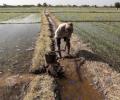
Gross Value Added (GVA) growth in agriculture and allied activities in the first quarter of the 2024-25 financial year (Q1FY25) dipped to 2.7 per cent at constant prices from 4.2 per cent in Q1FY24 due to a drop in output of some crops following heatwave in the main growing months. Low post-monsoon rains, which dried most of the reservoirs in several states across the country, also impacted the production of many crops. At current prices, the growth was estimated at 8.5 per cent as against 4.1 per cent in Q1FY24 due to a spike in food inflation during the April to June months of FY25.

With Donald Trump all set to become US president, Indian exporters may face high customs duties for goods like automobiles, textiles and pharmaceuticals if the new US administration decides to pursue the 'America First' agenda, opined trade experts. Experts also said that Trump could also tighten H-1B visa rules, impacting costs and growth for Indian IT firms. Over 80 per cent of India's IT export earnings come from the US, making it vulnerable to changes in visa policies.
The much-delayed decadal census exercise and the work to update the National Population Register (NPR) are likely to begin early 2025 and the data will be declared by 2026, thus changing future census cycles completely, official sources said.
Analysts are divided on their retail price inflation forecast, with some saying the first quarter numbers will overshoot the RBI target by as much as 60 bps while others are softer in their estimate. Consumer price inflation retreated from its 15-month peak of 7.4 per cent in July to 6.8 per cent in August, much lower than the market expectations, despite vegetable prices remaining elevated at 26.1 per cent. Food inflation eased to 9.9 per cent from 11.5 per cent, led by some cooling of inflation in vegetables, cereals, pulses and milk.
