
Most Indians have acquired hybrid immunity which means immunity developed through vaccines and also natural infection protecting them from different COVID-19 variants.

A new variant of SARS-CoV-2, the virus which cause COVID-19, has been detected in South Africa and many other countries globally which could be more transmissible and evade protection provided by vaccines, according to study.
'Delta continues to be the dominant lineage for new cases across all parts of India in recent samples and remains the most rapidly rising lineage globally that is responsible for multiple outbreaks, including across Southeast Asia, which shows the fastest growth in new cases globally,' the INSACOG said.
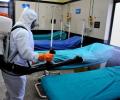
The study found that after 10 hours, the surrogate genetic material had spread to 41 per cent of sites sampled across the hospital ward, from bed rails to door handles to arm rests in a waiting room to children's toys and books in a play area.

The new and highly transmissible Omicron variant of the deadly coronavirus has increased immune escape compared with the Delta variant and appears likely to become the dominant SARS-CoV-2 strain globally in 2022, according to Singapore-based experts.

Covaxin, a whole-virion inactivated SARS-CoV-2 vaccine used for mass immunization in the country, showed a 65.2 per cent protection against the Delta variant in a double-blind, randomized, multicentre, phase 3 clinical trial.

Scientists have used virus-like particles to predict how environmental factors affect the survival of the novel coronavirus on surfaces, and found that the COVID-19 virus may remain infectious longer as temperatures drop in winter.

Raches Ella, project lead, Covid-19 vaccines at Bharat Biotech said in a series of tweets that he was 'surprised' that media and researchers were drawing conclusions based on non-peer reviewed work.

The vaccine was well tolerated in all dose groups with no vaccine-related adverse events.

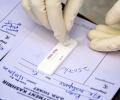
Named after Satyajit Ray's famed detective, the Feluda test, which is priced at Rs 500 and can deliver a result in 45 minutes, is able to differentiate SARS-CoV-2 from other coronaviruses even if genetic variations between them are minute.
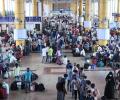
The endemic stage is when a population learns to live with a virus. It is very different from the epidemic stage when the virus overwhelms a population.

In a significant development, India is believed to have placed a funding request of around $55 million in its first call with the Pandemic Fund of the World Bank, sources said. The fund has been set up to finance critical investments in a bid to strengthen pandemic prevention, preparedness, and response capacities at national, regional, and global levels, with a focus on low- and middle-income countries. It was created in the aftermath of the Covid-19 global pandemic.

The identification of host dependency factors mediating virus infection may provide key insights into effective molecular targets for developing broadly acting antiviral therapeutics against SARS-CoV-2 and other deadly coronavirus strains, according to the researchers.
The first COVID-19 vaccine to reach phase I clinical trial is safe, well-tolerated, and capable of generating an immune response against the novel coronavirus in humans, says a new research published in The Lancet journal.
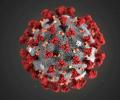
The study may also help to explain the apparent persistence and spread of SARS-CoV-2 in cool environments with high lipid or protein contamination, such as meat processing facilities and how we might better address that risk, the researchers said.
The researchers found an increased risk of deep vein thrombosis -- a blood clot in the leg -- up to three months after COVID-19 infection, pulmonary embolism -- a blood clot in the lung -- up to six months, and a bleeding event up to two months.

One in 15 individuals aged 10 years and above were estimated to be exposed to SARS- CoV2 by August 2020, ICMR's 2nd sero-survey said.

The committee acknowledged that the COVID-19 pandemic may be approaching an "inflexion point".
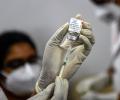
The NIH said results of two studies of blood serum from people who had received Covaxin suggest that the vaccine generates antibodies that effectively neutralise the B.1.1.7 (Alpha) and B.1.617 (Delta) variants of SARS-CoV-2, first identified in the United Kingdom and India, respectively.
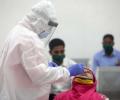
The first nasal vaccine against COVID-19, developed by Bharat Biotech, has received regulator's nod for conducting phase 2 clinical trials, the Department of Biotechnology said on Friday.

The Central Drugs Standard Control Organisation has granted restricted emergency use authorisation to two new vaccines and a drug for COVID-19, taking the number of preventives and treatments available in India to 12.
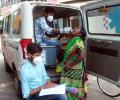
The highly transmissible Delta variant of SARS-CoV-2 has mutated further to form the 'Delta plus' or 'AY.1' variant but there is no immediate cause for concern in India as its incidence in the country is still low, scientists in New Delhi said.

Lower levels of ACE2 gene expression in nasal epithelium, the first point of contact for SARS-CoV-2 and the human body, may explain why children have a lower risk of Covid-19 infection and mortality, according to a study. The researchers found that ACE2 gene expression in nasal epithelium was lowest in younger children and increased with age.

But no extra risk after second dose, shows study led and funded by drug maker, reports Sohini Das.
The Delta Plus variant have been detected sporadically in Maharashtra, Kerala and MP.
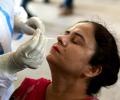
The Hyderabad-based firm completed clinical trials of the nasal vaccine with about 4,000 volunteers and there is no side effect or adverse reaction reported so far, company sources had said.

The states were requested to take a stock of hospital preparedness such as availability of drugs and medical oxygen, vaccination coverage against COVID-19 and influenza.
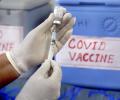
The durability of immunity post COVID-19 vaccination persists for nine months or more and a precautionary dose of vaccine which will be administered to healthcare and frontline workers and citizens above 60 years with comorbidities is to mitigate the severity of infection, hospitalisation and death, the government said on Thursday.

ZyCoV-D is a three-dose vaccine administered intradermally.

BA.4 and BA.5 are sub-variants of the highly-transmissible Omicron variant of the virus.
Instead of killing bat cells as the virus does with human cells, the MERS coronavirus enters a long-term relationship with the host, maintained by the bat's unique 'super' immune system
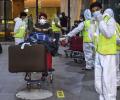
These seven countries are South Africa, Bangladesh, Botswana, China, Mauritius, New Zealand and Zimbabwe.
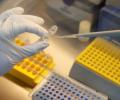
Results from early-phase non-randomised vaccine trials in a total of 76 people show that two formulations of the vaccine have a good safety profile detected over 42 days, and induce antibody responses in all participants within 21 days.

The study, published in the Journal of Pediatrics, also challenges the current hypothesis that because children have lower numbers of immune receptors for SARS-CoV2, the virus that causes COVID-19, this makes them less likely to become infected or seriously ill.
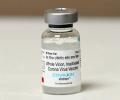
Results of an interim study recently published in The Lancet showed that two doses of Covaxin, also known as BBV152, had 77.8 per cent efficacy against symptomatic disease and present no serious safety concerns.

The objective of the study was to determine the genetic diversity among Indian SARS-CoV-2 viral isolates in comparison to the strains that are occurring worldwide.
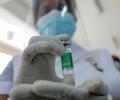
Anurag Agrawal, the Director of the Institute of Genomics and Integrative Biology, said the study on effectiveness of the available vaccines on the B.1.617 variant of SARS-CoV2 suggests that post vaccination, the infections are milder.

Rediff.com Contributing Photographer Pradeep Bandekar sighted these stars on Tuesday.
'The ICMR and Biological E Limited, Hyderabad, have developed highly purified antisera (raised in animals) for prophylaxis and treatment of COVID-19,' the apex health research body said on Thursday. The 'antisera' is yet to undergo human clinical trials to establish its safety and efficacy and Drugs Controller General of India would be approached soon in this regard, Dr Samiran Panda, the head of epidemiology and communicable diseases at the ICMR said.

India has recorded 1,134 new coronavirus cases, while the active cases increased to 7,026, according to the Union health ministry data updated on Wednesday.
