
India's agricultural output declined during the year 2002-03 to 183 million tonne compared to 212 million tonne produced in previous year, a drop of 13.9 per cent, according to Centre for Monitoring Indian Economy.
Tax collections might fall short of expectations of the Union Budget for 2002-03, in spite of recording a "healthy" growth during the nine-month period ended December 2002, according to Centre for Monitoring Indian Economy.\n\n\n\n
India's agricultural production could see its biggest drop in more than two decades this year, due to a drought that hit nearly one-third of the country, Centre for Monitoring Indian Economy said on Friday.
Gross fiscal deficit of the central government during 2002-03 is likely to be higher at Rs 1,52,300 crore (Rs 1,523 billion) as against the budgeted amount of Rs 1,35,524 crore (Rs 1,355.24 billion), according to CMIE.

Gujarat, the home state of Prime Minister Narendra Modi and portrayed as 'growth engine' of India has witnessed a steep fall in new investments for the second quarter of 2014-15 compared to the first quarter of the same fiscal.

'The high unemployment rate being witnessed today is not only the highest in three years but is far more debilitating for the economy than the similar unemployment rates witnessed in 2016,' says Mahesh Vyas.

Bhavin and Divyank Turakhia remain as committed as ever to incubating start-ups despite selling their firm for $900 mn

'Two consecutive quarters of negative growth are the technical definition of an economic recession, and for the first time in this generation's memory, we may be staring at one,' observes Aakar Patel.
'It does not look like unemployment is a priority for the government.' 'If there was one external factor which could have made an impact on low investment and low jobs, it was the Budget and it has not made any difference.' '2020 is going to be a difficult and challenging year.'

'I would want people to have food on their tables and their wages to rise.' 'Will that happen or not is the question that we need to ask and answer.'

The government must realise that it has very little time to recover itself, its reputation, its legacy - and India's fortunes,says Mihir S Sharma.

He attacked the dispensation over issues such as the state of the economy, the situation in Kashmir, the National Register of Citizens in Assam and action by probe agencies against opposition leaders.

The BJP needs to worry about the kinds of professions it has landed up glorifying -- chai vendors, pakora vendors and now guards. These are not professions that any one of its voters would like to cherish, points out Mahesh Vyas.

He cautioned however that these are the early signs and one should not start celebrating.

'The quick fixes have failed; there is now no alternative to deeper reforms,' says Ajay Shah.

'It could take 12 months or more for hiring to get back on track.' 'New opportunities would come up and there will be demand for skillsets that can help dealing with the current situation.'

Modi placed a $12.6 billion bet in this year's budget on road building

'The situation is quite terrifying as you have no job creation and there will be loss of jobs.'
The 30-day moving average of the unemployment rate had climbed up much ahead by January 6, to 7.8%, says Mahesh Vyas.

Lok Sabha elections result of 2019 tells us the Modi wave has only consolidated, instead of waning.
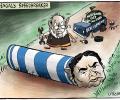
'Our government has created 10 million jobs when the Indian unemployment rate is at a 45-year high.'

'It is not simply demonetisation or GST, it is this government's failure to manage the financial sector crisis.'
He said the 'toxic combination of deep distrust, pervasive fear and a sense of hopelessness in our society' is stifling economic activity and growth.

The central government's deposits with the RBI had fallen to just Rs 100 crore as of June 8.

The senior Congress leader also said over 90 per cent of jobs are in the SME sector which requires an urgent push to boost the economy.

We present our alphabet of 2020, pulling in everything you'll remember about this year we'd rather forget.

Coal, land, insurance bills are cited as govt's commitment to reforms.

More people felt optimistic about their economic condition in November than in the same month a year ago, says Mahesh Vyas.

Nearly 31 million Indians are unemployed and looking for jobs. While economic growth has been humming along, the pace of job creation has been poor. A revealing excerpt from Dev Kar's India: Still A Shackled Giant.

'In India, a large proportion of the labour force does not have a regular job.' 'People are mostly employed as daily wage workers, agricultural labourers, small farmers and self-employed traders.' 'These move in and out of "jobs" fairly rapidly.' 'It is the high proportion of these workers in India that makes unemployment volatile,' explains Mahesh Vyas.

Mr Modi must stop talking, and start writing

With certain quarters demanding privatisation of public sector banks in the aftermath of the alleged fraud at Punjab National Bank (PNB), Economic Advisory Council to the Prime Minister chairman Bibek Debroy tells Sanjeeb Mukherjee, Ishan Bakshi and Indivjal Dhasmana that reducing government equity even to zero would not mean giving up of government control over these banks.

Advertisement revenues will go up in 2016-17 with automobiles and e-commerce being big contributors.

Private sector investment is likely to improve mildly in H2 of FY17, even though signs from investment data are not encouraging.

'Under-employment continues to be a very big problem.' 'What we see today is many youth who would have accepted any kind of job are not willing to accept any job.' 'They are ready to wait for a better job, one that justifies their educational qualification. 'This is one of the reasons why unemployment has risen.'

'The jobs that are being created now are the delivery boy jobs which are of extremely poor quality, or contractual jobs where you hire a person on a per piece basis.'

A way out of the economic slump is to revisit the template of 15 years ago and follow its constituents, recommends Ajay Shah.

The previous government set up a cabinet task force to clear the backlog of projects but failed to make much of an impact.
While naysayers say the economy is on a downward spiral, optimists point out that India has experienced a shift of gears in the realm of policies, thanks to several initiatives of the Narendra Modi government, says Ashok K Lahiri.

Available evidence suggests that we are on the way to a very costly failure of the current demonetisation scheme, says M R Narayana.
