
Leaders of the opposition parties had on Friday met Naidu and handed over the notice of impeachment against the chief justice of India bearing signatures of 64 MPs and seven former members, who recently retired.

The Supreme Court on Tuesday dismissed the Punjab government's appeal against a high court verdict quashing its decision to expand the definition of 'NRI quota' for admissions in undergraduate medical and dental courses in the state. "This fraud must come to an end now," the apex court said.
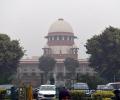
The Supreme Court on Wednesday said the Constitution intended to bring about a 'sense of social transformation' and it would be 'dangerous' to say that the private property of an individual cannot be regarded as material resources of community and taken over by state authorities to subserve 'common good'.

The 5-judge bench, was referring to four senior most judges of apex court -- Justices J Chelameswar, Ranjan Gogoi, M B Lokur and Kurian Joseph -- who had held January 12 press conference against CJI Dipak Misra raising litany of questions on allocation of cases.

A roster of the work for fresh cases notified under the order of the chief justice of India will come into effect from February 5 till further orders.
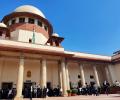
A committee headed by Chief Justice of India DY Chandrachud designated 56 lawyers and advocate-on-record as senior advocates, 11 of them women.
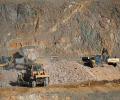
In a setback to the Centre, the Supreme Court on Thursday held that states have the legislative competence to impose taxes on mines and minerals-bearing lands under the Constitution.
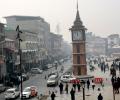
Highlights of the judgment pronounced by a five-judge Constitution bench of the Supreme Court that on Monday unanimously upheld the Centre's decision to abrogate provisions of Article 370 of the Constitution bestowing special status on the erstwhile state of Jammu and Kashmir.

Apart from high-profile cases like the validity of Aadhaar Act in light of the right to privacy judgment and Ayodhya land dispute, the CJI is also heading various benches that are expected to decide cases related reservations to Scheduled Castes and Scheduled Tribes in promotion in government jobs, the alleged dilution of Section 498A of the Indian Penal Code -- which stipulates punishment against harassment of women by husband and in-laws -- and framing of guidelines to check violence and vandalism by a protesting mob.

He did not give any specific reason for withdrawing from hearing the case.

'We are aghast at what happened in Gujarat a few days ago, on the 75th anniversary of India's Independence'

Hailing from a family of lawyers from Maharashtra, he was part of a nine-judge Bench of the Supreme Court which in August 2017 declared the right to privacy as a fundamental right of an individual.
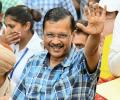
The apex court registry refused to accept the application, saying since Kejriwal was given liberty to move the trial court for regular bail, the plea is not maintainable.
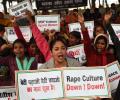
The Centre on Tuesday urged the Supreme Court not to hear this week the pleas on the vexed legal question of whether a husband should enjoy immunity from prosecution for the offence of rape if he forces his wife, who is not a minor, to have sex.

In a major relief to 25,753 teachers and non-teaching staff of West Bengal, the Supreme Court on Tuesday stayed the order of the Calcutta high court order invalidating their appointment made by the state's School Service Commission (SSC) in the state-run and state-aided schools.

A bench of justices A K Sikri and Ashok Bhushan in their separate but concurring verdicts noted that being the senior-most judge, the CJI is empowered to exercise 'leadership" on the court and in this role, he is expected to be the "spokesperson and representative" of the judiciary in its dealings with the executive, the government and the community.

He took exception to an "ideological group of people", activists, intellectuals for giving "identification marks" to as to "who is an independent judge" and said that according to them a judge must be necessarily anti-establishment.

The CJI said one of his relatives had earlier appeared on behalf of the victim's mother in the case and observed that it would be appropriate that some other bench hear the review plea at 10:30 am.
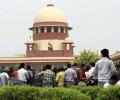
'No judge can take up a matter on its own unless allocated by the CJI as the CJI is master of the court,' the top court said.

In an emphatic victory for the Modi government, the Supreme Court on Monday unanimously upheld its decision to abrogate Article 370 of the Constitution that bestowed special status upon the erstwhile state of Jammu and Kashmir, ordered restoration of statehood "at the earliest" and set a September 30, 2024, deadline for holding the assembly elections.
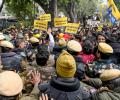
The bench told Masih that it was clear that he was putting the "X" mark on the ballot papers.
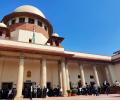
A bench headed by Chief Justice D Y Chandrachud directed the Chandigarh administration on Monday to provide security to the judicial officer, to be appointed by the high court, to ensure the safety of the officer and the records.

The Supreme Court verdict on mining royalty case will give a further jolt to the Indian mining industry and will have very large financial implications, as arrears may work out to the tune of more than Rs 1.5 lakh crore to Rs 2 lakh crore, industry players said on Wednesday. The Supreme Court on Wednesday upheld the power of states to levy tax on mineral rights and mineral-bearing land, and allowed them to seek refund of royalty from April 1, 2005 onwards. According to a senior mines ministry official, the verdict will have a very large financial impact on mining, steel, power and coal companies.
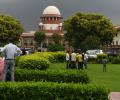
A bench comprising Chief Justice D Y Chandrachud and justices J B Pardiwla and Manoj Misra, however, agrees to hear as many as 10 petitions of the Bihar government against the Patna HC verdict.
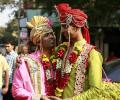
A five-judge Constitution bench of the Supreme Court, by a 3:2 majority, on Tuesday upheld one of the adoption regulations prohibiting unmarried and queer couples from adopting children.

This is in contrast to a Supreme Court judgment of March which said the panel should comprise of the prime minister, the leader of opposition in Lok Sabha and the Chief Justice of India.

Democracy does not begin and end with elections and the integrity of election process is pivotal for sustaining the democratic form of government, the Supreme Court said on Thursday while striking down as unconstitutional the electoral bonds scheme for political funding.

The Supreme Court will hear on Friday a plea challenging a Bombay high court verdict upholding a Mumbai college's decision to ban hijabs, burqas and naqabs inside the campus.

The Supreme Court Bar Association has written to Chief Justice of India NV Ramana expressing anguish at the non-consideration of names of its members for elevation as judges in various high courts.

The State Bank of India, which unsuccessfully sought extension of time till June 30 to disclose the details of electoral bonds, on Monday faced searching questions from the Supreme Court which wanted to know about the steps taken to comply with the directions it had issued while scrapping the controversial scheme of anonymous political funding on February 15.

The retired judge said the January 12 presser had an impact and things started changing for good during the remaining part of Justice Dipak Misra's tenure as CJI and is now continuing under the stewardship of the justice Gogoi.

The CJI also said the tribunals 'are not equipped and are lying empty and today a situation has come that no retired Supreme Court judge wants to head the Tribunal'.
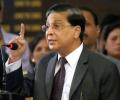
Ahead of CJI Dipak Misra's final day as the head of the judiciary of India, here's a look at the key judgments that he was a part of.

The judgment stated that there cannot be "any distrust about the responsibilities" the Chief Justice discharges.

The Supreme Court on Friday agreed to list for an early hearing the appeal of US-based creditor Glas Trust Company LLC against a judgment of the NCLAT, which had stayed insolvency proceedings against ed-tech firm Byju's and approving its Rs 158.9 crore dues settlement with the BCCI. A bench comprising Chief Justice D Y Chandrachud and Justices J B Pardiwala and Manoj Misra was urged by senior advocate NK Kaul, appearing for the ed-tech major, that the case needed to be heard at the earliest.

The Tirupati Laddu row intensified on Friday with the Tirumala Tirupati Devasthanams (TTD), which is managing the super-rich temple, backing Chief Minister N Chandra Babu Naidu's claim that the famous 'prasadam' had animal fat and Yuvajana Sramika Rythu Congress Party president Y S Jagan Mohan Reddy dubbing the accusations as 'atrocious'.
The minister further said that those who "peddle falsehood to destroy the institution are not dealt with in an exemplary manner, this trend will only accelerate."

The NGO challenges the validity of a provision of the Chief Election Commissioner and Other Election Commissioners Act, 2023.

The top court, however, refused to stay the counselling of successful candidates for admissions to Bachelor of Medicine, Bachelor of Surgery, Bachelor of Dental Surgery and other courses.

A five-judge bench headed by Chief Justice D Y Chandrachud noted that Karnataka high court judge Justice Vedavyasachar Srishananda, who had made those observations, had on September 21 tendered an apology for his comments in the open court there.
