
India said the Hague-based Court of Arbitration has no jurisdiction over its sovereign decisions on the Indus Waters Treaty.
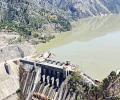
India has stopped releasing water from the Baglihar Dam on the Chenab River and is planning similar measures at the Kishanganga Dam on the Jhelum River, following a recent terror attack in Jammu and Kashmir. These hydroelectric dams offer India the ability to regulate water releases. This decision potentially affects the Indus Waters Treaty, a decades-old agreement between India and Pakistan governing the use of the Indus River and its tributaries. The Baglihar and Kishanganga dams have been points of contention between the two nations in the past.

As India marks the first anniversary of Operation Sindoor, its decisive military action against the terror hotbeds in Pakistan, the ministry of external affairs sharply rebuked Islamabad's policy of terrorism.
Pakistan has written to India seeking information about the Svalkot hydroelectric project on the River Chenab, according to the Foreign Office spokesperson.

The Indus Waters Treaty, brokered by the World Bank, has governed the use of the Indus River and its tributaries between India and Pakistan since 1960.
It is the first major contact of its kind since the Pakistan-India conflict in May, the paper said, citing sources.

Prime Minister Manmohan Singh on Friday dedicated to the nation the 450-MW Baglihar hydro electric power project built on river Chenab in Ramban district of Jammu and Kashmir.
India's measures announced against Pakistan on April 23 will remain effective, the sources said.
In return, Pakistan will withdraw the case from the World Bank,says the South Asia Tribune.
Lafitte, a professor at the Swiss Federal Institute of Technology in Lausanne along with two Swiss, six Pakistani and four Indian officials flew in from New Delhi, officials said.
Islamabad says the height of the project is in violation of the Indus Waters Treaty.
Pakistan claims the project violates the 1960 Indus Water Treaty.
Weeks after India placed the 1960 Indus Waters Treaty (IWT) in abeyance following the April 22 Pahalgam terror attack, Pakistan has signalled its willingness to discuss New Delhi's long-standing concerns about the treaty, sources said.
The World Bank appointed Lafitte as the neutral expert to resolve the dispute for the 450 MW power project in May after Pakistan said construction of the project violated the 1960 Indus Water Treaty.\n\n
A red alert has been issued by the administration as the mighty river was flowing two to three degrees below the danger\nmark in Pul-Doda, Ramban and Akhnoor belts of the division.
Lafitte was appointed by the World Bank in May.
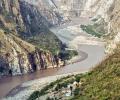
Pakistan may face a significant water shortage during the Kharif season due to reduced water supplies from India.
India welcomed the report on Baglihar saying the finding of neutral experts that New Delhi's designs were in conformity with the basic principles of the Indus-Water treaty.

Pakistan's ambassador to Russia, Muhammad Khalid Jamali, has warned that Pakistan will respond with "full spectrum of force", including nuclear, if it is attacked or its vital water flow is disrupted. The warning comes amid heightened tensions between Pakistan and India following a terrorist attack in Jammu and Kashmir. Jamali also reiterated Pakistan's stance on the Indus Water Treaty, saying any attempt to stop or divert water flow would be considered an act of war. He urged de-escalation, emphasizing the potential danger given both countries possess nuclear weapons. Jamali further called for a neutral investigation into the Kashmir attack, suggesting the involvement of China and Russia. He also highlighted the need to address the root causes of the conflict, pointing to the unresolved Kashmir issue and its potential for resentment.
Pakistan had earlier moved the World Bank for appointment of neutral experts but India has insisted on solving the issue bilaterally.
The expert overruled Pakistan's other technical objections.
Pakistan objects to the Baglihar project, saying it violates the 1960 Indus Water Basin treaty, which accorded rights over rivers Ravi, Beas and Sutlej to India and riparian rights on the Indus, Jehlum and Chenab rivers to Pakistan.
Pakistan approached the bank, which is a signatory to the 1960 Indus Water Treaty between the two countries, for arbitration after failure of talks with New Delhi early this year.
Pakistan has halted the construction of contentious canals in Punjab province after India suspended the Indus Waters Treaty following a deadly terrorist attack in Kashmir. The decision to suspend the canals project was made after Prime Minister Shehbaz Sharif met with PPP chairman Bilawal Bhutto-Zardari and agreed to address the concerns of Sindh province, where the project had sparked protests. The canals project, aimed at irrigating the desert region in Punjab, was seen as a threat to water resources in Sindh. Both sides have agreed to seek consensus on the issue in the Council of Common Interests (CCI), a high-powered inter-provincial body. Meanwhile, Pakistan has reiterated the importance of the Indus Water Treaty for its water security and economy, and condemned India's move to suspend it.
India has suspended the Indus Waters Treaty with immediate effect, accusing Pakistan of breaching the pact by refusing to negotiate modifications and engaging in sustained cross-border terrorism. The decision follows a recent terror attack in Jammu and Kashmir that killed 26 people. Pakistan has rejected India's move, calling it an "act of war."
The Awami National Party has threatened that if the Pakistani government executed the Kalabagh dam project, it would take up the matter with international agencies.
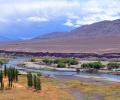
'Militarily, it risks escalating tensions with Pakistan, potentially triggering conflict due to Pakistan's heavy reliance on the Indus.'
The Indus system of rivers comprises the main river -- the Indus -- along with its five left bank tributaries, namely, the Ravi, the Beas, the Sutlej, the Jhelum and the Chenab. The right bank tributary, the Kabul, does not flow through India.
Lafitte was appointed neutral expert for the contentious 450 mw power project in May by the World Bank after Pakistan said construction of the Baglihar project violated the 1960 Indus Water Treaty.
According to the provisions of the treaty, the decision of Professor Lafitte on all matters within his competence is final and binding.
Hours after the verdict was announced, Azad visited the dam site in the mountainous Doda district and met the engineers and workers who were jubilant at the verdict by the World Bank appointed arbitrator Prof Raymond Lafitte.
"The design of the project is strictly according to the Indo-Pak water treaty and will not become hurdle in the peace process," Union Water Resources Minister Priya Ranjan Dasmunshi explained.
Kamal Majidulla, special assistant to the prime minister on water issues, claimed that the neutral expert's verdict of 2007 on the Baglihar project was a "travesty of justice" and an "inversion of the Indus Waters Treaty" that allocated three Western rivers to Pakistan.

Abdullah issued a white paper on development undertaken in Jammu and Kashmir during the rule of "Abdullah and Sons" -- as Shah referred the family in his speech at a rally in Baramulla district -- to counter the allegations of corruption.
Pakistan has said India violated the Indus Water Treaty.
