
Amid a raging debate on the dilution of the Armed Forces Special Powers Act and its partial withdrawal from Kashmir, Army chief General V K Singh on Saturday said the AFSPA was an 'enabling provision' and not 'arbitrary'. The army has given its views on the issue and the government will take the "correct decision," he said.General Singh also said there have been more infiltration attempts into Jammu and Kashmir in the last two months and did not rule out 'some methods'.

The Manipur government has accused Mizoram Chief Minister Lalduhoma of stoking hatred and division through "unwarranted comments" and called on him to display "better statesmanship" by being a "good neighbour". In a statement, the Manipur government alleged that Lalduhoma's comments were part of a "greater agenda" to carve out a Kuki-Chin Christian nation from contiguous areas of Myanmar, India, and Bangladesh. It also warned against any attempt to "push" illegal Kuki-Chin immigrants from Mizoram into Manipur for land grabbing and the creation of a "Greater Mizoram." The Mizoram government could not be reached immediately for comment.
Army Chief Gen Bikram Singh on Monday opposed any dilution of the Armed Forces Special Powers Act in Jammu and Kashmir, saying any decision to revoke it from any part should be taken only after getting inputs from security agencies and stakeholders.
Three decades after it was imposed in Manipur to deal with insurgents, the controversial Armed Forces Special Powers Act (AFSPA) is still an issue used by parties during electioneering for the January 28 assembly poll in the state.
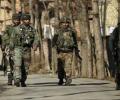
Tirap, Changlang and Longding districts of Arunachal Pradesh and eight police stations bordering Assam were declared "disturbed" areas under the Armed Forces (Special Powers) Act (AFSPA), 1958.

Protest rallies erupted in Imphal with thousands of students marching towards the centre of the city, sloganeering against the kidnapping and killing of two youths for the second consecutive day on Wednesday.
The ruling Congress has pledged to improve the law and order situation in Manipur and withdraw the controversial Armed Forces Special Powers Act if voted to power in the assembly election.
A fresh attempt is being made to build consensus within the Government to amend the controversial Armed Forces Special (Powers) Act, Home Minister P Chidambaram indicated on Thursday.
The meeting with the Prime Minister comes a day after Omar had discussions with Defence Minister A K Antony and Army Chief V K Singh to press for early removal of the Act from certain parts of the state.

'My one recommendation would be to first quell the violence and then encourage dialogue and build the trust among the different communities.' 'This is not easy but necessary, for violence cannot be the way forward.'
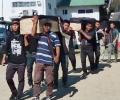
'There are 7,000 guns which are in the hands of the armed militia of the Kuki and Meitei communities.'
'Today's terrorist/insurgent/militant/Naxalite does not allow you the luxury of a magistrate's presence -- you are shot dead or blown-up in a jiffy, unless you are quicker and forestall him.'
Describing the situation in Jammu and Kashmir as "worrisome", the BJP top brass, led by L K Advani, on Monday met Prime Minister Manmohan Singh and demanded that the government should not dilute AFSPA or grant autonomy to the state as it would demoralise the security forces.
Jammu and Kashmir Chief Minister Omar Abdullah on Wednesday said withdrawal of the Armed Forces Special Power Act (AFSPA) from certain areas of the state was in no way an effort to undermine the role of the Army.

The government on Wednesday said that time was "not appropriate" for withdrawal of Armed Forces Special Powers Act from Jammu and Kashmir.

The Omar-Abdullah led party said continuation of the Act was not in sync with the "significant" decrease in violence in the past six years.
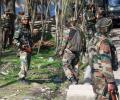
Relatives of the three youths, belonging to Dhar Sakri village in Kotranka of Rajouri area in Poonch, had lodged a written missing persons report in the local police station after they lost contact with them on July 17. The three were working as labourers in apple and walnut orchards in Amshipura.

The government on Thursday said it sincerely wants to have friendly relations with all its neighbouring countries, including Pakistan, but Islamabad will also have to think about its approach.

Amid demands for scrapping of Armed Forces Special Powers Act in parts of the country, including Jammu and Kashmir and northeastern states, an article in pro-Rashtriya Swayamsevak Sangh journal 'Organiser' has favoured its continuation in such areas till government trains and prepares state police to contain insurgency.
Civil society groups in insurgency-hit Manipur have been carrying on with their campaign for withdrawal of 'draconian' 1958 Armed Forces Special Powers Act, alleging that security forces operating in the state often resort to excesses taking advantage of the Act in force.
After his tough talk with the army for withdrawing Armed Forces Special Powers Act from parts of Jammu and Kashmir, Chief Minister Omar Abdullah on Thursday said his government has the authority to revoke the controversial law and sought a 'workable' solution from the army.
Commenting on state Congress president Saifuddin Soz's statement, Jammu and Kashmir Chief Minister Omar Abdullah has said he will hold talks with the alliance party over plans to withdraw the controversial Armed Forces Special Powers Act. Soz had slammed Abdullah for not consulting the Congress or the home minister on the AFSPA issue. "I am not going to react to what Professor Saifuddin Soz has said. As a chief minister, I am well aware of my responsibilities," said Omar.
Warning that partial revocation of the Armed Forces Special Powers Act from Jammu and Kashmir will create "terrorist sanctuaries", Army chief General V K Singh has said dilution of the controversial Act will be 'detrimental' to national interest. the Army chief said, "Just one summer of peace does not mean normalcy. Diluting of AFSPA in any form will be detrimental to national interest."
Even as the two-day conclave of the director of generals of police of northeastern states held in Guwahati has raised the alarm over the attempts by Maoist elements to strike roots in the region, especially in Assam and Manipur, the government of India has once again extended the enforcement of the Armed Forces (Special Powers) Act, 1958 in Assam by another one year notwithstanding the marked improvement of security scenario in the state of late.
Amidst controversy over the issue of revocation of Armed Forces Special Powers Act from parts of Jammu and Kashmir, Defence Minister A K Antony on Friday said that the final decision on it would be taken by the Unified Command Headquarters in the state.
Former Jammu and Kashmir chief minister and People's Democratic Party patron Mufti Mohammad Sayeed has linked the repeal of the Armed Forces Special Powers Act and reduction in the number of deployed troops to the ongoing peace process.
Amid reports that the army is opposed to withdrawal of controversial Armed Forces Special Powers Act from some areas of Jammu and Kashmir, Army Chief General V K Singh on Thursday said the issue is under the purview of the home ministry. He said the army has already given its inputs on the issue.
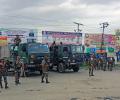
The officials said that in the present environment where two communities are attacking each other, they may not find even a lawyer to defend them as all courts were within Imphal valley.
"The presence of troops in residential areas is a grave threat... the sooner the rulers understand this, the better," Mirwaiz said addressing a religious function at Reshi Mohalla locality of Habbakadal in downtown city, shortly after authorities lifted restrictions on his movement.
The Centre has convened an all-party meeting on Kashmir on Wednesday. This was decided after a meeting of the Cabinet Committee on Security chaired by Prime Minister Manmohan Singh in New Delhi on Monday.

Mehbooba Mufti said she will not contest the assembly elections in Jammu and Kashmir, pointing out that she would not be able to fulfil her party's agenda in the union territory set up even if she were to become the chief minister.
The AFSPA was being "unnecessarily demonised" although it had "nothing to do with the present unrest (in Kashmir)", General Singh said while firmly sticking to his opposition to any withdrawal or even dilution of the Act which gives the Army vast powers to deal with insurgents.
Pushing for partial lifting of the controversial Armed Forces Special Powers Act in Jammu and Kashmir, Chief Minister Omar Abdullah on Monday asked all stake holders concerned to shed their rigidity to help take a decision based on the ground situation and for the benefit of people of the state.
On the eve of the crucial meeting of the Cabinet Committee on Security on Kashmir, The Bharatiya Janata Party demanded the removal of Chief Minister Omar Abdullah, saying his government has "completely collapsed" and warned that any dilution of AFSPA would only allow the separatists and miscreants to call the shots.
The shrill politically-driven rhetoric demanding that the Armed Forces Special Powers Act be repealed, if allowed to hold sway, may drive us deeper into the dark world of both Islamist terror and the Maoist insurgency, warns Brigadier S K Chatterji (retd).
The time is 'not right' for the removal of the Armed Forces Special Powers Act from Jammu and Kashmir, Army Chief Gen Bikram Singh said on Friday, emphasising that any decision on this 'should not be politicised'.
Union Minister Farooq Abdulla on Monday said there was a "massive" public opinion in favour of revoking the Armed Forces Special Powers Act but maintained that all the stakeholders should discuss the issue and take a collective decision.
Opposing the withdrawal of the Armed Forces Special Powers Act from Jammu and Kashmir, Bharatiya Janata Party leader L K Advani on Saturday said nothing should be done that weakens the armed forces' position. He, however, said there is a case for withdrawal of the Act in Manipur, which could be examined.
Amid renewed demands for repeal of the Armed Forces Special Powers Act by Jammu and Kashmir Chief Minister Omar Abdullah, National Conference's alliance partner Congress on Wednesday said the time was not right for it and rejected the contention that the central government was being blackmailed by army on this.

In its election manifesto -- 'Sankalp Patra' -- the Bharatiya Janata Party has vowed to implement the Union Civil Code (UCC), maintain peace in the Northeast, among other key poll promises.
