Financial services firm AnandRathi analysed the key points of the policy soon after it was announced.
Financial services firm AnandRathi analysed the key points of the policy soon after it was announced.

Home Minister Rajnath Singh said that the decision could cost the government roughly Rs 15,000 crore.

The stronger than expected monsoon has not yet softened food inflation as much as it should have and in particular, vegetable prices have been impacted by weather-driven supply disruptions, said RBI Governor D Subbarao while unveiling the first quarter monetary policy review.

'So far, the government has sanctioned more than Rs 300 billion as GST refunds,' Ansh Bhargava and Aditya Singhania point out.
.jpg)
During April-February, the index of industrial production, a measure of factory activity, declined 0.1 per cent compared with a 0.9 per cent growth in the corresponding period of 2012-13.

Fall in both WPI and CPI inflation to pressure RBI, say analysts

The Reserve Bank of India is widely expected to lower interest rates for a third time this year.

Finance Minister expects rate cut by RBI.
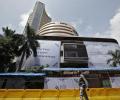
In the broader market, the S&P BSE Midcap added over 1% to finish at record closing high

Sun Pharma was the best gainer among Sensex components, surging 6.91 per cent
The government hopes of registering GDP growth rate ranging between 6.1-6.7 per cent in 2013-14.

Shifting its stance of monetary policy towards targeting retail inflation as it is an "inequitable tax", RBI today said it may exceed 8 per cent by March end and efforts will continue to bring it down.

Markets extended gains for the fourth consecutive day tracking gains in banks, capital goods and oil and gas majors.

Next set of Q4 FY16 earnings, progress of monsoon along with election poll outcome will dictate market trend this week

Capital inflows continued to aid the rupee's rise, although a strong dollar overseas capped the gains.

India's manufacturing sector activity contracted for the third straight month in October amid falling levels of production and new orders, as the business climate within the country remained tough, an HSBC survey said on Friday.

Food prices probably fueled a sharp rise in India's retail inflation in December after the record low struck the previous month.

In April, the World Bank had projected India's GDP would grow at 6.1 per cent in the current financial year and at 6.7 per cent the following year.

Standard Chartered on Friday lowered India's growth forecast for the current financial year to 4.7 per cent from earlier 5.5 per cent, citing "upside risks" to inflation and fiscal deficit.

About 1,556 shares have advanced, 1,211 shares declined, and 182 shares are unchanged.
.jpg)
As on Monday, the prices of many vegetables had fallen as much as 50% compared with those a month before, due to increased supply, following the arrival of winter crops in the markets.

According to bankers and economists, there is room for further rate cut by the RBI as retail and wholesale inflation rates have remained benign.

n the broader market, BSE Midcap and Smallcap indices are trading higher by 0.3% each.

The RBI has targeted 6 percent inflation by January 2016

The country's near-term outlook hinged on a benign inflation trajectory, uptick in industrial activity and falling crude oil prices
The rupee appreciation will most likely lead to lower inflation and less ambiguity.

The new Land Acquisition Act to provide just and fair compensation to farmers came into force from January 1, 2014.
As inflation rate is near the upper limit of the comfort zone, experts rule out rate cuts anytime soon

The government has taken a number of steps to stem the depreciation of rupee including moderation in demand of non-essential imports and enhancing supply of capital flows, Finance Minister P Chidambaram said.

Investors' confidence has been revived in recent weeks on the likelihood the elections will usher in a new government.

With crude and commodity prices ebbing and the twin deficits under check, the Reserve Bank should have cut the key policy rate to push investments and boost economic growth, India Inc said.

Industrial ouput, however, was seen falling 0.6 per cent in January

'It appears the growth rate could be around six per cent'.
As investors try to second-guess the US Fed, corporate and election results could have a bearing on market direction
.jpg)
Indian economy is seeing signs of upward momentum helped by gradual reduction of inflationary pressure though the country's growth still remains "relatively weak", according to Paris-based think tank OECD.

Technically, the Indian economy is on road to recovery.

RBI Governor would like to wait till Budget before taking any action on rate front.
India Inc has an impressive report card to show for the first quarter of this financial year.
Repo rate may well end 2013 at 8 per cent, where it had begun the year.
