
Foreign portfolio investors (FPIs) withdrew a substantial amount from Indian equities in the first half of March, driven by geopolitical tensions, rupee depreciation, and concerns about crude oil prices.

Indian equity markets experienced a significant downturn as geopolitical tensions in West Asia, rising oil prices, and foreign fund outflows dampened investor confidence. The Sensex and Nifty both fell sharply in early trade, reflecting broader global market weakness.

Russian President Vladimir Putin is actively working to de-escalate the escalating crisis in the Gulf, engaging with regional leaders following Iran's retaliatory strikes on US facilities after joint US-Israeli strikes against Iran.

Indian benchmark equity indices experienced a significant downturn, with the Sensex plummeting over 800 points and the Nifty falling sharply, driven by rising crude oil prices, geopolitical tensions, and foreign capital outflows.

Karnataka Deputy Chief Minister D K Shivakumar has urged the central government to protect Indians, especially Kannadigas, stranded in West Asia due to the ongoing conflict, assuring that all efforts are being made to ensure their safety.

The US-Israeli military campaign, dubbed "Operation Epic Fury" by Washington, has entered its third day, with US President Donald Trump stating that operations would continue "until all of our objectives are achieved."
Foreign investors pulled out Rs 21,000 crore (around $2.3 billion) from Indian equities over the last four trading sessions amid deteriorating global risk sentiment triggered by the West Asia crisis.

China is significantly expanding its nuclear power sector, aiming to become a global leader by 2030. The country has the capacity to construct up to 50 nuclear reactors simultaneously, reducing reliance on fossil fuels.
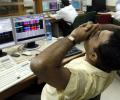
Indian benchmark equity indices Sensex and Nifty experienced a significant crash in early trade, triggered by a sharp increase in crude oil prices and escalating tensions in the Middle East.

Indian investors have seen their wealth erode by a staggering Rs 48.29 lakh crore since the West Asia war began on February 28, leading to a significant downturn in the BSE Sensex and NSE Nifty, driven by geopolitical tensions and rising crude oil prices.

'OMCs are incurring losses of Rs 1,000 crore per day due to the West Asia crisis.'

Prime Minister Modi has urged citizens to adopt measures like judicious fuel use, postponing gold purchases, and deferring foreign travel to strengthen India's economy in the face of the West Asia conflict's adverse impact.
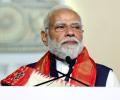
Congress leader Rahul Gandhi has criticised Prime Minister Narendra Modi's call for citizens to make economic sacrifices in response to the West Asia conflict, calling it 'evidence of failure'. Gandhi accused Modi of shifting responsibility onto the public and being incapable of running the country.

The Indian government has increased import duties on gold and silver from 6 per cent to 15 per cent to curb inbound shipments of precious metals amid a rising import bill due to the West Asia crisis.

The threat has raised concerns about possible asymmetric attacks outside the region. Iran has also stepped up attacks on energy infrastructure in Gulf countries.

Prime Minister Narendra Modi has appealed to citizens to adopt austerity measures, including avoiding destination weddings abroad and reducing edible oil consumption, to mitigate the impact of the West Asia crisis on India's economy.
The Iran conflict led to a sharp correction in Reliance Industries Ltd's (RIL's) share price, which has been partially reversed by a rebound.

Indian equity markets experienced a significant decline in early trade, with the BSE Sensex and NSE Nifty dropping, as escalating geopolitical tensions in West Asia and a surge in global oil prices dampened investor sentiment. Track Sensex, Nifty50 movement and key market drivers for May 8, 2026.

Indian benchmark indices Sensex and Nifty experienced volatile trade, declining in early deals before fluctuating, as investors reacted to unabated foreign fund outflows and rising geopolitical uncertainties, particularly in West Asia.
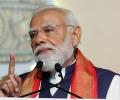
Prime Minister Narendra Modi has urged for restraint in the use of petro products due to the West Asia crisis, emphasising the need to save foreign exchange and reduce the impact of war. He also highlighted India's progress in solar power and ethanol blending, while assuring support to Telangana's development.

Airfares to Southeast Asia have surged 25 to 30 per cent, driven by high demand and limited airline seat capacity.

Crude oil prices surged over 3% in futures trade after US President Donald Trump expressed doubts about the Iran ceasefire, reigniting fears of supply disruptions from West Asia and pushing Brent crude above USD 107 per barrel.

Explore the resilient daily life in Tehran, where residents navigate geopolitical tensions and economic challenges with routine activities, showcasing a striking contrast between normalcy and underlying uncertainty.
Indian equity markets, including the Sensex and Nifty, experienced a significant downturn for the second consecutive day, driven by escalating geopolitical tensions in West Asia and persistent foreign fund outflows.

India's state-run oil marketing companies (OMCs) are projected to incur under-recoveries of approximately Rs 80,000 crore on liquefied petroleum gas (LPG) sales in FY27 if current loss levels persist, according to rating agency Icra.

India's services sector growth reached a five-month high in April, with the HSBC India Services PMI Business Activity Index rising to 58.8, primarily driven by robust domestic demand and a shift from international to local suppliers amidst the West Asia crisis.

Air India has deferred annual salary increments for its staff by at least one quarter and urged a "relentless focus on costs" due to external headwinds like the closure of Pakistan airspace, West Asia conflict, rupee depreciation, and a significant surge in aviation turbine fuel prices, though the airline has assured there will be no layoffs.

Uncertainty stemming from the US-Iran conflict has significantly impacted India's mutual fund industry, leading to a sharp decline in new fund offers (NFOs) in March, despite numerous regulatory approvals. This geopolitical tension, coupled with existing market strain and distributor hesitation, has dampened investor sentiment and affected overall inflows.

Indian equities on Dalal Street saw volatility as global market trends and fresh tariff concerns linked to Donald Trump impacted investor sentiment. Track Sensex, Nifty50 movement and key market drivers for April 2, 2026.

Analysts are revising down India Inc's financial year 2026-27 (FY27) earnings growth forecasts, citing persistently high crude oil prices above $100 a barrel due to the West Asia conflict, which is expected to dent corporate financial performance in the coming quarters.

A top Iranian official has blamed the US and Israel for the disruption of global supply chains due to the West Asia conflict, stating that Tehran is not happy about the consequences faced by countries like India.

Jewellers in Lucknow protest Prime Minister Modi's appeal to defer gold purchases for a year amid the West Asia crisis, fearing significant business losses and economic hardship for those involved in the trade.
India's retail inflation, measured by the Consumer Price Index (CPI), increased to 3.48 per cent in April, up from 3.40 per cent in March, primarily due to a surge in prices of gold and silver jewellery, as well as certain kitchen staples like tomatoes and cauliflower.

Indian stock markets are poised for volatility this week, driven primarily by the outcomes of five state assembly elections, ongoing high crude oil prices amid West Asia tensions, and the release of Q4 corporate earnings, according to market analysts.

Infrastructure major Larsen & Toubro (L&T) reported a 3 per cent year-on-year decline in consolidated net profit for Q4 FY26, reaching 5,325.60 crore, primarily due to exceptional gains in the previous year. Despite this, the company's consolidated order book surged by 28 per cent to 7.4 trillion, with international orders accounting for 52 per cent.

US President Donald Trump will visit China from May 13 to 15 at the invitation of President Xi Jinping. The visit occurs amidst global tensions, including the war in West Asia and trade disputes between the US and China. Discussions are expected to cover China-US relations, world peace, and economic issues.

A downsizing in the prime minister's convoy was implemented in his recent domestic visits, official sources said.

The Confederation of Indian Industry (CII) has urged the Indian government to gradually restore the Rs 10-per-litre cut in special additional excise duty on petrol and diesel over six to nine months. This move aims to relieve pressure on government finances as crude oil prices stabilise, without significantly impacting consumer sentiment.

Iran has submitted its latest proposal aimed at advancing negotiations to end the ongoing West Asia conflict with the US, days after the Islamic Republic submitted a fresh proposal through regional intermediaries to cease its military operations in the Strait of Hormuz, which is likely to get rejected by Washington.

Indian benchmark equity indices, Sensex and Nifty, snapped a three-day rally, tumbling nearly 1 per cent due to heavy selling in IT stocks, a jump in crude oil prices, foreign fund outflows, and fears of prolonged instability in West Asia.
 © 2026 Rediff.com - Advertise with us - Disclaimer - Privacy Policy - Sitemap - Feedback - About us - Terms of use - Grievances