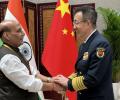
China has called Tibet-related issues a 'thorn' in India-China bilateral relations and a 'burden' for New Delhi, ahead of External Affairs Minister S Jaishankar's visit to China.

India and China reviewed the situation along the Line of Actual Control (LAC) in eastern Ladakh and prepared for the next Special Representatives' dialogue on the boundary question.

Prime Minister Narendra Modi and Chinese President Xi Jinping are expected to hold bilateral meetings on the sidelines of the SCO summit in Tianjin, as both nations look to strengthen ties amid global trade tensions.
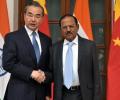
Wang also condemned the April 22 terror attack in Jammu and Kashmir's Pahalgam, which had cross-border linkages and triggered the worst fighting between India and Pakistan in years.
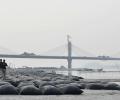
China has formally started the construction of a USD 167.8 billion dam over the Brahmaputra River in Tibet, close to the Indian border in Arunachal Pradesh, raising concerns in India and Bangladesh.

'If Washington has to balance Chinese power, she will have to turn to the third biggest power in the world which is India.' 'The United States and India will have to work together in order to keep Chinese ambitions in check.'
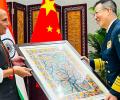
Defence Minister Rajnath Singh, in his meeting with Chinese counterpart Dong Jun in Qingdao on June 26, proposed that India and China should solve the "complex issues" under a structured roadmap comprising steps to de-escalate tensions along the frontiers and rejuvenate the existing mechanism to demarcate the borders.
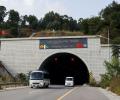
The announcement on expansion of CPEC was made following a meeting among Chinese Foreign Minister Wang Yi, his Pakistani counterpart Ishaq Dar and Afghanistan's Acting Foreign Minister Amir Khan Muttaqi in Beijing, according to a Pakistani readout.
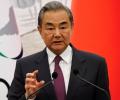
China on Tuesday called for a 'comprehensive and lasting ceasefire' between India and Pakistan, urging both countries to properly handle their differences through dialogue.
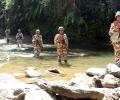
China's military has said it is willing to work with India to find a solution to the border issue, while also pushing for sound and stable defence ties. The statement comes after recent meetings between officials from both countries to normalize relations following a prolonged period of tension.
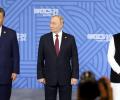
China has expressed its support for Russia's initiative to revive the Russia-India-China (RIC) troika, emphasizing its importance for regional and global security and stability.
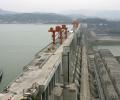
China defends its construction of a dam on the Brahmaputra river in Tibet, addressing concerns from India and Bangladesh about its potential impact on water flow and the environment.
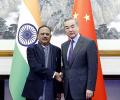
He said that in recent times, based on the important consensus reached by the leaders of the two countries, China and India have maintained close communication on the border situation through diplomatic and military channels and achieved great progress.
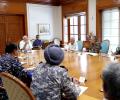
'One good outcome of Operation Sindoor -- perhaps, its best outcome -- could be that India has resumed meaningful contact directly with Pakistan at the military-to-military level,' observes Ambassador M K Bhadrakumar.
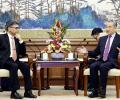
India and China have agreed to rebuild ties and resume people-to-people exchanges, including resuming direct flights and the Kailash Manasarovar Yatra this year. The two countries also discussed the resumption of dialogue mechanisms to address each other's concerns and move relations to a more stable path. The meeting comes after a period of strained relations following the Galwan Valley clashes in 2020.
Since the Pahalgam terrorist attack, China, Pakistan's "ironclad ally", while condemning it, has called for restraint, besides a fair and swift investigation into the attack.
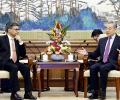
India and China held diplomatic talks in Beijing, focusing on effective border management and the resumption of cross-border cooperation and exchanges, including on trans-border rivers and the Kailash-Mansarovar Yatra. The meeting explored measures and proposals to implement decisions made during the Special Representatives (SR) dialogue in December. Both sides agreed to work together for the next SR meeting in India later this year.
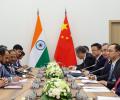
According to informed sources, Doval will arrive in Beijing on Tuesday to attend the crucial talks, which were expected to provide a way forward for the two countries to normalise the relations.
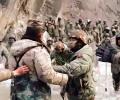
China has honored an army regiment commander who was injured in the Galwan Valley border clash with Indian soldiers in 2020 as an outstanding member of the national advisory body - Chinese People's Political Consultative Conference (CPPCC). Qi Fabao, who was made the torchbearer for the Winter Olympics in 2022, was among the 33 individuals honored with the 2024 Outstanding Performance Award for CPPCC Members. The incident, which resulted in the deaths of 20 Indian soldiers, led to a freeze in relations between the two countries for over four years. Ties were restored after a meeting between Prime Minister Narendra Modi and President Xi Jinping in October 2023.

"China is an absolutely impossible factor to ignore in what has been our confrontation with Pakistan," Tharoor said.
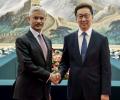
India and China should build on 'good progress' in normalising the bilateral ties to address border-related issues including de-escalation, and it is essential to avoid 'restrictive trade measures and roadblocks', External Affairs Minister S Jaishankar said on Monday during talks with his Chinese counterpart Wang Yi.
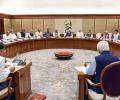
India has reached out to key global powers, including members of the UN Security Council, and apprised them about the reasons behind its military strikes on nine terror targets in Pakistan and Pakistan-occupied-Kashmir in retaliation for the Pahalgam terror attack. New Delhi also conveyed to the countries that it will retaliate if Islamabad escalates the already tense situation.
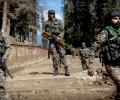
China hopes both sides will remain restrained, move toward each other, and work together to de-escalate the situation.

Chinese Foreign Minister Wang Yi has called on India to implement the consensus reached by Prime Ministers Narendra Modi and Xi Jinping at their summit in Russia, urging a restart of bilateral ties. Wang emphasized the importance of respecting each other's core interests, enhancing mutual trust, handling differences effectively, and bringing the relationship back on track. He suggested practical steps such as resuming flights, easing visa procedures, and planning commemorative activities for the 75th anniversary of diplomatic relations. Wang also highlighted the shared interests and opportunities for cooperation between the two countries, advocating for mutual development and strengthening coordination in international affairs.

Both men spent most of their careers in their nations' intelligence services before they ascended to bigger roles -- Doval in the Intelligence Bureau; Putin in the KGB.

And while delegates from all over China attended the National People's Congress, all eyes were on one man, the anointed-by-personal-diktat ruler for life, Xi Jinping.

The Ministry of External Affairs (MEA) has announced that India and China have reached an understanding to resume the Kailash Mansarovar Yatra in 2025. While an understanding has been reached, the modalities of the pilgrimage are yet to be firmed up. The Yatra has been suspended since 2020 due to the COVID-19 outbreak and non-renewal of Yatra arrangements by the Chinese side.

India and China on Monday decided to resume the Kailash Mansarovar Yatra as the two sides agreed to take certain people-centric steps to 'stabilise and rebuild' ties.

India is preparing to resume the Kailash Mansarovar Yatra, a pilgrimage to Mount Kailash in Tibet, after a three-year hiatus. The decision comes as part of efforts to improve relations between India and China, which have been strained since a military standoff in 2020. The two countries have also agreed in principle to resume flight services between them.
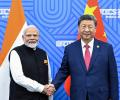
India and China celebrated the 75th anniversary of their diplomatic relations on Tuesday, with leaders from both countries exchanging congratulatory messages. The anniversary comes as the two countries are working to restore ties after a four-year freeze due to the military standoff in eastern Ladakh. Both countries have expressed a willingness to enhance strategic mutual trust and step up cooperation in various fields. The two sides are also exploring ways to rebuild ties and promote people-to-people exchanges.

China supplied more than $20 billion worth of arms to Pakistan. These include 20 J-10CE and JF-17 Block III fighter aircraft, Wing Loong drones, frigates, submarines, Hongqi HQ-9P surface-to-air missiles, 240 PL-15E air-to-air missiles, LY-80 air defence systems, ZDK early warning aircraft and other weapons.

India and China held talks in New Delhi to discuss the lessons learned from the eastern Ladakh military standoff and prevent its recurrence. The two sides also prepared for the next meeting of the Special Representatives on the boundary question. The talks took place under the framework of the Working Mechanism for Consultation and Coordination on India-China Border Affairs (WMCC). Both sides highlighted the importance of regular exchanges and contacts at diplomatic and military level to maintain peace and tranquility in the border areas.
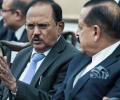
National Security Advisor Ajit Doval is likely to travel to Beijing within the next few weeks to lead the Indian delegation at a new edition of the Special Representatives dialogue on the larger boundary question that will be held after a gap of nearly five years, authoritative sources said.

India and China on Thursday vowed to redouble efforts to resolve the remaining issues in eastern Ladakh at the earliest and 'stabilise and rebuild' ties even as External Affairs Minister S Jaishankar conveyed to his Chinese counterpart Wang Yi during a meeting that the Line of Actual Control (LAC) must be respected.
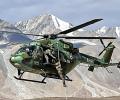
India has lodged a "solemn protest" with China over the establishment of two new counties in the Hotan prefecture, as parts of these regions fall within India's union territory of Ladakh. The Indian government asserted that the creation of these counties will not impact its sovereignty over the area and does not lend legitimacy to China's "illegal and forcible" occupation.
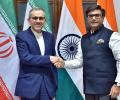
India's Foreign Secretary Vikram Misri will travel to Beijing for a two-day trip beginning Sunday, marking the second high-profile visit from India to China in less than one-and-a-half months. The visit comes amidst ongoing border tensions and follows a recent disengagement pact between the two countries in eastern Ladakh. The Foreign Secretary-Vice Minister mechanism meeting will focus on the next steps for India-China relations, including in the political, economic, and people-to-people domains. The decision to revive this bilateral mechanism was taken at a meeting between Prime Minister Narendra Modi and Chinese President Xi Jinping in Kazan in October.
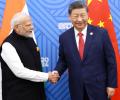
Chinese Foreign Minister Wang Yi said on Friday that India-China relations have made positive strides and achieved a series of encouraging outcomes at all levels after last year's breakthrough ending the over four-year-long military standoff in eastern Ladakh. Wang's remarks came during his annual press conference as he replied to a question on how Beijing views the course of bilateral ties after the two countries ended the prolonged stalemate in the ties.
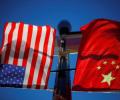
China has toned down its rhetoric on fighting a trade or any other type of war with the US, saying that no such wars should be fought because they cannot be won. Foreign Ministry spokesman Lin Jian responded to US Secretary of Defence Pete Hegseth's remarks that his country doesn't seek a war with China, but will rebuild the military and prepare for war. However, on Tuesday, Lin had said that China is ready to fight till the end if the US wants a trade war or any other type of war. Hegseth said on Wednesday that the US is not actively seeking conflict with China, but is rebuilding its military and establishing deterrence.
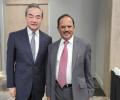
Doval is in Beijing for the 23rd round of the Special Representatives' talks being held after a gap of five years.
'It is typical of China's strategic deception of making virtue out of necessity,' observes Rup Narayan Das.
 © 2026 Rediff.com - Advertise with us - Disclaimer - Privacy Policy - Sitemap - Feedback - About us - Terms of use - Grievances