
In a strong message to China, India and ASEAN on Thursday called for a "full and effective" implementation of the understanding between the parties involved in the South China Sea dispute, while stressing on maritime security and freedom of navigation in the critical sea lanes.

Prime Minister Narendra Modi will focus on extended neighbourhood, particularly the ASEAN and Central Asian regions, says Archis Mohan

Prime Minister Narendra Modi this month will be undertaking one of the longest ever abroad visits by an Indian head of government in recent times. He is scheduled to be on a nine-day, three-nation visit to Myanmar, Australia and Fiji from November 11 to 19. Later in the month, he will be in Nepal to attend the South Asian Association for Regional Cooperation summit on November 26-27.

US President Barack Obama told Prime Minister Narendra Modi, when the two met on the sidelines of the East Asia Summit in Myanmar in November 2014, how he barely had two years left to his presidential term and so much to do. The wish list included getting his daughters to see a tiger in the wild and the Taj Mahal.
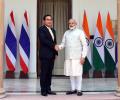
Thailand's importance to India's Act East policy is too significant to be overlooked.
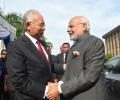
Both countries will advance maritime security and strengthen disaster response in the region, says Modi.

India is no longer shying away from playing a role on the regional and international stages and is willing to don a bigger role in regional politics. It is showing traits of a responsible stakeholder in the regional security dynamics, says Dr Rahul Mishra.

As India strives to make its Act East Policy a comprehensive politico-diplomatic and economic success, Brunei gains more salience, says Dr Rahul Mishra.

India hopes to bridge gap with US to buffer against a Paris agreement that restricts country's developmental space.
India-Vietnam relationship has its own imperatives and dynamism. In India's look east policy Vietnam has been the major pivot, at least in terms of security and strategic imperatives, says Rup Narayan Das.

India wants more business and closer engagement with ASEAN even as China's influence spreads in the region. Rediff.com's Sheela Bhatt, who is travelling with the prime minister on his visit to Brunei, reports from Bandar Seri Begawan, capital of the tiny oil-rich country.

It seems China is ready to cooperate with India in the central Asian region through the SCO framework, the reasons for which are manifold, says Sana Hashmi.

'Pakistan persists in the belief that such attacks will enable it to obtain the territory it covets. Their plans will not succeed.'

'This is the first time the US has formally recognised the threat India faces from terrorist organisations based in Pakistan.'

'India alone cannot walk the path of peace. It also has to be Pakistan's journey to make,' says Prime Minister Narendra Modi at the government's geo-political flagship initiative "Raisina Dialogue-II".

Continued uncertainty or confrontation in the Asia-Pacific is clearly in no one's interest as it will affect major powers' attempts to restructure their economies and revive growth. Conflict would roll back the gains to each of our countries of 40 years of stability and peace, says Shivshankar Menon.

A list of all the foreign visits taken up by PM Narendra Modi this year and their outcomes.

Ashley J Tellis, a leading authority on Indo-US relations, tells Archis Mohan in an emailed interview that it is time Washington and New Delhi agreed on the contours of their 'strategic partnership', and that India's elite could learn from Prime Minister Narendra Modi in how he has put India's interests first and his own sentiments about the Americans second.

The two countries also asked all nations to stop cross-border movement of terrorists and asserted that a decisive collective response from the international community without 'double standards and selectivity' was required to combat the threat of terrorism.

Trade between India and Indonesia stands at $20 billion.
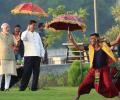
A sensational interview on India-China ties, with the man most qualified to answer.
 © 2026 Rediff.com - Advertise with us - Disclaimer - Privacy Policy - Sitemap - Feedback - About us - Terms of use - Grievances