
Gurugram, already established as the corporate hub of Delhi-NCR, is increasingly attracting developers from outside the region, drawn by robust end-user demand, premium pricing, and emerging development opportunities.

After three post-pandemic years of an upcycle, it was a mixed bag for the realty sector in 2025, with sales volumes in the residential real estate moderating across top cities, and commercial real estate and institutional investments emerging as standout performers. Residential: Volumes soften, value holds firm.
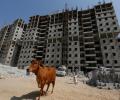
Tata Realty and Infrastructure, a subsidiary of Tata Sons, is looking to expand its business with over 50 projects across major cities in India, Sri Lanka, and the Maldives. The combined projects boast a development potential exceeding 51 million sq ft, according to a top executive. The Mumbai-based real estate major has completed the first phase of project developments in Male (the Maldives), and is gearing up for the second phase. It has also expanded its footprint in Sri Lanka and plans to add about 2 million sq ft. in Colombo.

After three straight quarters of decline, India's housing market is pinning hopes on the ongoing festival season to revive sales momentum. While 2025 may still end with sales volumes below 2024 levels, developers believe the seasonally strong October-December quarter could narrow the gap, aided by stable interest rates, festive incentives, and resilient demand in the premium segment.

The US's recent 50 per cent tariff on Indian exports will have a trickledown effect on India's affordable housing, potentially derailing demand as well as supply in this segment, according to experts. Pointing to worker incomes and jobs in micro, small and medium enterprises (MSMEs), and small and medium enterprises (SMEs) that typically make up majority of the customer base of affordable housing, would take a hit in the near terms due to the tariff change, further crippling India's affordable housing sector, already reeling from the impact of the Covid-19 pandemic.

Home purchase affordability has improved in the first half of calendar year (CY) 2025, after the RBI reduced the repo rate by 100 basis points (bps), according to real estate consultancy Knight Frank India.

Office space owners are looking at good times ahead as rentals are expected to rise due to demand for Grade A office spaces outpacing supply that has been sluggish due to construction delays, long gestation periods and developers' interests shifting to residential.

'Every delay directly increases the cost burden on developers. Land holding charges, financing costs, and compliance expenses escalate as approvals drag on.'

Housing demand should improve nationwide after the Reserve Bank of India (RBI) cut the repo rate by a larger-than-expected 50 basis points (bps) on Friday, said real estate industry executives. The rate cut comes after housing sales in top Indian cities in the first quarter of 2025 dipped 28 per cent due to skyrocketing residential property prices and geopolitical headwinds, according to Anarock.

India's flexible (flex) office segment, having breached pre-pandemic levels, is thriving as corporates, startups, multinational corporations, and global capability centres (GCCs) expand in India, seeking low-capital yet Grade A plug-and-play facilities. In the first quarter (Q1) of 2025, the flex office segment continued to grow, with flex space leasing rising by 22 per cent to 2.2 million square feet (msf), according to Colliers.

'In the past six months, capital markets have seen a dip, and realty is struggling. The stock-market investor will be cautious of putting that investment in real estate when there may be a slowdown coming.'

While one of them is on the verge of opening, three others are expected to come up in the next three years.

The investigating agency wants to ascertain the actual purpose of the deal.

To commence work on two projects, add Rs 3,000 crore (Rs 30 billion) of business Tata Realty and Infrastructure (TRIL), a wholly-owned subsidiary of Tata Sons, is foraying into retail and hospitality segments through a new subsidiary, TRIL Hospitality Services.

The fund is to invest in income generating assets such as malls, office complexes among others.

High-end apartments, penthouses, and bungalows boasting amenities like swimming pools, expansive driveways, and premium interiors are becoming highly sought after.

Leading property developers, such as Oberoi Realty, Tata Realty and Infrastructure, and Hiranandani, have turned to redevelopment of existing buildings in the expensive parts of Mumbai as a way of augmenting revenue. Experts estimate that Mumbai's redevelopment projects could be worth Rs 30,000 crore. As such, they are not new. What is new is that the big developers are interested in them. Leading the race is Oberoi Realty, which has set up a separate team for these projects.

'The rising cost of construction, the cost of doing business, high compliance, and inflation/interest rates going up have already reduced returns to single digits.'

The Central Bureau of Investigation (CBI) has started a fresh inquiry into the Rs 1,700-crore land deal between Tata Realty and Unitech in 2007.

With the deadline for filing the chargesheet in the 2G spectrum case nearing, the CBI is expected to soon question Dravida Munnetra Kazhagam MP K Kanimozhi and corporate lobbyist Niira Radia, especially on the role played by Radia in clinching a deal between Tata Realty and Unitech.

Shankar Prajapati, a 57-year-old potter in Dharavi, has given up hope of getting a bigger house for his family. He lives cheek by jowl in a hutment measuring 200 square (sq.) feet (ft) in the nondescript shanty town. "We have surrendered to our fate. We cannot wait forever for better accommodation. "Perhaps we are not meant to dream big," despairs Prajapati. Raju Korde, president, Dharavi Redevelopment Committee, and a local resident, agrees with Prajapati.

After years of living with his family in a poky 110 sq. ft. 'house', textile worker Sambhaji Surve dreams of moving into a home four times the size once the Maharashtra government starts its ambitious redevelopment of the 39-acre Kamathipura shanty town in south-central Mumbai. Sharing his dream are about 8,000 other families hoping for a better life when the redevelopment project, part of the government's effort to redevelop old settlements and make life more livable for some residents, gets underway. The Shiv Sena-Nationalist Congress Party aims to redevelop BDD Chawl and Dharavi but for Surve all the matters is Kamathipura where he arrived in the 1970s from Nasik to work in a textile mill. Kamathipura was originally built 150 years ago following construction of a causeway to connect the seven islands of Mumbai. From the British Raj to post-independence, it became infamous for slums and brothels.

Although residential sales faced a major set back in Q2, they made a comeback with help of pent up demand.

Some of the country's largest listed real estate developers - DLF, Prestige Estates, and Puravankara - are foraying into the Rs 50,000-crore residential property market of Mumbai, where home prices are among the highest in the world. All of them are set to launch residential projects in the financial capital of the country, where the market is dominated by players such as Runwal, Lodha, and Oberoi Realty, among others. Leading the race is Prestige, which has lined up 6 million square feet (msf) of new launches in the city across Mulund and Byculla in the third quarter of this financial year (2021-22).

Two top executives of Tata group -- Chairman of the group's realty and infrastructure arm R Krishna Kumar and its Managing Director and Chief Executive Officer Sanjay G Ubale -- were on Thursday questioned by the CBI in connection with the 2G spectrum allocation scam.

Tata Realty and Infrastructure Ltd, a 100 per cent subsidiary of Tata Sons Ltd, will invest Rs 3,500 crore (Rs 35 billion) in setting up an information technology Special Economic Zone at Taramani, Chennai. The project will have both commercial and residential projects.
Tata Consultancy Services (TCS) is likely to delay its Rajarhat campus in West Bengal, as part of a string of cost-management initiatives to cope with the pangs of the global meltdown.
TRIL is planning to raise a Rs 4,770 crore international infrastructure fund by the end of the year to invest in infrastructure projects like building special economic zones, roads, ports and other core sector projects in the next three years. Tata Realty has already raised a Rs 3,500 crore offshore fund for investing in its real estate projects, 20 per cent of which is deployed. The other 80 per cent will be used in the next three years.

Mumbai, India's financial capital, is set for a mega transformation with a massive patch of land opening up for redevelopment; a new metro railway ready to start services by the year-end; and the country's oldest railway station, the Chhatrapati Shivaji Terminus, going for modernisation with private sector participation. Work on Mumbai's second airport will start from next month, while construction of the sea link connecting central Mumbai to Navi Mumbai has already moved into a fast lane despite Covid-induced lockdowns. Also, a coastal road project, connecting Nariman Point to Worli, is under way and will help decongest the city to quite an extent. Of all these mega infrastructure projects, the one that has a huge potential to change the city's skyline is the Eastern Waterfront project - to be built on the Mumbai Port Trust (MbPT) land.

Mumbai's property markets, where prices earlier crossed Rs 1 lakh per sq. ft in South Mumbai, are seeing a 20-25 per cent markdown from last year's levels.

This is the second extension for the bids since June 18.

Norms limiting airlines' stake in SPVs managing airports to hurt Tatas.

Almost all the big mall developers/investors - such as Raheja-owned Inorbit Malls, Xander-APG joint venture Virtuous Retail South Asia (VRSA), property developer Prestige Estates Projects, and Blackstone-owned Nexus Malls - are looking to double their space in a year or two.

The project cost was pegged at Rs 4,766 crore (Rs 47.66 billion).

The airports chosen for operation, management and development through a public-private partnership model are those in Lucknow, Ahmedabad, Jaipur, Mangaluru, Thiruvananthapuram, and Guwahati.

On July 31, one of the five shortlisted companies, IRB Infrastructure, had said it would not bid for MTHL.

Union ministry of home affairs changed its mind and gave bid clearance for Hiranandani Developers and its consortium partner, Zurich Airport

Singapore Airline along with its Indian JV partner have got clearance from the aviation ministry.

In a departure from its stand, the government has decided to go ahead with the privatisation of the four airports.

GVK Group that runs the swanky MIAL (Mumbai international airport) pipped rival GMR Group to bag the contract for the proposed facility in Navi Mumbai which will ease the severe congestion at the Chhatrapati Shivaji International Airport.
 © 2026 Rediff.com - Investor Information - Advertise with us - Disclaimer - Privacy Policy - Sitemap - Feedback - About us - Terms of use - Grievances